
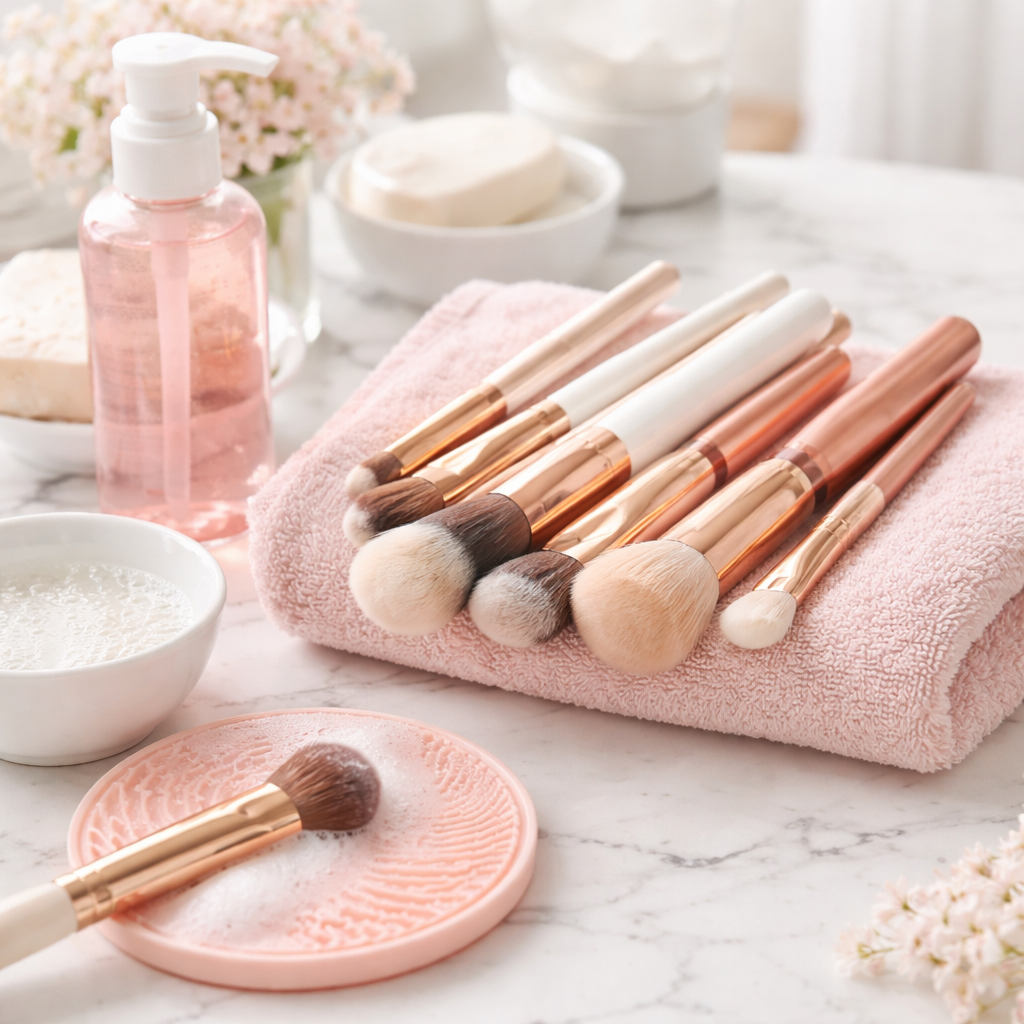
Keeping your makeup brushes clean isn’t just about looking polished, it’s a quiet but powerful part of healthy skin care. If you’ve ever dealt with unexpected breakouts, patchy foundation, or makeup that just doesn’t blend the way it used to, dirty brushes may be the hidden cause.
This guide walks you through how to clean makeup brushes properly, how often to do it, what to use, and the mistakes that can quietly ruin your tools, all in a way that’s easy to follow and realistic to maintain.
What Happens If You Don’t Clean Makeup Brushes Regularly
Makeup brushes collect more than just pigment. Over time, they trap oil, dead skin cells, bacteria, and leftover product. When brushes aren’t cleaned regularly, this buildup can lead to:
- Acne and clogged pores
- Skin irritation, especially around the eyes
- Uneven or cakey makeup application
- Shortened brush lifespan
Dirty makeup brushes don’t just affect how your makeup looks, they directly impact skin health and hygiene.
How Often Should You Clean Makeup Brushes (By Brush Type)
There’s no one-size-fits-all rule, but frequency matters more than perfection.
Foundation & Concealer Brushes
These brushes touch liquid and cream products, making them the biggest bacteria collectors.
Clean once a week to avoid buildup and breakouts.
Eye Brushes
Because the eye area is sensitive, aim for weekly cleaning, especially if you use darker or shimmery shades.
Powder, Blush & Bronzer Brushes
These can be cleaned every 10 to 14 days, depending on how often you use them.
Signs Your Makeup Brushes Need Cleaning
- Bristles feel stiff or sticky
- Brushes smell slightly “off”
- Makeup isn’t blending smoothly
- You’re noticing new breakouts
What You Need to Clean Makeup Brushes at Home
You don’t need anything fancy, just the right basics.
- A gentle soap or dedicated brush cleanser
- A silicone brush cleaning pad or textured mat
- A clean towel or microfiber drying mat
What NOT to Use on Makeup Brushes
Avoid harsh detergents, hot water, and alcohol-based products. These can dry out bristles, weaken glue, and cause shedding.
Step-by-Step: How to Clean Makeup Brushes Properly
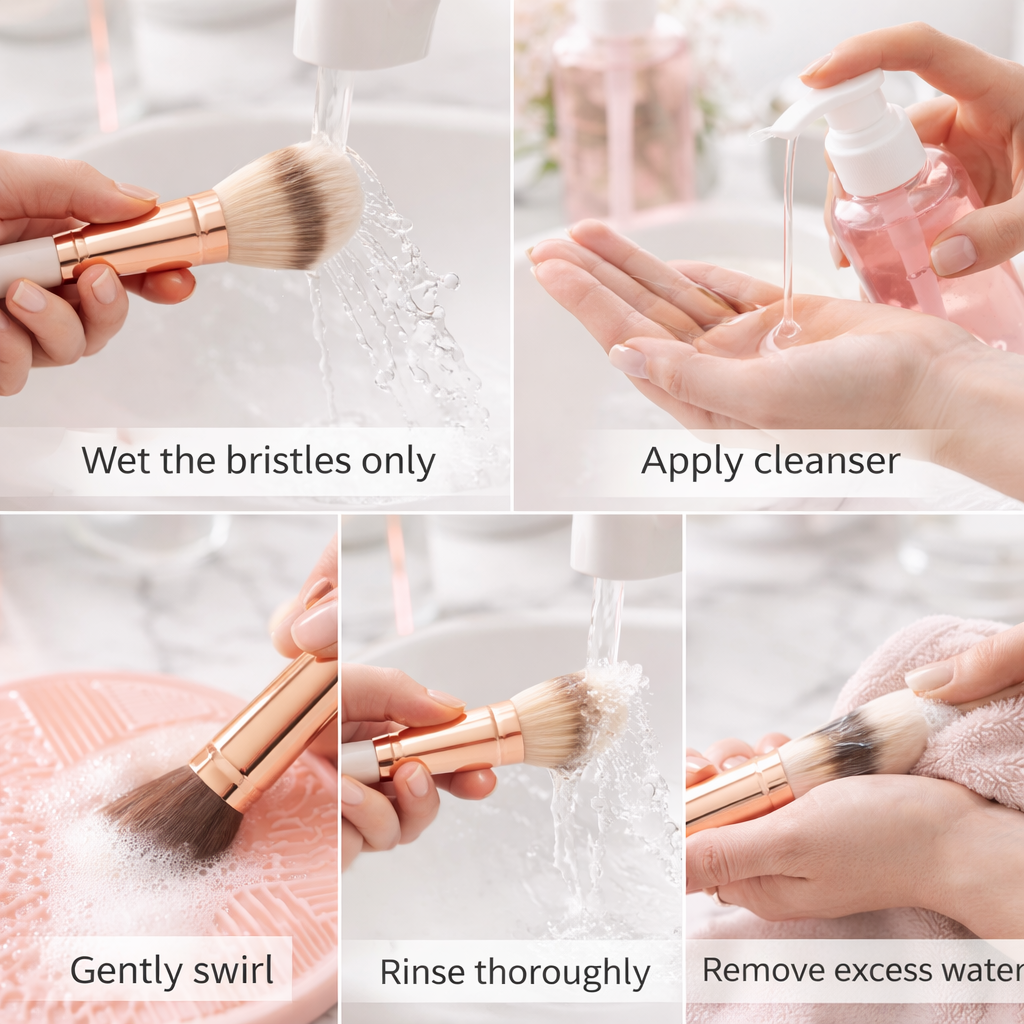
This is the safest and most effective method for washing makeup brushes at home.
- Wet the bristles only
Hold brushes at a downward angle under lukewarm water. Avoid soaking the handle. - Apply cleanser
Add a small amount of soap or brush cleaner to your palm or cleaning pad. - Gently swirl
Move the brush in circular motions to loosen makeup and oil. - Rinse thoroughly
Continue rinsing until the water runs clear. - Remove excess water
Gently squeeze the bristles using a clean towel, never twist.
This step-by-step makeup brush cleaning routine keeps bristles soft while removing buildup safely.
How to Dry Makeup Brushes the Right Way
Drying is just as important as washing.
- Lay brushes flat on a towel
- Angle bristles slightly downward if possible
- Allow 12 to 24 hours to dry completely
Common Drying Mistakes That Shorten Brush Lifespan
- Drying brushes upright (water loosens glue)
- Using heat or hair dryers
- Storing brushes before fully dry
Quick Clean vs Deep Clean — When to Use Each
- Quick clean: Useful between makeup looks or when changing colors
- Deep clean: Necessary weekly to remove bacteria and oil buildup
Quick sprays are helpful for convenience, but they don’t replace proper washing.
Common Makeup Brush Cleaning Mistakes to Avoid
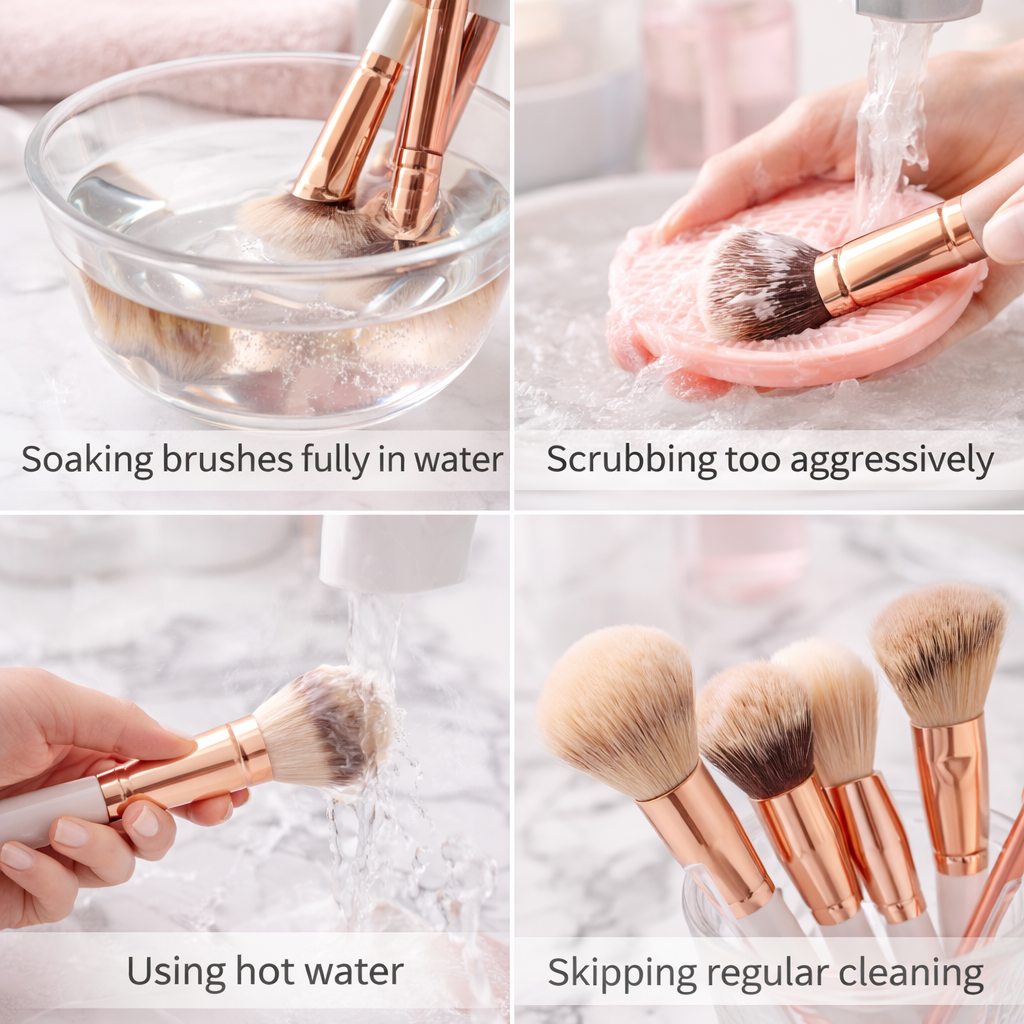
Even well-meaning habits can damage brushes over time.
- Soaking brushes fully in water
- Scrubbing too aggressively
- Using hot water
- Skipping regular cleaning
Gentle care keeps brushes performing like new.
How to Make Makeup Brushes Last Longer (Care & Storage Tips)
This section is often overlooked, but it matters.
- Store brushes upright once completely dry
- Keep them away from humidity
- Use brush guards for travel
- Avoid overcrowding in containers
Proper makeup brush maintenance protects both your investment and your skin.
Frequently Asked Questions
Can dirty makeup brushes cause acne?
Yes. Bacteria and oil buildup can clog pores and trigger breakouts.
Can I clean makeup brushes with dish soap?
Occasionally, yes but frequent use can dry out bristles. A gentle cleanser is better long-term.
How long do makeup brushes last?
With proper care, quality brushes can last several years.
Can makeup sponges be cleaned the same way?
Sponges need more frequent washing and thorough drying due to moisture retention.
Final Thoughts
Learning how to clean makeup brushes properly doesn’t require perfection, just consistency. A simple, skin-safe routine protects your complexion, improves makeup application, and helps your brushes last longer.