
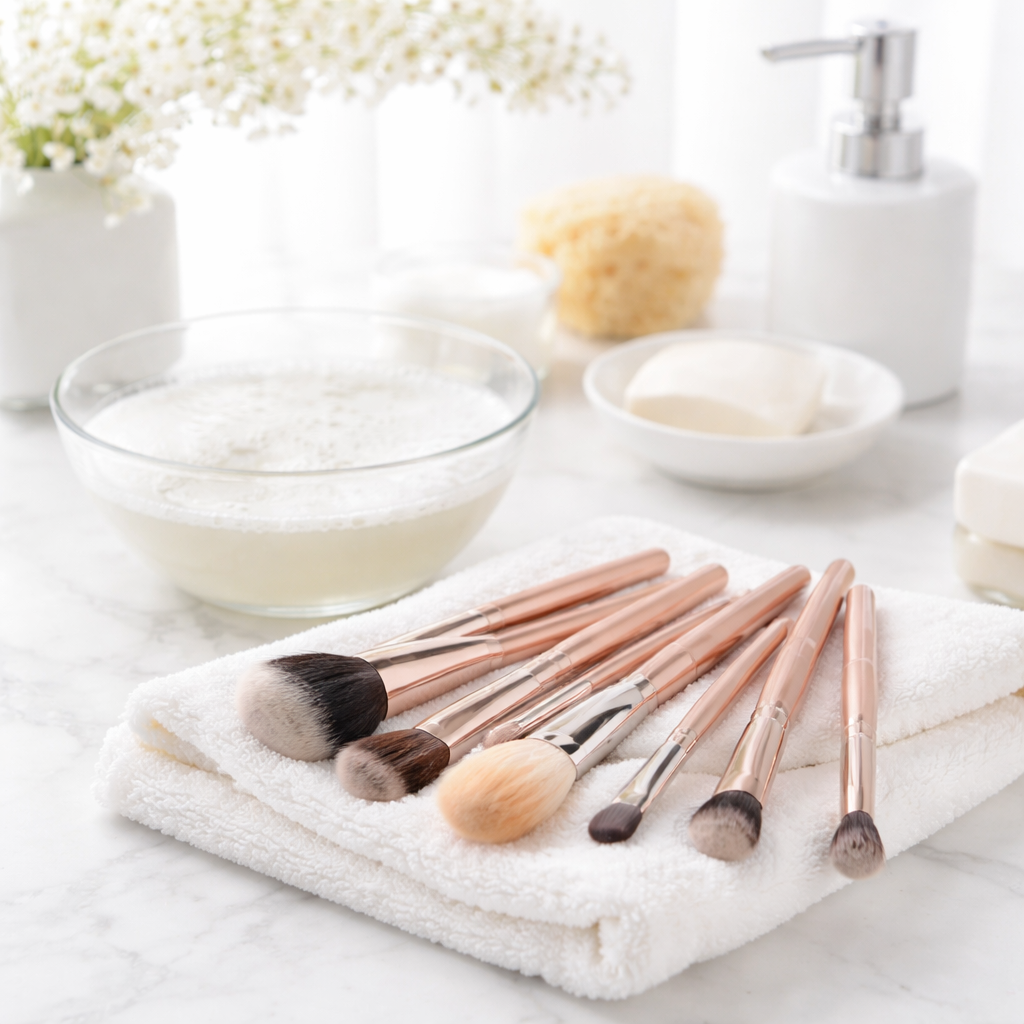
Makeup brushes are one of the most used, and most overlooked, beauty tools. While they help create flawless looks, they also collect makeup residue, oil, and bacteria over time. Knowing how to wash makeup brushes properly keeps your skin healthier, improves makeup application, and extends the life of your brushes.
This guide walks you through safe, simple, at-home makeup brush cleaning using methods that work for beginners and regular makeup users alike.
What Really Builds Up on Makeup Brushes Over Time
Even when brushes look clean, they often hold layers of:
- Old foundation and powder residue
- Natural skin oils
- Environmental dust
- Bacteria that can transfer back to your skin
This buildup can make brushes stiff, cause uneven makeup blending, and contribute to clogged pores or irritation — especially for sensitive or acne-prone skin. Regular makeup brush hygiene isn’t just about cleanliness; it’s part of good skin care.
How Often Makeup Brushes Actually Need Cleaning
There’s no one-size-fits-all rule, but a realistic makeup brush cleaning routine looks like this:
- Foundation & concealer brushes: once a week
- Powder, blush, bronzer brushes: every 7–10 days
- Eye makeup brushes: every 1–2 weeks
- Quick cleaning: after heavy makeup days
If brushes start smelling, shedding product unevenly, or irritating your skin, they need cleaning sooner.
What You’ll Need Before Washing Your Brushes
Most people already have what they need at home:
- Lukewarm water
- A gentle cleanser or mild shampoo
- A clean towel
These aren’t required, but they help remove residue faster and more evenly.
Step-by-Step Guide to Washing Makeup Brushes at Home
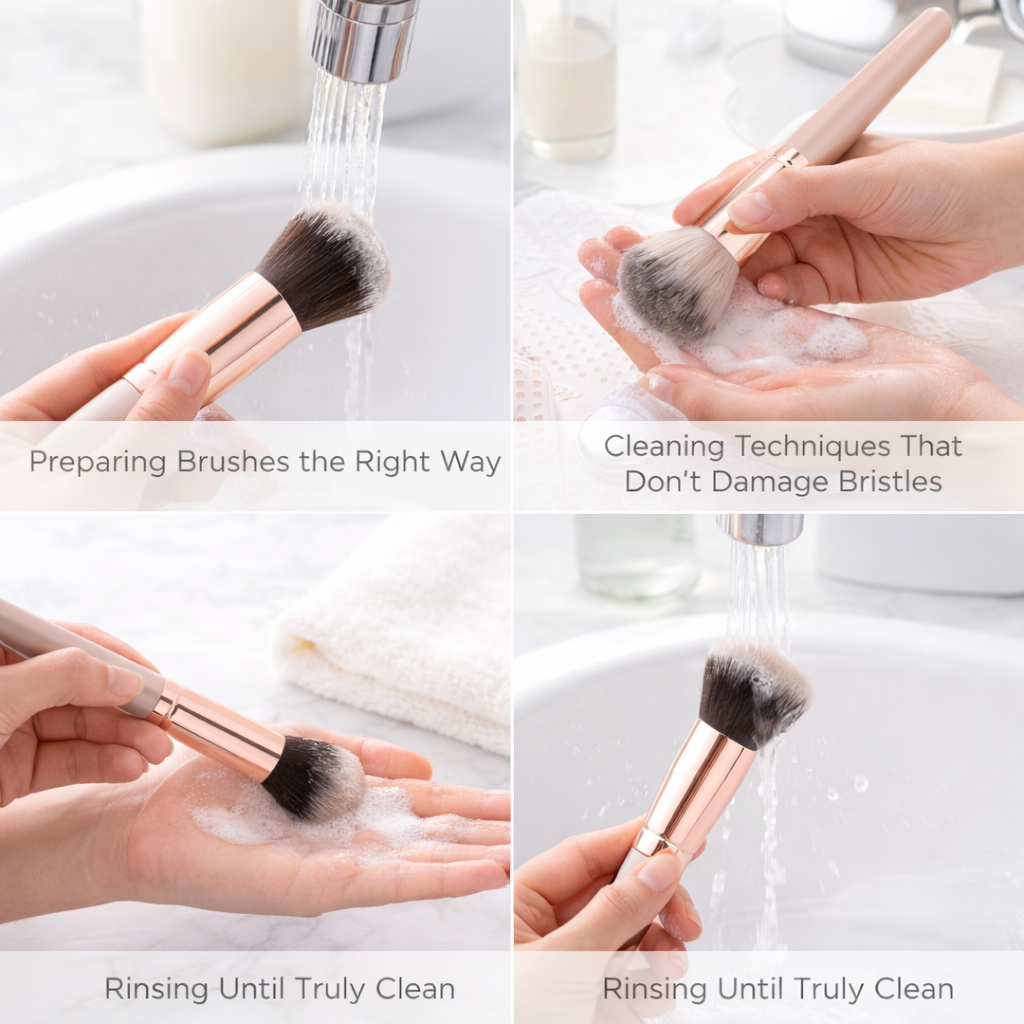
Preparing Brushes the Right Way
Start by rinsing only the bristles under lukewarm water. Avoid wetting the handle or ferrule, as trapped moisture can loosen glue over time.
Cleaning Techniques That Don’t Damage Bristles
Apply a small amount of cleanser to your palm or cleaning pad. Gently swirl the brush in circular motions. Avoid pressing or twisting harshly — this helps preserve the brush shape.
Rinsing Until Truly Clean
Rinse until the water runs clear and no makeup residue remains. Repeat if necessary, especially for dense brushes.
How to Clean Different Types of Makeup Brushes
Different brushes need slightly different care:
Foundation & Cream Brushes
These hold the most product and benefit from slow, thorough cleaning to remove buildup.
Powder & Blush Brushes
They’re easier to clean but still need regular washing to avoid dull makeup application.
Eye Makeup Brushes
Because they’re used near sensitive areas, keeping them clean helps reduce irritation.
Synthetic vs Natural Bristles
Synthetic brushes are more forgiving, while natural bristles require gentler handling and milder cleansers.
The Correct Way to Dry Makeup Brushes
Drying is where many brushes get damaged.
- Gently squeeze out excess water with a towel
- Reshape the bristles
- Lay brushes flat with bristles slightly angled downward
Avoid standing brushes upright while wet, as water can seep into the handle. Most brushes take 8–24 hours to fully dry.
Common Brush-Washing Mistakes That Shorten Brush Life
Avoid these habits:
- Using harsh soaps or alcohol regularly
- Soaking brushes completely
- Blow-drying with heat
- Skipping cleaning for long periods
These mistakes weaken bristles and shorten brush lifespan.
Quick Cleaning Methods for Busy Days
When time is tight, quick cleaning can help:
- Light cleanser + towel swirl for surface residue
- Fast-dry spray cleansers (not a replacement for deep cleaning)
Quick methods are helpful between washes but shouldn’t replace proper cleaning.
How Clean Brushes Improve Makeup Results
Clean brushes:
- Blend makeup more smoothly
- Improve color payoff
- Reduce product waste
- Feel softer on the skin
Many people notice their makeup looks better immediately after washing their brushes.
Frequently Asked Questions
Can I wash makeup brushes with shampoo?
Yes, as long as it’s gentle and free from harsh ingredients.
Can brushes be sanitized?
Occasionally, but frequent alcohol use can dry out bristles.
How do I clean makeup sponges?
Sponges should be cleaned more often using similar gentle methods.
What if my brushes shed after washing?
Light shedding can happen initially, but frequent shedding may indicate damage.
Final Thoughts
Learning how to wash makeup brushes properly doesn’t require special tools or complicated routines. With gentle products, regular care, and proper drying, your brushes stay cleaner, last longer, and help protect your skin.
Consistency matters more than perfection — and clean brushes always show in your makeup results.