
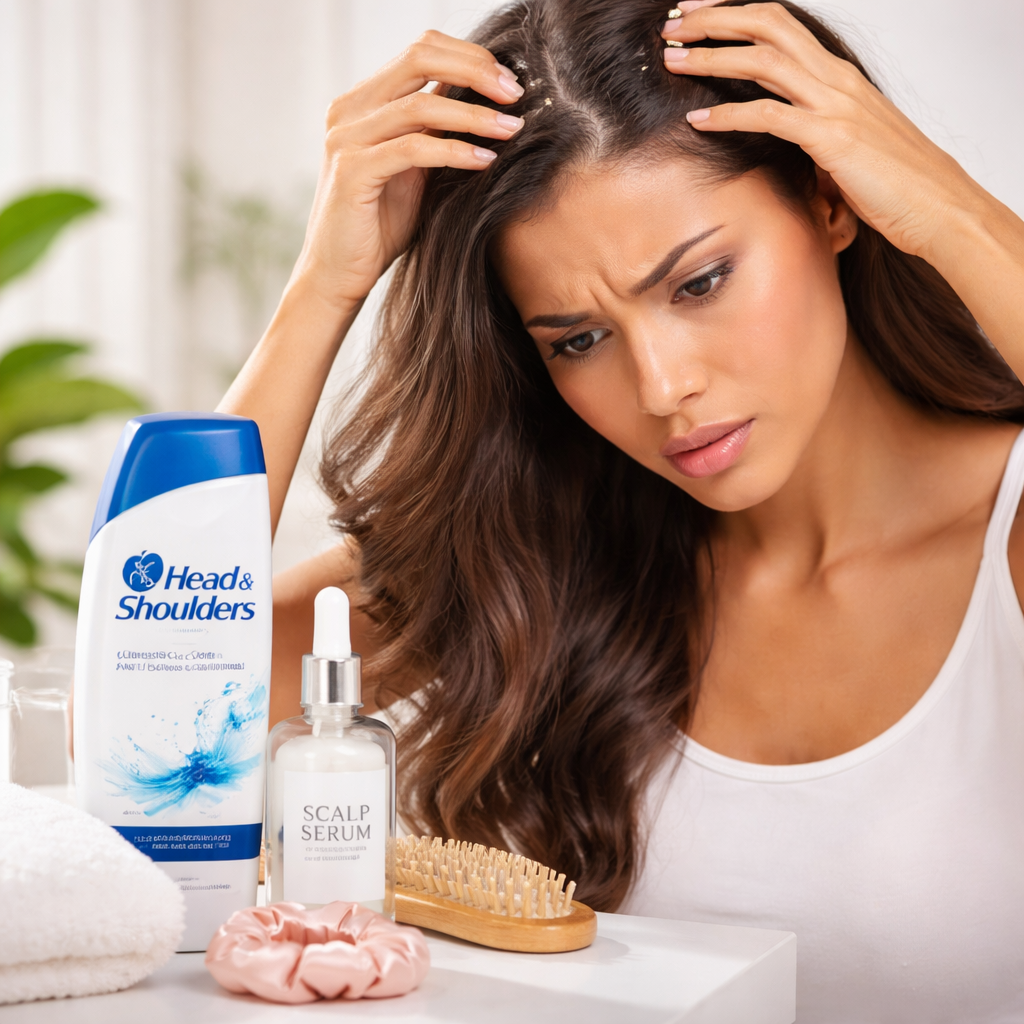
If you’re noticing flakes on your shoulders and more strands in your brush, it’s completely normal to worry. Many women start searching, can dandruff cause hair loss, when they see shedding and scalp irritation happening at the same time. The connection between dandruff and hair loss can feel confusing, and the answer isn’t a simple yes or no — it depends on what’s happening beneath your scalp.
Let’s break it down clearly and calmly.
If You Have Dandruff and Hair Fall at the Same Time…
First, take a breath.
In most cases, dandruff does not directly cause permanent hair loss. However, severe dandruff can trigger temporary hair shedding when the scalp becomes inflamed, irritated, or constantly scratched.
So if you’re experiencing hair loss due to dandruff, it’s usually reversible once the scalp health improves.
The Real Connection Between Dandruff and Thinning Hair
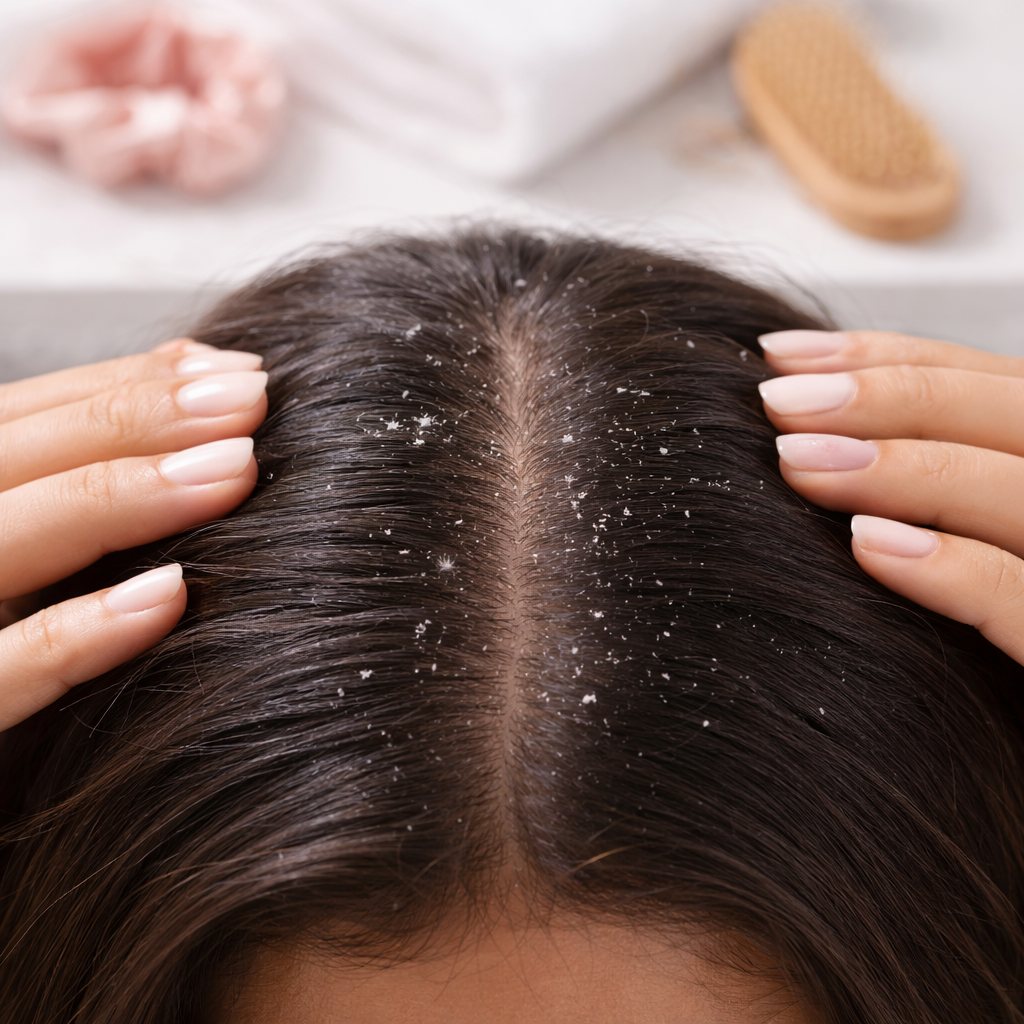
Dandruff happens when the scalp sheds excess skin cells, often linked to:
- Overgrowth of malassezia yeast
- Excess oil production
- Scalp microbiome imbalance
- Seborrheic dermatitis
- Chronic scalp inflammation
When your scalp becomes itchy and irritated, constant scratching can stress the hair follicles. This inflammation may weaken the roots, leading to increased shedding.
This is why people often experience:
- Itchy scalp and hair loss
- Flaky scalp and thinning hair
- Severe dandruff hair fall
- Scalp irritation with noticeable shedding
But remember — this type of shedding is usually temporary.
What Happens Inside the Hair Follicle During Scalp Inflammation
When inflammation builds up around the follicles:
- Blood flow can become disrupted
- The follicle may shift into a resting phase (similar to telogen effluvium)
- Hair strands shed earlier than normal
This doesn’t mean the follicle is permanently damaged. In most cases, once scalp inflammation is reduced, the growth cycle resets.
However, if dandruff is linked to seborrheic dermatitis hair loss or chronic fungal infection scalp hair loss, ignoring it can prolong the shedding phase.
Temporary Shedding vs Permanent Hair Loss
Here’s where confusion often happens.
Temporary Shedding (Common with Dandruff)
- Triggered by inflammation
- Caused by scratching or buildup
- Improves with proper scalp care
- Hair grows back
Permanent Hair Loss (Different Condition)
- Pattern thinning
- Bald patches
- Hormonal causes
- Autoimmune issues
If you’re asking, “Does dandruff cause permanent hair loss?” — in most cases, no.
But chronic untreated inflammation can weaken hair over time.
Common Scalp Conditions That Cause Both Flakes and Hair Loss
Sometimes dandruff isn’t just dandruff.
It may be connected to:
- Seborrheic dermatitis
- Psoriasis on the scalp
- Chronic fungal imbalance
- Excess sebum production
- Scalp barrier damage
These inflammatory scalp conditions can contribute to hair follicle stress.
If symptoms include redness, greasy flakes, burning, or thick scaling, you may need more than a regular shampoo.
How to Stop Hair Loss from Dandruff
If you’re wondering how to stop hair loss from dandruff, focus on calming the scalp first.
1. Control the Yeast and Buildup
Use a medicated anti-dandruff shampoo with ingredients like ketoconazole or zinc pyrithione.
This helps reduce fungal overgrowth and scalp buildup.
2. Reduce Inflammation
A soothing scalp serum with calming ingredients can help reduce irritation and protect hair follicles.
Avoid heavy oils if your scalp is already inflamed.
3. Protect the Hair Shaft
Friction can worsen breakage.
These small changes reduce mechanical stress and help prevent extra shedding.
Weekly Scalp Health Blueprint
Here’s a simple routine to support scalp health and reduce dandruff hair loss connection issues:
- Wash 2–3 times weekly with medicated shampoo
- Gently massage the scalp (no aggressive scratching)
- Use lukewarm water
- Avoid harsh heat styling
- Exfoliate the scalp lightly once weekly
Consistent care can restore balance and support scalp health and hair growth.
Early Warning Signs You Shouldn’t Ignore
See a dermatologist if you notice:
- Rapid shedding for more than 3 months
- Bald patches
- Severe redness
- Oozing or painful scalp
- Thick crusting
If you’re unsure whether it’s dandruff vs hair loss from another cause, professional evaluation helps.
Can Stress Make Dandruff and Hair Loss Worse?
Yes.
High stress levels can:
- Increase oil production
- Trigger inflammation
- Disrupt hair growth cycles
Stress-related shedding combined with dandruff may amplify the issue. Supporting overall wellness can reduce chronic dandruff hair loss triggers.
Frequently Asked Questions
Can severe dandruff cause hair loss?
It can contribute to temporary shedding due to inflammation and scratching.
Will hair grow back after dandruff?
In most cases, yes. Once the scalp heals, follicles resume normal growth.
Can scratching scalp cause hair loss?
Repeated scratching damages follicles and weakens roots.
Does dandruff block hair follicles?
Heavy buildup may clog follicles temporarily, but proper cleansing resolves it.
How long does dandruff-related hair loss last?
Usually a few weeks to a few months, depending on severity and treatment.
Final Thoughts: A Healthy Scalp Is the Foundation of Healthy Hair
Dandruff itself isn’t the enemy — untreated inflammation is.
If you control the fungal imbalance, reduce irritation, and protect your strands, most dandruff-related hair shedding is reversible.
Focus on restoring scalp balance. When your scalp thrives, your hair follows.