
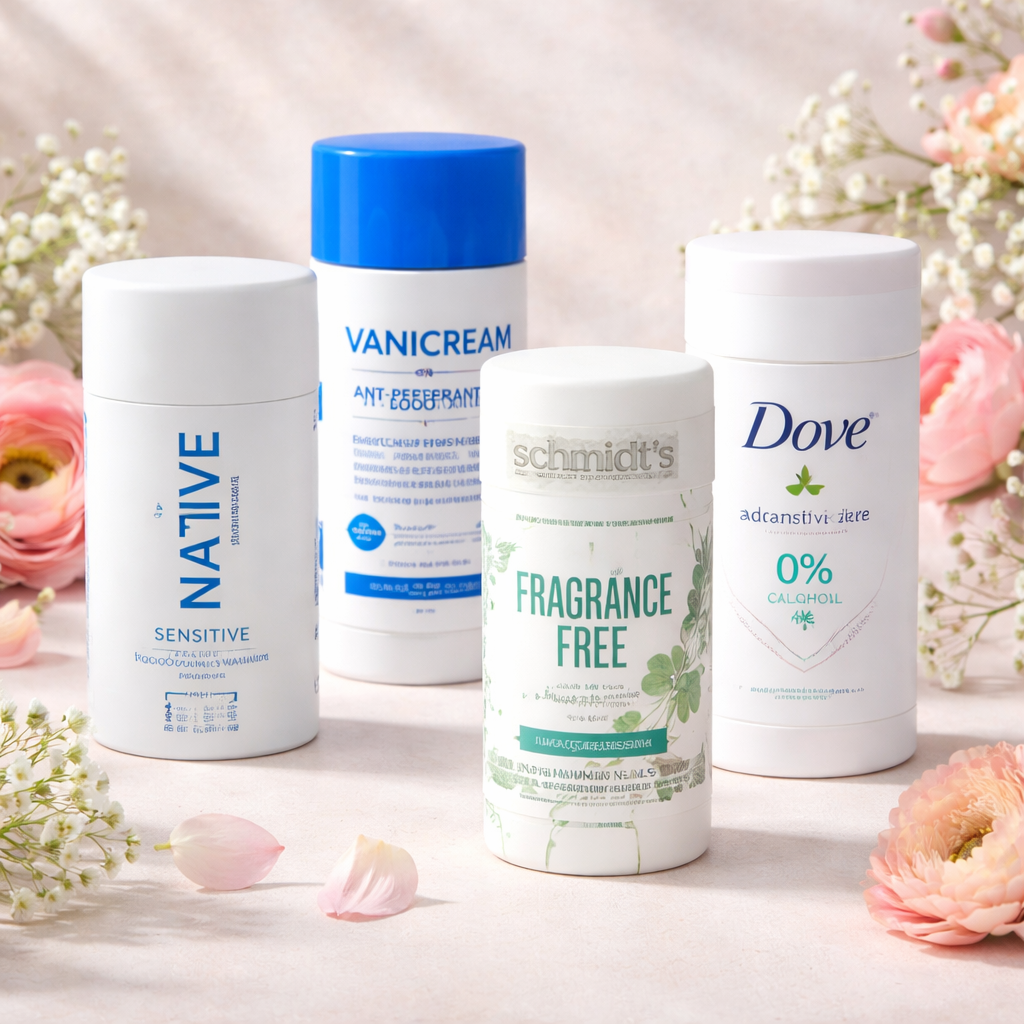
If your underarms sting, itch, or develop redness every time you switch products, you’re not alone. Finding the best deodorant for sensitive skin can feel overwhelming — especially when labels say “natural,” “clinical strength,” or “long-lasting,” but still cause irritation.
Sensitive underarms need more than odor protection. They need balance, soothing ingredients, and formulas that respect your skin barrier. In this guide, we’ll break down how to choose a gentle deodorant, what to avoid, and which options work best for eczema-prone skin, dark underarms, post-shave irritation, and excessive sweating — without causing a rash.
Understanding Sensitive Underarm Skin
Underarm skin is thinner than most areas of your body. It has:
- High sweat gland concentration
- Constant friction
- Regular shaving or waxing
- A delicate microbiome balance
When you apply the wrong formula — especially one with fragrance, alcohol, or baking soda — it can disrupt your skin barrier and lead to redness, itching, and inflammation.
This is why choosing the right deodorant for sensitive underarms matters.
Common Causes of Deodorant Irritation
Many people searching for a deodorant that doesn’t irritate skin are reacting to one of these triggers:
- Baking soda (sodium bicarbonate): Alters pH and can cause burning
- Synthetic fragrance: A common allergen
- Alcohol: Dries and weakens the skin barrier
- Essential oils: Can irritate very sensitive skin
- Aluminum salts: May cause discomfort for some users
If you’ve ever wondered why your armpits itch after applying a new product, these are usually the culprits.
Anti-Perspirant vs Deodorant: Which Is Better for Sensitive Skin?
Many people confuse the two.
- Deodorant controls odor by targeting odor-causing bacteria.
- Antiperspirant blocks sweat glands using aluminum salts.
If you have very reactive skin, a fragrance free deodorant without alcohol is often safer. However, if you experience excessive sweating, a clinical strength deodorant for sensitive skin may help — as long as it’s dermatologist tested and labeled hypoallergenic.
There’s no one-size-fits-all answer. It depends on whether odor control or sweat reduction is your priority.
What to Look for in a Sensitive Skin Deodorant
When shopping for the best deodorant for sensitive skin no rash, look for:
- Fragrance-free formulas
- Hypoallergenic labels
- Magnesium or zinc-based odor control
- Niacinamide or panthenol for soothing
- Ceramides to protect the skin barrier
- Colloidal oatmeal for calming redness
- Alcohol-free formulas
- Non-toxic, cruelty-free claims
These ingredients help prevent inflammation while still offering long-lasting freshness.
Best Deodorants for Sensitive Skin (Curated Picks)
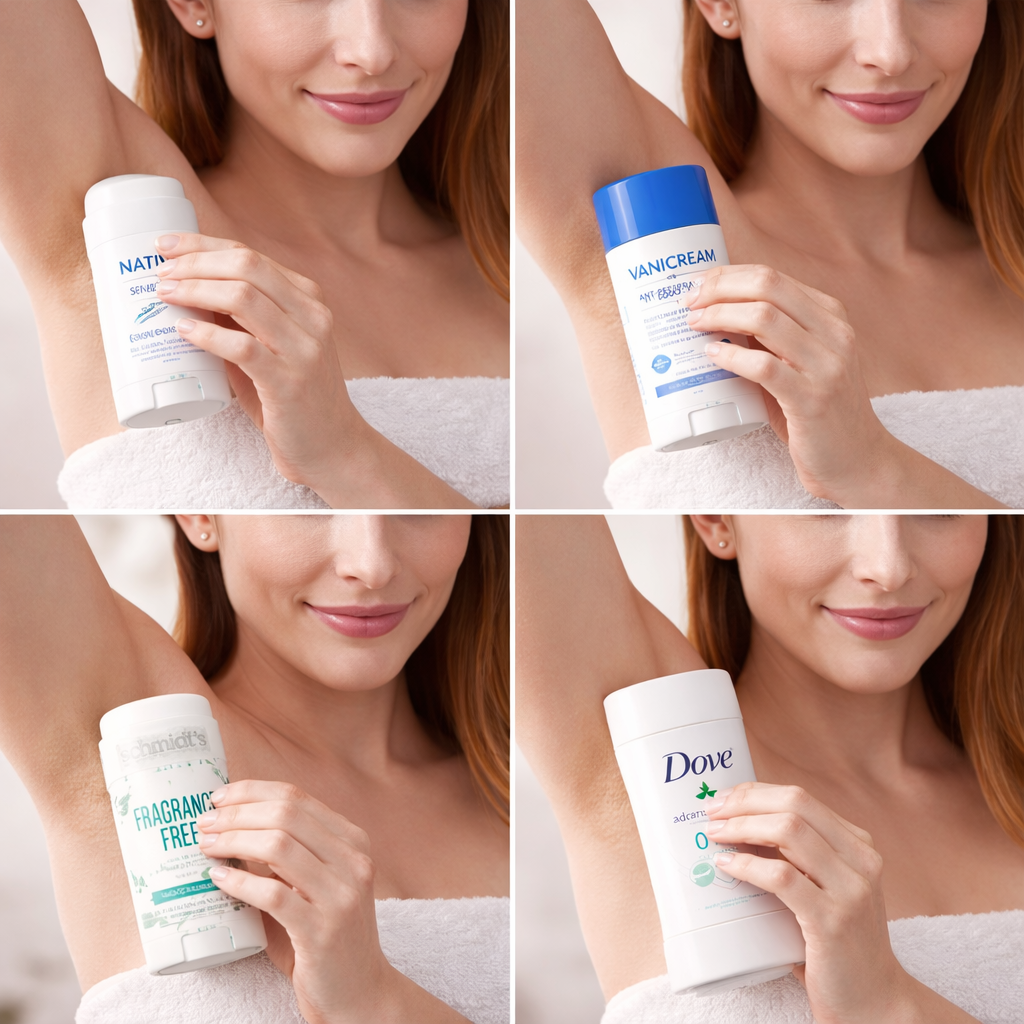
1. Best Overall Gentle Deodorant
Ideal for daily use, this formula combines magnesium and soothing botanicals. It’s a reliable sensitive skin deodorant that controls odor without irritation.
2. Best Aluminum-Free Deodorant for Sensitive Skin
Perfect if you prefer aluminum free deodorant for sensitive skin. Look for zinc oxide or arrowroot powder for moisture absorption.
3. Best Fragrance-Free Deodorant for Women Sensitive Skin
If fragrance triggers irritation, a fragrance free deodorant for women skin is often the safest option.
4. Best Deodorant for Eczema-Prone Skin
For those with eczema or contact dermatitis, choose a hypoallergenic deodorant with colloidal oatmeal or ceramides.
5. Best Clinical Strength for Sweat Control
If you need stronger protection but still want a deodorant for sensitive skin and excessive sweating, choose a dermatologist recommended deodorant labeled for sensitive skin.
Ingredient Deep Dive
Safe Ingredients to Look For
- Zinc oxide
- Magnesium hydroxide
- Niacinamide
- Ceramides
- Colloidal oatmeal
- Panthenol
- Allantoin
- Probiotics
These support microbiome balance and reduce inflammation.
Ingredients to Avoid
- Sodium bicarbonate
- Denatured alcohol
- Synthetic fragrance
- Phthalates
- Strong essential oils
Avoiding these reduces the risk of redness and itching.
Can Deodorant Damage the Skin Barrier?
Yes, it can — especially if used immediately after shaving.
The skin barrier protects against irritation. When disrupted, it leads to dryness, dark underarms, and sensitivity. Switching to a safe deodorant for sensitive skin and allowing recovery time helps restore balance.
Body Care Routine for Sensitive Underarms
- Cleanse gently (avoid harsh soaps)
- Exfoliate once weekly with mild lactic acid
- Moisturize with fragrance-free lotion
- Wait 24 hours after shaving before applying deodorant
- Patch test new products
Following a gentle routine prevents irritation and supports smoother underarms.
Shaving + Deodorant Timing Guide
Applying deodorant immediately after shaving is one of the biggest causes of irritation. For best results:
- Wait at least 12–24 hours
- Avoid alcohol-based formulas
- Choose a deodorant for shaving irritation
This also helps prevent hyperpigmentation.
How to Switch to a New Deodorant Without Irritation
When transitioning to a natural deodorant for sensitive skin:
- Patch test for 48 hours
- Use a thin layer
- Avoid mixing multiple new products
- Give your skin 2–3 weeks to adjust
The “detox” myth is often just your skin adjusting to a new formula.
Frequently Asked Questions
What deodorant is best for very sensitive skin?
Look for fragrance free, hypoallergenic formulas with magnesium or zinc.
Is aluminum bad for sensitive skin?
Not always, but some people find aluminum salts irritating.
Why do natural deodorants cause rash?
Often due to baking soda or essential oils.
Can deodorant cause dark underarms?
Yes, irritation and inflammation can lead to hyperpigmentation.
What’s the best deodorant for eczema and sensitive skin?
Choose dermatologist tested, fragrance-free options with soothing ingredients.
Final Thoughts
Finding the best deodorant for sensitive skin isn’t about picking the strongest formula — it’s about choosing one that respects your skin barrier while controlling odor.
Whether you need a deodorant without irritation for daily use, a fragrance free option, or a formula for eczema-prone skin, focus on soothing ingredients and gentle application habits.
Your underarms deserve the same care as your face — and once you find the right match, irritation becomes a thing of the past.