

Contouring is one of the most talked-about techniques in modern beauty routines. If you’ve ever wondered what contour makeup is and why so many makeup artists use it, the answer is surprisingly simple.
Contour makeup is a technique that uses darker shades to create shadows and define facial features. By strategically placing contour products on certain areas of the face, you can enhance cheekbones, sharpen the jawline, and add dimension to your overall makeup look.
Whether you want a subtle everyday sculpt or a dramatic evening makeup style, learning how contouring makeup works can completely transform how your face appears in photos and real life.
Understanding the Basics of Contouring
To understand contour makeup, it helps to think about light and shadow.
Our faces naturally have areas that catch light and areas that fall into shadow. Makeup artists recreate this effect by applying:
- Darker tones to add shadow
- Lighter tones or highlights to bring features forward
This technique helps sculpt the face and create a more defined structure.
For example, applying contour beneath the cheekbones creates the illusion of higher cheekbones, while contouring the jawline can make the face appear slimmer.
This is why face contour makeup is often used in professional photography and red-carpet beauty looks.
What Is Contour Makeup and How It Works
At its core, contouring makeup is about enhancing your natural bone structure.
Instead of changing your face completely, contour makeup works by creating the illusion of depth. This makes facial features appear more sculpted and balanced.
When done correctly, contour makeup can:
- define cheekbones
- slim the appearance of the nose
- sharpen the jawline
- add depth to flat facial areas
The key is choosing a cool-toned contour shade that mimics natural shadows rather than warmth.
Benefits of Using Contour Makeup
Many beauty enthusiasts include contouring in their makeup routine because of the subtle yet powerful difference it creates.
Some of the biggest benefits include:
Enhances Facial Structure
Contouring helps emphasize natural bone structure and adds definition to the face.
Creates Dimension
Foundation alone can make the face look flat. Contouring restores depth and shadow.
Improves Makeup Balance
Contour makeup helps balance facial proportions by highlighting strong features.
Adds Professional Finish
Even a light contour can make everyday makeup look more polished.
Different Types of Contour Products
Not all contour products are the same. Choosing the right one depends on your skin type and makeup preference.
Cream Contour
Cream contour formulas blend smoothly into the skin and create a natural finish. They are especially popular for dewy makeup looks.
Powder Contour
Powder contour products are lightweight and ideal for oily or combination skin.
Liquid Contour
Liquid formulas provide buildable coverage and work well for dramatic contour makeup styles.
Contour Sticks
Contour sticks are beginner-friendly and easy to apply directly onto the skin before blending.
Essential Tools for Contouring
The right tools make a big difference when applying contour makeup.
Here are some of the most commonly used tools:
- angled contour brush
- beauty sponge
- blending brush
These tools help blend contour products seamlessly into foundation.
Best Contour Shades for Different Skin Tones
Choosing the right contour shade is essential for a natural look.
Fair Skin
Use light taupe or soft grey-brown contour shades.
Medium Skin
Cool brown contour tones work best for defining cheekbones.
Deep Skin
Richer chocolate-brown shades create natural shadow effects.
The goal is always to choose a shade that looks like a natural shadow rather than a bronzer.
Where to Apply Contour on the Face
Knowing where to apply contour on the face is just as important as choosing the right product.
Common contour areas include:
- under the cheekbones
- sides of the nose
- along the jawline
- near the hairline on the forehead
These placements create the illusion of a sculpted face.
Beginner Contour Makeup Routine
If you’re new to contouring, follow this simple routine.
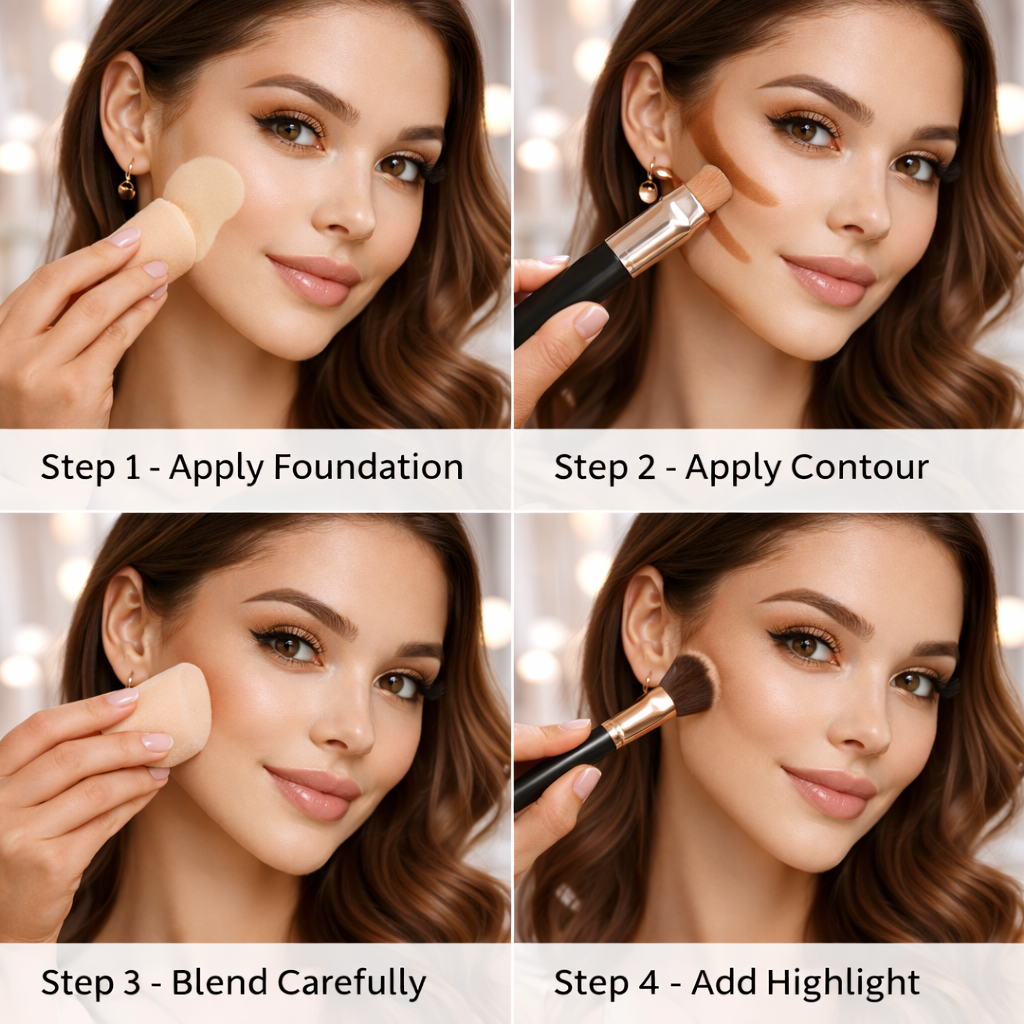
Step 1 – Apply Foundation
Start with your regular foundation and concealer.
Step 2 – Apply Contour
Use a contour stick or brush to apply contour beneath cheekbones, jawline, and forehead edges.
Step 3 – Blend Carefully
Blend the contour upward using a sponge or blending brush.
Step 4 – Add Highlight
Apply highlight to the high points of the face for balance.
Blending is the most important step in contour makeup tutorials for beginners.
Advanced Contouring Techniques
Once you master basic contouring, you can try more advanced techniques.
Nose Contour
Applying contour along the sides of the nose can create a slimmer appearance.
Jawline Contour
Adding contour beneath the jawline enhances facial definition.
Forehead Contour
Applying contour near the hairline can shorten a tall forehead.
These techniques are often used in professional makeup artistry.
Cream vs Powder Contour
Both product types create beautiful results, but they work differently.
| Cream Contour | Powder Contour |
|---|---|
| creamy texture | matte finish |
| easy to blend | lightweight feel |
| ideal for dry skin | good for oily skin |
Many beginners prefer powder contour because it is easier to control.
Contour vs Bronzer Explained
Many people confuse contour and bronzer, but they serve different purposes.
| Contour | Bronzer |
|---|---|
| creates shadows | adds warmth |
| cool toned | warm toned |
| defines features | gives sun-kissed glow |
Using both together can create a balanced and radiant makeup look.
Mistakes That Ruin Contour Makeup
Even experienced makeup lovers sometimes make contouring mistakes.
Common mistakes include:
- using a shade that is too dark
- applying contour in the wrong placement
- not blending enough
- contouring every face shape the same way
Avoiding these mistakes helps contour look natural rather than harsh.
Quick Contouring Tips for Natural Makeup
If you prefer subtle everyday makeup, try these simple tips:
- start with a small amount of product
- blend upward toward the temples
- use natural lighting when applying makeup
- choose cool toned contour shades
These small techniques can make contouring makeup look effortless and natural.
FAQ – Contour Makeup Questions
What does contour do in makeup?
Contour creates shadows on the face to define features like cheekbones and jawlines.
Can beginners use contour makeup?
Yes. Beginners can start with light powder contour and blend carefully.
What shade should contour be?
Contour shades should be slightly darker than your skin tone with cool undertones.
Do you apply contour before or after foundation?
Contour is usually applied after foundation but before highlight and blush.
Conclusion
Contour makeup may seem intimidating at first, but once you understand the basics, it becomes a simple way to enhance your natural features. By choosing the right contour products, using proper blending tools, and applying contour in the correct areas, you can create a beautifully sculpted makeup look that still feels natural.
With practice, contouring makeup techniques can easily become part of your everyday beauty routine.