
Many people notice that their hair feels thinner over time. The part line may look wider, ponytails feel smaller, and styling becomes harder. If you’re wondering how to increase hair density, the good news is that several habits and treatments can help support thicker-looking hair.
Hair density depends on the health of your hair follicles, your scalp condition, and your overall lifestyle. Improving nutrition, protecting hair strands from damage, and using the right hair care routine can all help improve hair growth and fullness.
In this guide, you’ll learn realistic methods to increase hair density naturally, strengthen hair follicles, and support healthier hair over time.
What Hair Density Actually Means
Hair density refers to the number of hair strands growing on your scalp per square inch. The more strands growing in a specific area, the fuller your hair appears.
Many people confuse hair density with hair thickness or hair volume, but they are different:
- Hair density – number of follicles growing hair
- Hair thickness – width of each individual hair strand
- Hair volume – how full hair looks when styled
Someone can have thick strands but low density, which makes hair appear flat. Understanding this difference helps you focus on improving the health of hair follicles and scalp circulation rather than only styling tricks.
Signs Your Hair Density May Be Decreasing
Hair density changes gradually, so it’s not always obvious at first. Some common signs include:
- A wider hair part line when you style your hair
- A ponytail that feels thinner than before
- Visible scalp under bright light
- Increased hair shedding in the shower or on brushes
- Hair that looks flat even after styling
If you notice these signs, focusing on scalp health, nutrition, and gentle hair care can help support stronger hair growth.
Why Hair Density Decreases
Several factors can affect hair follicles and reduce density over time.
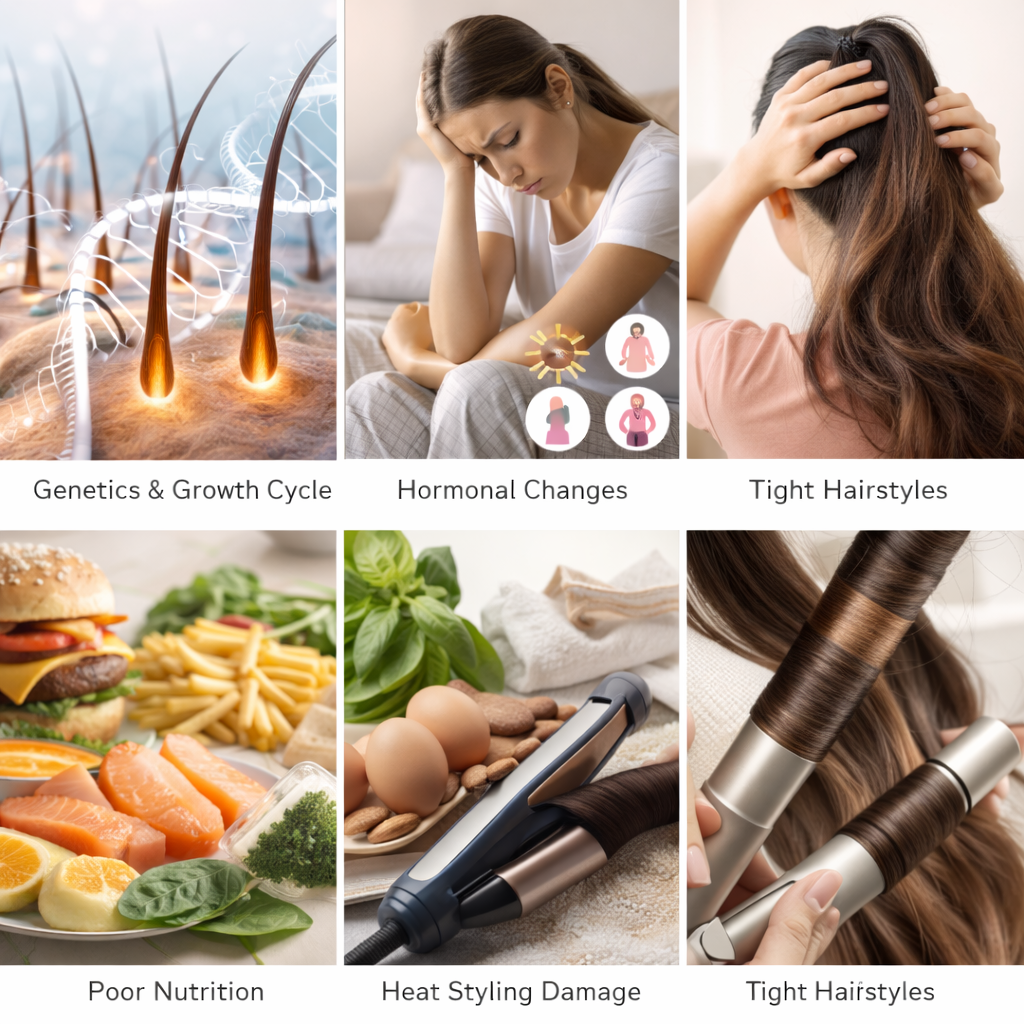
Genetics and Hair Growth Cycles
Your genes influence how many hair follicles grow on your scalp and how long each hair stays in its growth phase.
Hormonal Changes
Hormonal shifts from stress, aging, pregnancy, or medical conditions may affect hair growth and contribute to hair thinning.
Poor Nutrition
Hair follicles rely on nutrients like protein, iron, biotin, and omega-3 fatty acids. Without them, hair growth may slow down.
Heat Styling and Chemical Damage
Frequent heat tools, bleaching, or harsh treatments weaken hair strands and may lead to breakage that makes hair look less dense.
Tight Hairstyles
Constant tension from ponytails, braids, or buns can stress hair follicles and lead to thinning around the hairline.
Proven Ways to Improve Hair Density
Improve Scalp Health for Stronger Follicles
Healthy hair begins with a healthy scalp. When the scalp is nourished and circulation improves, hair follicles receive more oxygen and nutrients.
Helpful habits include:
- gentle scalp exfoliation
- regular scalp massage
- hydrating scalp treatments
A simple tool can help stimulate circulation during washing.
Using a scalp massager while shampooing can help stimulate hair follicles and distribute products evenly.
Eat a Nutrient-Rich Diet That Supports Hair Growth
Your diet plays a major role in healthy hair growth and hair density. Hair is primarily made of protein, so consuming enough protein supports stronger strands.
Foods that support hair growth include:
- eggs (rich in biotin and protein)
- spinach (iron and folate)
- nuts and seeds (omega-3 fatty acids)
- salmon (healthy fats and protein)
A balanced diet helps nourish the scalp and improve overall hair follicle health.
Use Hair Growth Serums and Strengthening Treatments
Hair growth serums often contain ingredients that support hair follicles and reduce breakage. Many formulas include peptides, caffeine, or botanical extracts that nourish the scalp.
Consistent use of growth treatments can support stronger hair strands and help improve the appearance of fuller hair.
Try Regular Scalp Massage to Stimulate Hair Follicles
Scalp massage improves blood circulation and may encourage hair follicles to remain active.
Research suggests that daily massage may help support hair thickness by stimulating the scalp and increasing nutrient flow.
You can massage the scalp with fingertips or a gentle brush.
Reduce Heat Styling and Harsh Chemical Treatments
Frequent heat styling weakens the hair structure and leads to breakage. Even if hair follicles are healthy, damaged strands make hair look less dense.
Tips for reducing damage:
- use heat protectant sprays
- limit blow dryers and curling irons
- avoid frequent bleaching or chemical treatments
Protecting hair strands allows them to grow longer and maintain volume.
Use Natural Oils Known to Support Thicker Hair
Certain natural oils are commonly used in hair care routines because they nourish the scalp and help protect hair strands.
Popular oils include:
- rosemary oil
- castor oil
- coconut oil
Rosemary oil is widely known for supporting scalp health and promoting stronger hair growth when used regularly.
Reduce Stress and Improve Sleep Habits
High stress levels can trigger hair shedding. Stress hormones affect the hair growth cycle and push hair follicles into the resting phase.
Managing stress with:
- regular exercise
- meditation
- proper sleep
can help support healthier hair growth.
Choose Gentle Hair Products That Protect Hair Strands
Using gentle products can reduce breakage and maintain hair health.
Look for:
- sulfate-free shampoos
- volumizing shampoos
- lightweight conditioners
These products help maintain hair health while supporting a fuller appearance.
Hair Tools That Can Help Increase Hair Density
Hair care tools can improve your routine and help protect hair strands.
Helpful tools include:
- Scalp massager – improves circulation
- Derma roller for scalp – may stimulate hair follicles
- Microfiber hair towel – reduces friction and breakage
Using gentle tools prevents unnecessary damage and helps support healthy hair growth.
Daily Hair Care Routine for Fuller Hair
A consistent routine can make a noticeable difference in hair health.
Morning routine:
- brush gently with a wide-tooth comb
- apply lightweight hair serum
- avoid tight hairstyles
Night routine:
- braid hair loosely
- sleep on a smooth pillowcase
- avoid sleeping with wet hair
Silk pillowcases reduce friction and help prevent hair breakage during sleep.
Mistakes That Reduce Hair Density
Some everyday habits unintentionally damage hair and reduce density.
Common mistakes include:
- overwashing hair with harsh shampoos
- tight ponytails or braids
- excessive heat styling
- skipping scalp care
- brushing wet hair aggressively
Avoiding these habits helps protect hair follicles and maintain stronger strands.
When to Consider Professional Hair Treatments
If natural methods are not enough, dermatologists may recommend treatments such as:
- Minoxidil treatments that stimulate hair follicles
- PRP therapy using platelet-rich plasma
- Laser hair therapy that encourages follicle activity
These treatments should always be discussed with a qualified professional.
How Long It Takes to See Results
Hair growth takes time because hair follicles follow natural growth cycles.
Typical timeline:
- 4–8 weeks: improved scalp health
- 3 months: reduced hair shedding
- 6 months: visible improvement in hair fullness
Consistency with your hair care routine is the most important factor.
Final Thoughts
Improving hair density takes patience and consistent care. If you’re wondering how to increase hair density, focusing on scalp health, eating a balanced diet, and protecting hair from damage can help support stronger, fuller hair growth over time.
Small daily habits—like scalp massage, gentle styling, and nourishing treatments—can make a significant difference over time. When combined with the right products and healthy routines, these steps help create the conditions for thicker, healthier hair.