
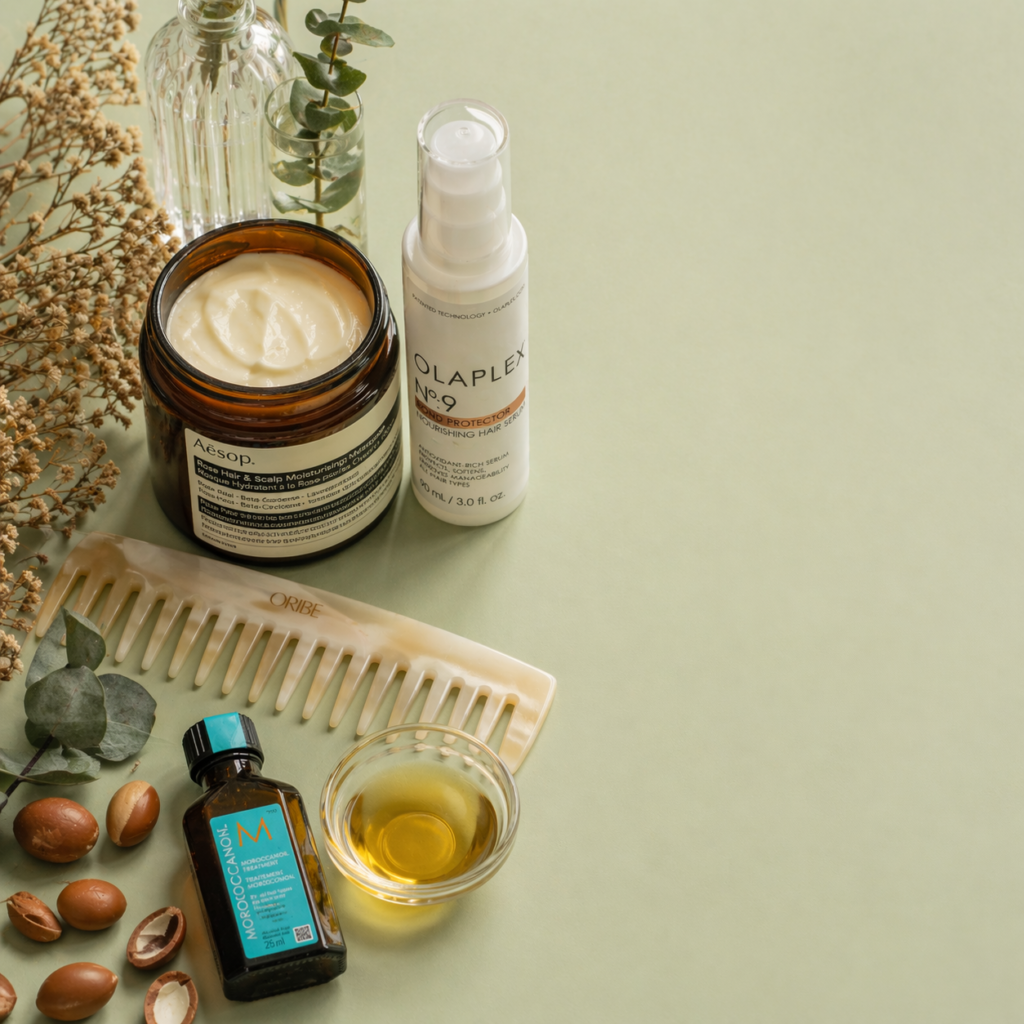
Here’s the deal, your hair is basically screaming for help, and most people are throwing the wrong products at it. Damaged hair treatment isn’t a one-size fix. Because of this, I spent weeks researching exactly what broken cuticles, snapped bonds, and fried strands actually need at the molecular level. The Briogeo Don’t Despair, Repair! Deep Conditioning Mask is one product I keep recommending as a solid starting point. However, the real results come from understanding why your hair breaks down in the first place, and fixing the process, not just the symptom.
How Damaged Hair Treatment Works
Let’s look at the chemistry, because hair damage isn’t just cosmetic. Each strand has three layers: the medulla at the core, the cortex in the middle, and the cuticle on the outside. When heat, chemicals, or friction attack your hair, those cuticle scales lift and the cortex proteins, called keratin, literally break down.
Here’s why that matters follicle to tip. Once the disulfide bonds in your cortex snap, your hair loses elasticity and strength. As a result, it snaps when you stretch it, frizzes in humidity, and refuses to hold a style. That’s not a moisture problem, that’s a structural one.
Bond-repair ingredients like bis-aminopropyl diglycol dimaleate (that’s the Olaplex active) work by relinking those broken bonds inside the cortex. In addition, ceramides fill gaps in lifted cuticles to restore the smooth outer surface. This means that a real damaged hair treatment protocol targets both layers simultaneously, not just slapping on conditioner and hoping for the best.
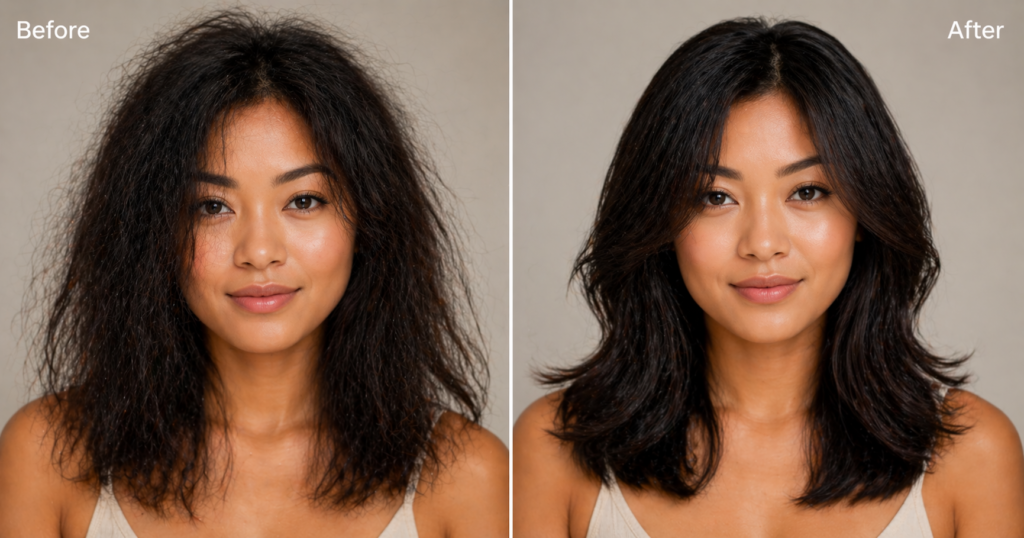
Before and After: What to Expect
| Feature | Before (Common Mistake) | After (Optimized Approach) |
|---|---|---|
| Product choice | Regular conditioner used as a treatment mask | Bond-repair serum layered under a protein-rich deep conditioner |
| Application method | Piled on roots to ends in one go | Applied mid-length to ends first, roots last or avoided entirely |
| Heat use | Blow-drying damaged hair daily without protectant | Air-drying 80% then diffusing on low heat with protectant applied beforehand |
| Frequency of treatment | Deep conditioning once a month when hair “feels bad” | Weekly bond repair plus bi-weekly protein treatment on a consistent schedule |
| Protein balance | Layering protein treatments back-to-back, causing brittleness | Alternating protein and moisture treatments based on hair porosity test results |
| Trimming strategy | Skipping trims hoping hair will “recover” | Trimming every 8 weeks to remove split ends before they travel up the shaft |
| Result | Hair stays brittle, dull, and breaks off at the ends | Visible elasticity returns within 2 to 4 weeks of consistent treatment |
The Protocol
Follow this sequence consistently, the order matters as much as the products.
- First, do the strand test. Wet a single strand and stretch it gently. If it snaps immediately with no stretch, you need protein. If it stretches and never snaps back, you need moisture. This tells you exactly where to start.
- Next, apply a bond-repair treatment to soaking-wet hair. Work it from mid-length to ends before you shampoo. Leave it on for 10 minutes — bond repair needs damp, porous hair to penetrate properly.
- Then shampoo with a sulfate-free, low-pH formula. pH matters here because a low-pH shampoo (around 4.5 to 5.5) helps close the cuticle after treatment. Most clarifying shampoos are far too alkaline for damaged hair.
- Next, apply your deep conditioner with heat. Use the heated thermal hair cap for deep conditioning for 20 to 30 minutes, the gentle heat opens the cuticle slightly so ingredients absorb deeper into the cortex. Rinse with cool water to seal everything back down.
- Apply a leave-in protectant before any heat styling. Look for ingredients like hydrolyzed keratin, panthenol, and silicone-free film-formers. Finally, limit heat tools to twice a week maximum while you’re in active repair mode.
Drugstore Gems vs. Salon Standards
| Feature | Drugstore Pick | Salon Professional |
|---|---|---|
| Bond repair active | Maleic acid (found in Aussie, Pantene Bond Repair line) | Bis-aminopropyl diglycol dimaleate — full Olaplex chemistry |
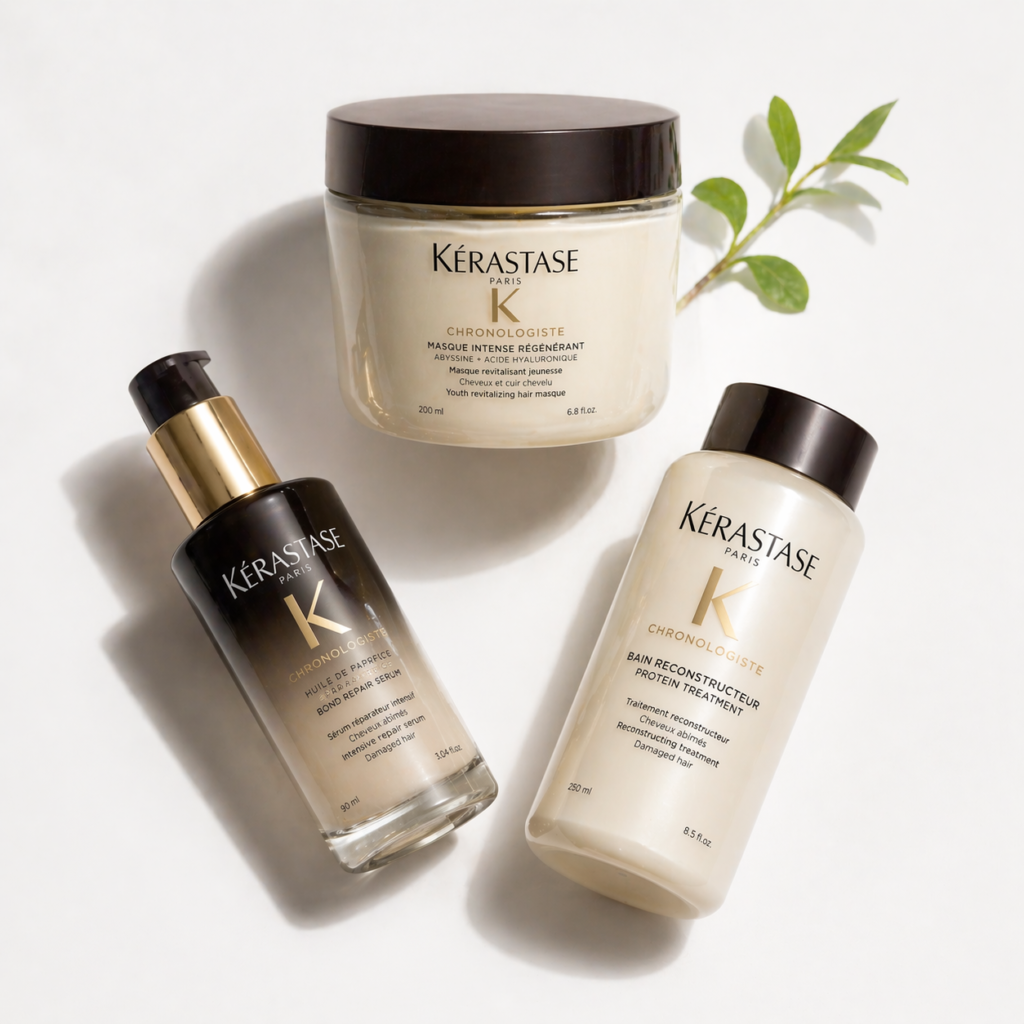
| Deep conditioner | SheaMoisture Manuka Honey & Mafura Oil Intensive Hydration Masque | Kerastase Nutritive Masquintense for thick dry hair |
| Protein treatment | Aphogee Two-Step Protein Treatment — surprisingly professional-grade | Redken Acidic Bonding Concentrate Intensive Treatment |
| Leave-in conditioner | Cantu Shea Butter Leave-In Conditioning Repair Cream | Pureology Strength Cure Fabulous Lengths Spray |
| Price range per treatment | $8 to $18 per product | $28 to $65 per product |
| Effectiveness on severe damage | Good for maintenance and mild to moderate damage | Faster, more measurable results on chemically or heat-damaged hair |
Porosity Check Sidebar
How to Know Your Hair Porosity in 2 Minutes
Drop a clean, shed strand into a glass of room-temperature water. If it sinks fast — you have high porosity (damaged, lifted cuticles). If it floats — you have low porosity (cuticles are tight). High-porosity hair needs protein plus heavy sealants. Low-porosity hair needs light, water-based products and heat to open the cuticle for absorption.
Frequently Asked Questions
How long does damaged hair treatment actually take to work?
Here’s the honest answer, you’ll feel a difference after one session, but real structural repair takes 4 to 6 weeks of consistent weekly treatment. Most people see visible shine and reduced breakage around week two. However, if your damage is severe from bleaching or heat abuse, expect a full 8 to 12-week protocol before elasticity fully returns.
Can I do a protein treatment and deep condition on the same day?
Yes, in fact, that’s exactly the right approach. Apply the bond-repair or protein treatment first on wet hair before shampooing. Then follow with your moisture-rich deep conditioner after rinsing. This means you address structural repair first and seal everything with hydration second, which prevents the stiffness that protein-only treatments sometimes cause.
Is it possible to fully reverse heat damage at home?
Partially, yes, but there’s a ceiling. Bond-repair treatments can restore strength and elasticity to heat-damaged hair significantly. However, if the cortex is completely fractured, think white dots on the strand, which signal breakage points, those sections need to be trimmed. As a result, trimming while treating is the most effective combination for severe cases.
What’s the difference between damaged hair and dry hair?
This is a really common mix-up. Dry hair lacks moisture, you fix it with humectants like glycerin and aloe. Damaged hair has broken protein bonds and lifted cuticles, moisture alone won’t fix that. In other words, damaged hair is almost always dry, but dry hair isn’t always damaged. Your strand stretch test tells you which problem you’re actually dealing with.
The Amber Verdict
Damaged hair treatment works when you stop treating all damage the same way, heat damage, chemical damage, and mechanical damage each need a slightly different approach, and the order of your steps matters enormously. My honest recommendation is to start with a porosity check, commit to a bond-repair plus deep-condition weekly rotation for six weeks, and trim the ends so you’re not trying to repair what’s already gone. Pin this so you actually come back to it when you’re standing in the hair care aisle confused, I promise it saves time.