
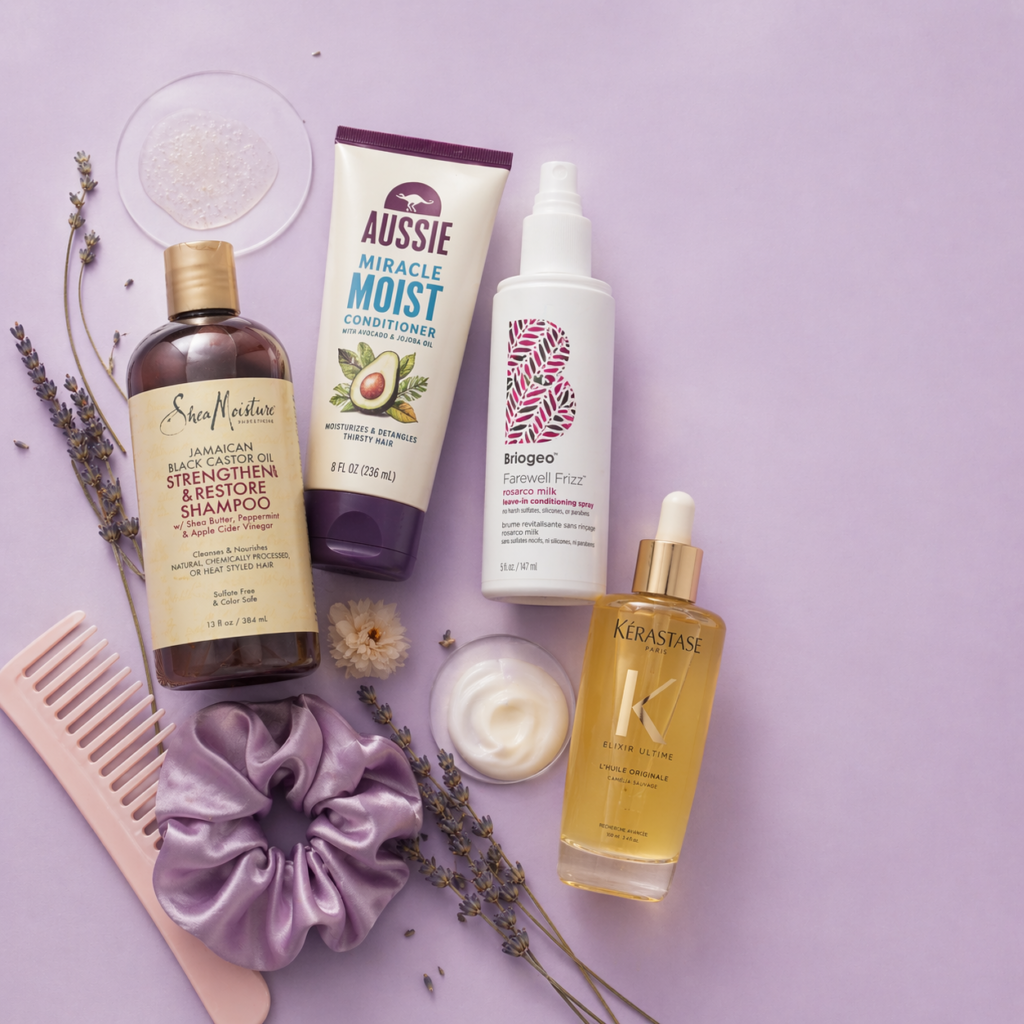
Here’s the deal, most people are running a hair care routine built on habit, not science, and their strands are paying the price. I spent way too many evenings researching trichology studies so you don’t have to. A proper hair care routine isn’t about using more products. It’s about using the right ones in the right order, consistently. My current non-negotiable is the briogeo farewell frizz rosarco milk leave-in conditioning spray, lightweight, science-backed, and actually delivers from follicle to tip. Let’s build your routine properly.
How Hair Care Works
Your hair shaft is a protein structure wrapped in a cuticle layer, think of it like roof tiles on a house. When those tiles lift, moisture escapes, and you get frizz, breakage, and dullness. Because of this, every step in your routine needs to either protect that cuticle or repair it.
Hair growth happens at the follicle, buried in your scalp. However, most people focus only on the ends and completely ignore scalp health. This means that poor scalp circulation and product buildup can slow growth before a strand even sees daylight, follicle to tip health starts underground.
Furthermore, your hair’s porosity determines how well it absorbs and retains moisture. High porosity hair soaks up products fast but loses hydration quickly. In contrast, low porosity hair resists products but holds moisture well once it gets in. That distinction changes everything about how you build your routine.
The Porosity Check Sidebar
Quick Porosity Test: Drop a clean, dry strand into a glass of room-temperature water and wait four minutes.
- Sinks fast — High porosity. Use heavier creams and sealants.
- Floats in the middle — Normal porosity. Most routines work for you.
- Floats on top — Low porosity. Use heat with deep treatments and lightweight liquids.
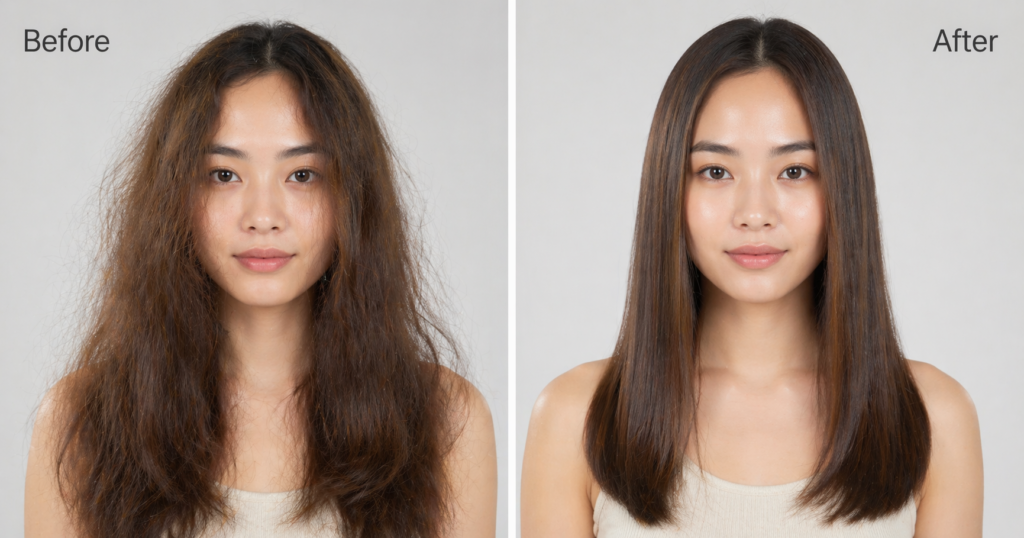
Before and After: What to Expect
| Feature | Before (Common Mistake) | After (Optimized Approach) |
|---|---|---|
| Shampooing method | Scrubbing all over in circular frenzy, drying out the scalp | Massaging only the scalp with fingertips, letting suds rinse the lengths |
| Conditioner placement | Applied root to tip, weighing down the scalp | Applied mid-shaft to ends only, where hair is driest |
| Product order | Random application with no layering logic | Water, leave-in, cream, oil, always lightest to heaviest |
| Wash frequency | Daily washing strips natural sebum and disrupts scalp microbiome | 2 to 3 times per week matched to your scalp type and porosity |
| Heat protection | Skipped entirely or applied to already-dry hair | Applied to damp hair before any heat tool touches the strand |
| Deep conditioning | Never done, or done randomly with no timing | Weekly for high porosity, bi-weekly for normal, monthly for low porosity |
The Protocol
1. First, clarify your scalp once a month.
Use a clarifying shampoo to strip silicone and mineral buildup. Most people skip this step and wonder why their other products stop working. Buildup blocks every single ingredient that comes after it.
2. Next, shampoo the scalp only — twice.
Lather only your scalp on the first wash and rinse fully. Then repeat with a second, shorter lather. This double-cleanse method is standard in professional salons and gets the scalp genuinely clean without over-stripping the lengths.
3. Then, deep condition with heat every week.
Apply your deep conditioner after shampooing and use the rechargeable thermal heat cap for deep conditioning for 20 to 30 minutes. Heat opens the cuticle and lets ingredients penetrate instead of sitting on top. This is especially important if you tested as high porosity.
4. Apply leave-in while hair is soaking wet.
Section your hair and work the leave-in through each section while water is still dripping. In other words, don’t towel dry first, that water is part of the formula. The moisture gets sealed in by the products you layer on top.
5. Finally, seal with an oil appropriate for your porosity.
High porosity hair needs heavier oils like castor or avocado to lock moisture in. Low porosity hair does better with lighter oils like argan or jojoba. Therefore, your porosity test result directly picks your oil, not the marketing on the bottle.
Drugstore Gems vs. Salon Standards
| Feature | Drugstore Pick | Salon Professional |
|---|---|---|
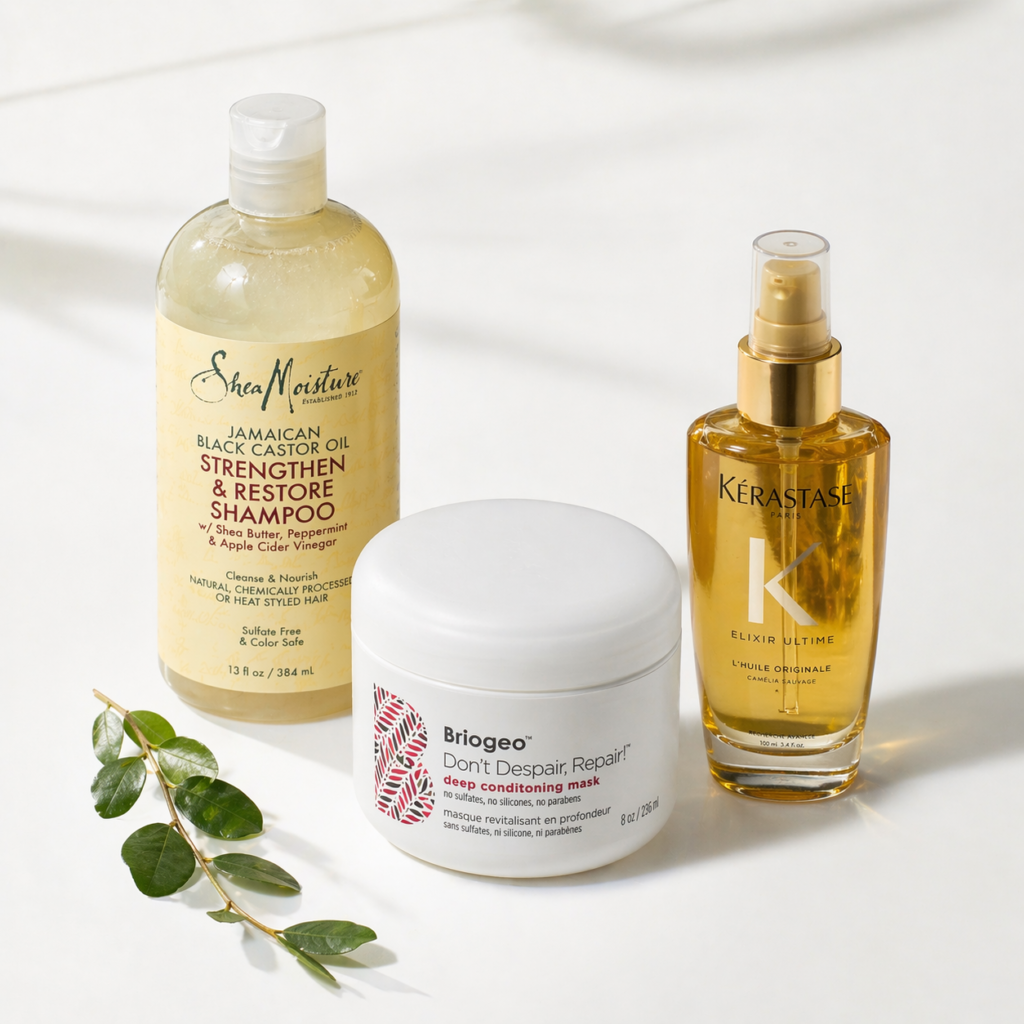
| Shampoo | SheaMoisture Jamaican Black Castor Oil Shampoo, sulfate-free, accessible, great for dryness | Kérastase Bain Nutri-Thermique, thermally active formula, penetrates deeper on coarse textures |
| Conditioner | Aussie Miracle Moist, rinse-out, affordable, decent slip for detangling | Redken All Soft Mega Curls Conditioner, ceramide-rich, longer-lasting softness |
| Deep treatment | Mielle Organics Babassu Oil Conditioning Sulfate-Free Shampoo deep mask, budget hero for naturals | Olaplex No. 8 Bond Intense Moisture Mask, repairs disulfide bonds, not just surface moisture |
| Leave-in | Cantu Shea Butter Leave-In Conditioning Repair Cream, thick, affordable for high porosity | Davines MOMO Moisturizing Mousse, lightweight, works across all porosity types |
| Scalp treatment | Nizoral Anti-Dandruff Shampoo, pharmacy staple for scalp health | Kérastase Specifique Bain Divalent, regulates sebum production at the follicle |
Frequently Asked Questions
How often should I wash my hair?
Most people wash too often. As a result, the scalp overproduces oil to compensate for constant stripping. For fine hair, 3 times a week works well. For thick or coarse textures, 1 to 2 times is usually enough. However, sweating heavily daily changes the equation, scalp hygiene always comes first.
Does the order of hair products actually matter?
Yes, and significantly. Because lighter products can’t penetrate through heavier ones, you always apply in order from thinnest to thickest. Water first, then leave-in, then cream, then oil. In other words, think of each layer as a vehicle delivering the next one deeper into the shaft.
Can I fix heat damage with the right routine?
Here’s the honest answer, you can’t fully reverse heat damage because it permanently alters the protein structure. However, a consistent hair care routine with bond-building treatments and deep conditioning can dramatically improve elasticity and reduce future breakage. Trim the worst damage and protect aggressively going forward.
Why does my hair look great after washing but terrible the next day?
This usually signals a sealing problem. Therefore, check whether your final step is actually locking moisture in. High porosity hair loses water overnight. Furthermore, cotton pillowcases create friction and pull moisture out. Swap to satin or silk and try applying a light oil on day two to refresh without rewashing.
The Amber Verdict
A smart hair care routine isn’t complicated, it’s strategic, and the strategy comes from understanding your own hair’s biology. Once you know your porosity and stop guessing at products, the results stack up faster than you’d expect. Pin this so you have the full protocol exactly when you need it.