
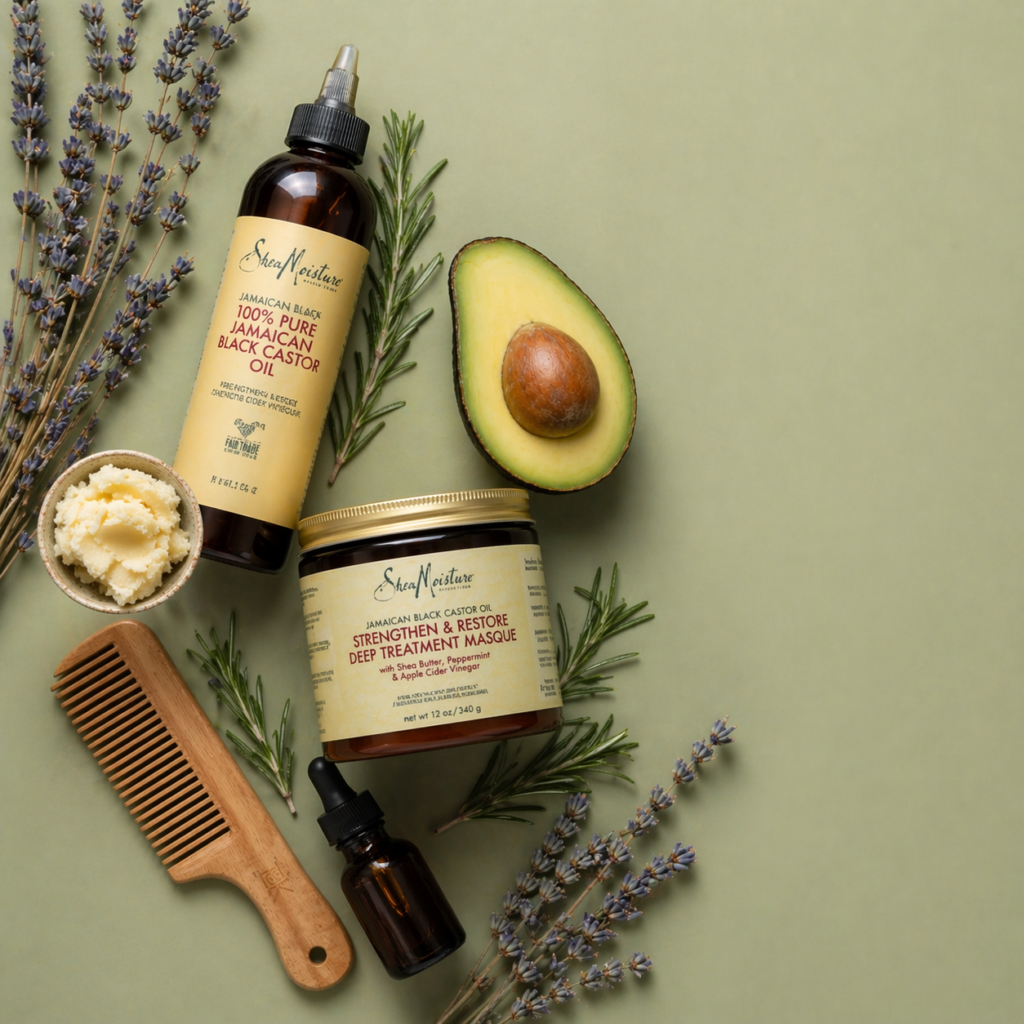
Here’s the deal, most “natural” hair care labels are lying to you, and your hair is paying the price. I spent months cross-referencing ingredient lists, peer-reviewed studies on plant-derived actives, and trichologist interviews so you don’t have to. If you’re ready to build a real routine using natural hair care products that actually hold up to science, this is where you start. My current hero product is the SheaMoisture 100% pure jamaican black castor oil for hair and scalp, and it earns its spot every single time. Because of this, I’m leading with it, and building everything else around what the research actually says.
How Natural Hair Care Works
Let’s look at the chemistry. Plant-derived ingredients like castor oil, aloe vera, and marshmallow root work because they contain fatty acids, polysaccharides, and humectants that mirror your hair’s own lipid structure. In other words, they’re not just gentle, they’re structurally compatible with the keratin in your strands.
Furthermore, many synthetic sulfates strip the hair’s cuticle by raising its pH above 5.5. Natural alternatives like apple cider vinegar rinses and saponin-based cleansers keep your scalp’s acid mantle intact. This means that follicle to tip, your hair retains moisture instead of fighting to get it back.
However, “natural” doesn’t automatically mean effective. Concentration matters enormously, a product with rosemary oil listed tenth on the label delivers a fraction of the benefit seen in clinical studies using 2% rosemary extract concentrations. Therefore, reading past the marketing claims is the single most important skill you can develop.
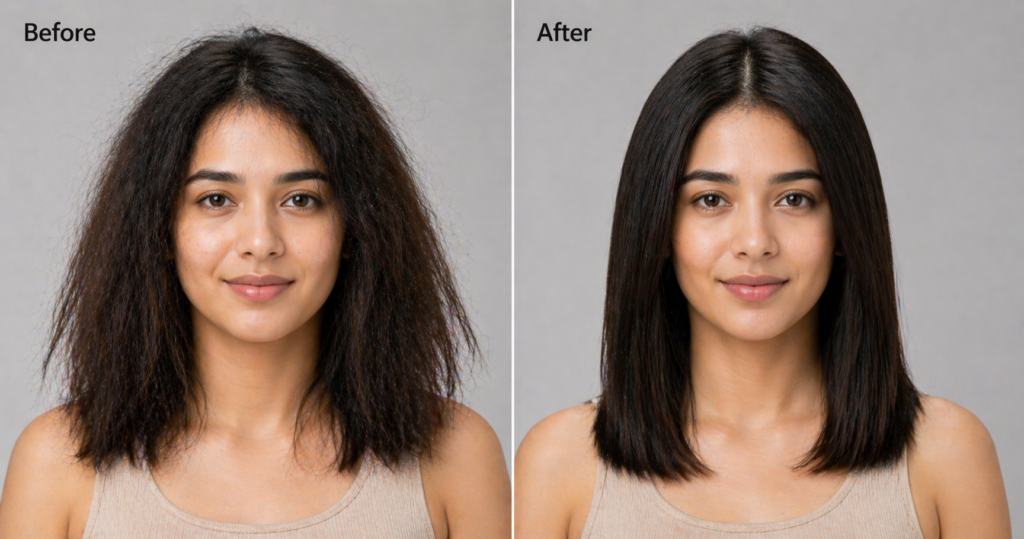
Before and After: What to Expect
| Feature | Before (Common Mistake) | After (Optimized Approach) |
|---|---|---|
| Cleanser choice | Sulfate-heavy shampoo with synthetic fragrance | pH-balanced co-wash or saponin cleanser with no synthetic sulfates |
| Moisture method | Applying conditioner only to mid-lengths, rinsing immediately | Finger-detangling conditioner through ends, leaving on 5 minutes minimum |
| Scalp treatment | Skipping scalp care entirely, focusing only on strands | Weekly rosemary or peppermint oil scalp massage to stimulate follicle circulation |
| Product ingredients | Buying “natural” labels with mineral oil and silicones buried in the list | Checking INCI list for plant-derived actives in top 5 ingredients |
| Frequency | Daily washing that strips natural sebum and disrupts microbiome | Washing 1 to 2 times weekly, adjusting by porosity and activity level |
| Result | Chronic dryness, breakage at the crown, and dull, limp strands | Improved elasticity, reduced breakage, and visible shine within 4 to 6 weeks |
The Protocol
Here’s a four-step weekly routine built around natural hair care products with proven active concentrations. Follow it consistently for at least six weeks before evaluating results.
- First, clarify your scalp — not just your hair. Use a sulfate-free, saponin-based shampoo and focus the product directly on your scalp, massaging in small circular motions for 90 seconds. This loosens buildup without stripping your acid mantle.
- Next, condition with intention. Apply a slip-heavy conditioner from ears to ends, using a wide-tooth comb to detangle in sections. Leave it on for a minimum of five minutes, your cuticles need that time to absorb the fatty acids.
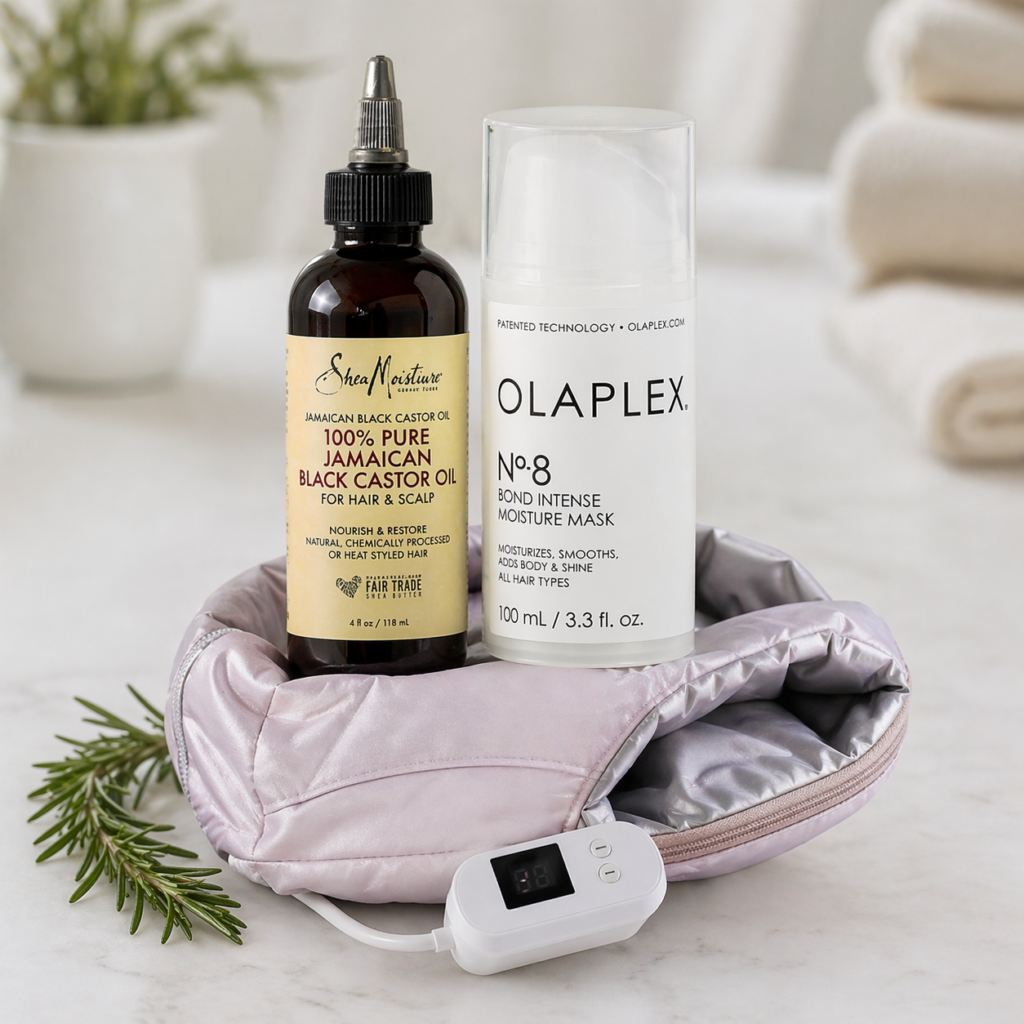
- Then, treat your scalp weekly with a plant oil blend. Mix three drops of rosemary essential oil into one tablespoon of jojoba carrier oil and massage into your scalp before bed. For deeper conditioning, apply a rechargeable thermal heat cap for deep conditioning over a treatment mask and sit for 20 minutes, heat drives the actives deeper into the cortex.
- Finally, seal with a butter or oil on damp hair. Apply shea butter or avocado oil within two minutes of stepping out of the shower. This traps the water molecules inside the hair shaft before they evaporate, which is exactly where you want them.
Drugstore Gems vs. Salon Standards
| Feature | Drugstore Pick | Salon Professional |
|---|---|---|
| Cleanser | SheaMoisture Jamaican Black Castor Oil Shampoo, saponin-free but sulfate-free, solid pH | Aveda Botanical Repair Strengthening Shampoo, plant keratin complex, clinically tested |
| Conditioner | Cantu Shea Butter Leave-In Conditioning Repair Cream, great fatty acid profile for the price | Olaplex No. 8 Bond Intense Moisture Mask, bis-aminopropyl diglycol dimaleate + plant actives |
| Scalp treatment | Mielle Organics Rosemary Mint Scalp Oil, rosemary near top of INCI list, affordable | Kérastase Initialiste Advanced Scalp and Hair Serum, 97% natural-origin, concentrated |
| Leave-in / sealant | Raw shea butter from a health food store, unrefined, zero additives | Christophe Robin Regenerating Mask with Rare Prickly Pear Oil, cold-pressed actives |
| Price range | $8 to $18 per product | $28 to $72 per product |
| Best for | Consistent weekly maintenance and high-porosity hair | Repair-phase hair, color-treated strands, or low-porosity types needing lighter formulas |
Porosity Check: Which Products Work for Your Hair Type?
Not sure where you fall? Here’s the quick float test. Drop a clean, product-free strand into a glass of room-temperature water and wait four minutes.
- Sinks fast (high porosity): Your cuticles are raised and absorb moisture quickly, but lose it just as fast. Use heavy sealants like shea butter and protein treatments monthly.
- Floats in the middle (medium porosity): Most natural hair care products work well for you. Focus on consistency over intensity.
- Floats on top (low porosity): Your cuticles resist moisture entry. As a result, you need heat activation and lightweight oils like argan or jojoba — avoid heavy butters that sit on top.
Frequently Asked Questions
Are natural hair care products actually better than synthetic ones?
Not always, and that’s the honest answer. Natural ingredients like rosemary oil, aloe, and shea butter have real efficacy data behind them. However, concentration matters more than the “natural” label. A product with certified organic rosemary extract at 2% concentration outperforms one with a tiny synthetic fragrance additive that’s technically “plant-derived.” Read the INCI list, not the front label.
How long before I see results from a natural hair care routine?
Most people see measurable changes, less breakage, more moisture retention, improved curl definition, within four to six weeks of consistent use. However, your hair grows roughly half an inch per month, so full-length improvement takes longer. Furthermore, if you’re transitioning from heavy silicones, expect a two-week adjustment period while your cuticle recalibrates.
Can I use natural hair care products on color-treated hair?
Yes, and in many cases they’re gentler than conventional alternatives. For example, sulfate-free cleansers preserve color vigorously because they don’t aggressively strip the cuticle. In addition, plant proteins like hydrolyzed quinoa and rice amino acids help fill gaps in chemically processed strands. That said, always check that your chosen products are free from high-pH ingredients that can lift color.
What’s the most important ingredient to look for in natural hair care?
If I had to pick one, it’s rosemary extract. A 2015 clinical study in Skinmed Journal found rosemary oil matched minoxidil for hair density improvement after six months. In addition, look for aloe vera juice as a primary base, it hydrates, reduces scalp inflammation, and has a natural pH close to 4.5, which is ideal for your hair’s acid mantle.
The Amber Verdict
After testing dozens of products and reading more ingredient lists than I care to admit, my verdict is this: the best natural hair care products win on three things, active ingredient concentration, pH compatibility, and the right match for your porosity level. Stop buying the prettiest bottle and start buying the most honest label. Pin this before your next shopping trip, your future hair will thank you.