
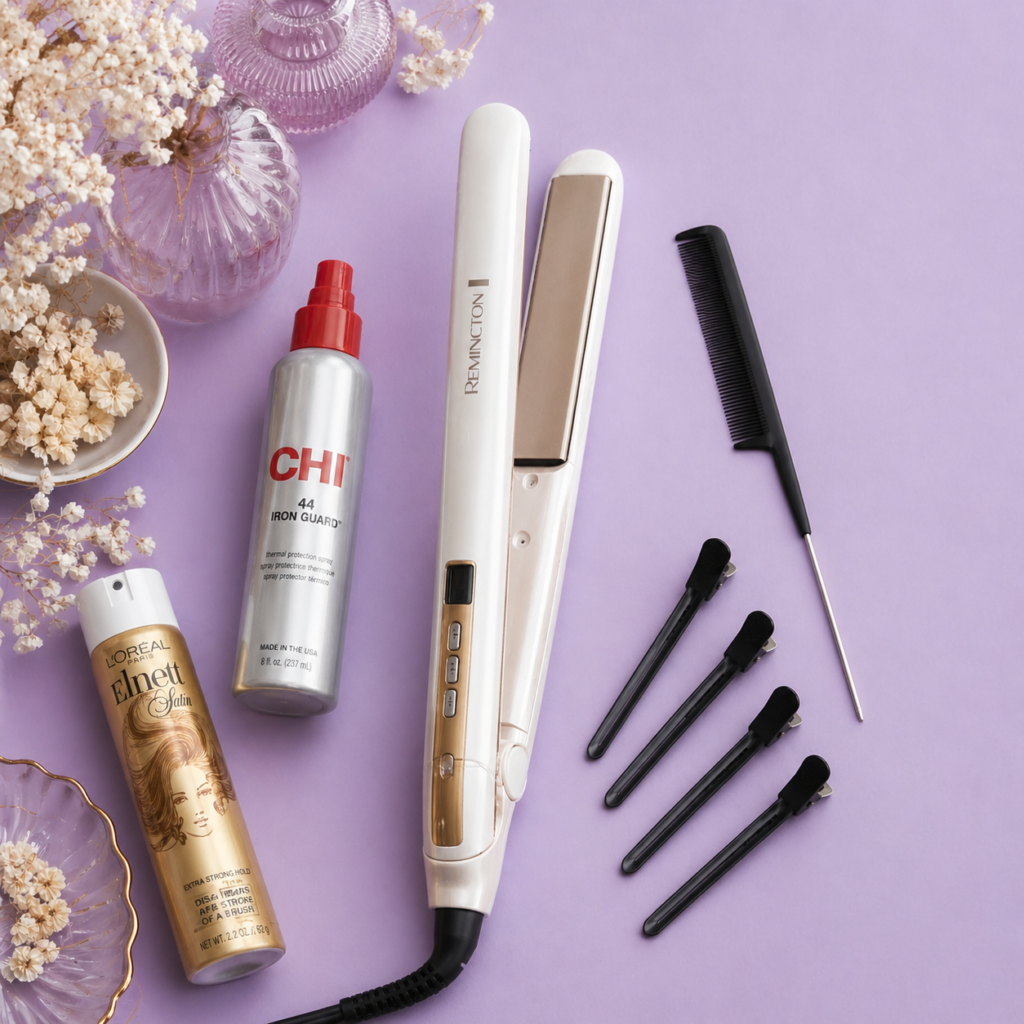
Here’s the deal learning how to curl straight hair with a straightener is honestly the best skill you’ll add to your styling toolkit this year. Most people think flat irons only flatten. They don’t realize a single tool can create beachy waves, bouncy curls, and everything in between. I started using Remington S9500PP Pearl Pro Ceramic Flat Iron for both straightening and curling, and I never looked back.
Because of this technique’s flexibility, you truly don’t need a separate curling iron. However, the angle and movement matter enormously and most tutorials skip the details. That’s exactly what we’re fixing today, from follicle to tip.
How Curling With a Flat Iron Works
Let’s look at the chemistry or more accurately, the physics behind how to curl straight hair with a straightener. Your hair shaft is made of keratin proteins held together by hydrogen bonds. Heat temporarily breaks those bonds, letting you reshape the strand into a new form.
As a result, when you wrap hair around a flat iron and apply controlled heat, the strand sets into that curved shape as it cools. This means the curl hold depends on two things: the temperature you use and how quickly the hair cools in its new position.
Furthermore, the flat iron’s flat plates create a different curl texture than a barrel. You get a softer, more lived-in wave rather than a tight ringlet. That’s why this technique works so well for natural-looking curls on straight hair.
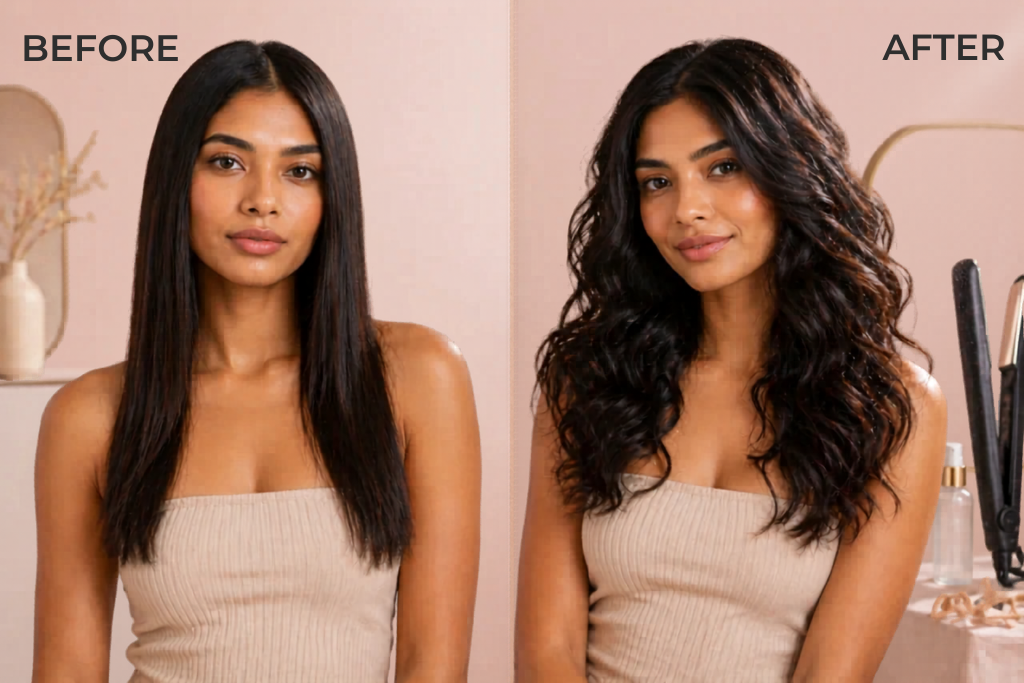
Before and After: What to Expect
| Feature | Before (Common Mistake) | After (Optimized Approach) |
|---|---|---|
| What most people do | Clamp and drag flat iron straight down | Rotate the iron 180° and glide slowly downward |
| Product choice | No heat protectant, or using a heavy cream | Lightweight thermal spray applied to dry hair before styling |
| Application method | Work on large, thick sections at once | Thin 1-inch sections for defined, long-lasting curls |
| Frequency | Daily heat styling with no recovery days | 2-3 times per week maximum with repair treatment in between |
| Result | Frizzy, uneven waves that drop within an hour | Smooth, bouncy curls that hold all day with light hold spray |
The Protocol
1. Start with completely dry, detangled hair.
Never apply heat to damp hair. Moisture trapped in the shaft turns to steam and causes serious damage. Fixing heat-damaged hair takes far longer than preventing it, so this step is non-negotiable.
2. Apply a heat protectant spray generously.
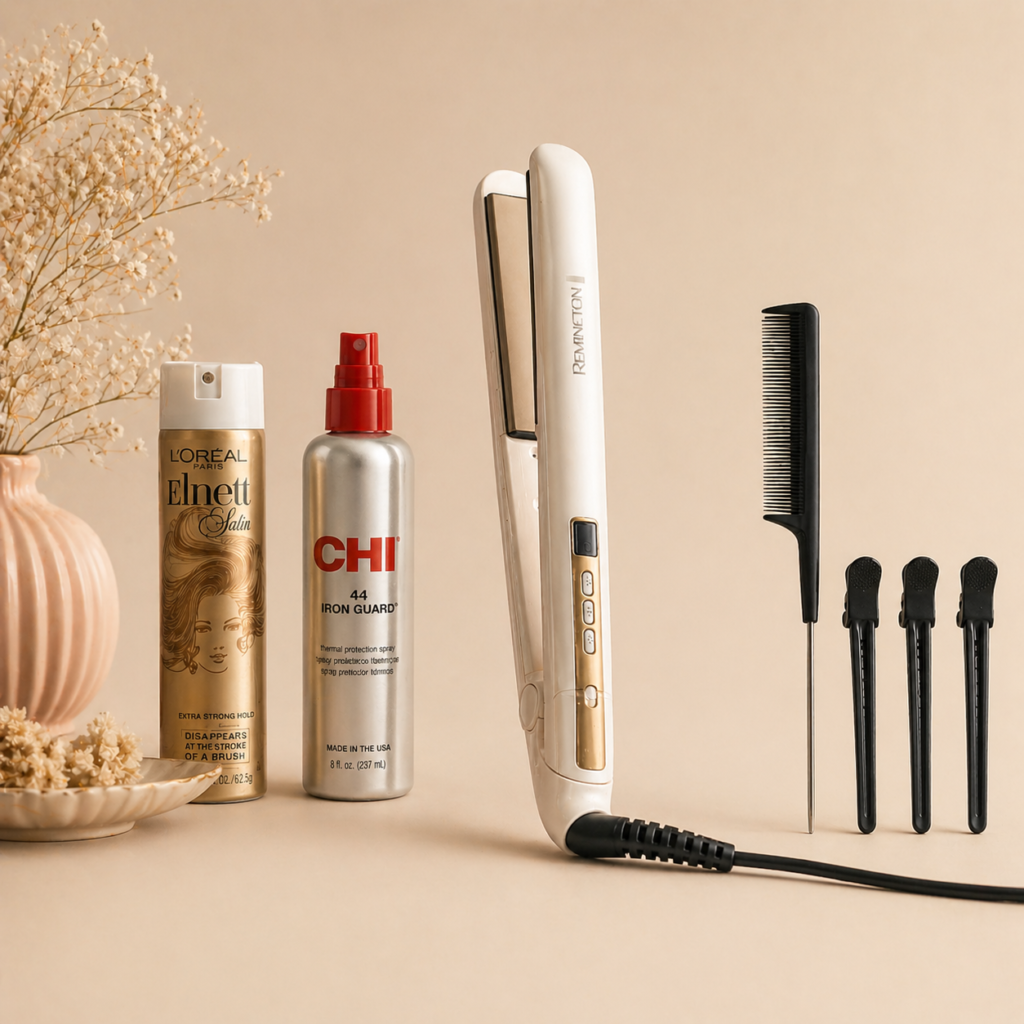
Spritz CHI 44 Iron Guard Thermal Protection Spray from roots to ends on each section before touching the iron to it. This creates a barrier that reduces moisture loss during styling. Most importantly, let it dry for 30 seconds before you begin.
3. Section your hair into four quadrants.
Clip the top half up and work from the bottom layers first. For example, thin 1-inch sections create the most defined, bouncy curls on straight hair. Thicker sections give you looser, beachier waves.
4. Rotate the iron and glide slowly.
Clamp the iron about two inches from your roots, then rotate it 180 degrees away from your face. Next, slowly glide it down the length of the section in one smooth motion. The speed controls the tightness slower means tighter curls.
5. Let each curl cool before touching it.
This step is where most people lose their curl hold. As a result of rushing, the hydrogen bonds reset back to straight before the shape sets. Hold each curl loosely in your palm for 5-10 seconds before releasing it.
6. Finish with a light-hold spray.
Mist your finished style gently to lock the curls in place. If your hair loses volume quickly, check your hair porosity, it directly affects how well your hair holds any style. Also, if you want to keep your hair healthy long-term, limit this full styling routine to two or three times per week.
Drugstore Gems vs. Salon Standards
| Feature | Drugstore Pick | Salon Professional |
|---|---|---|
| Flat iron quality | Conair Double Ceramic Flat Iron affordable, gets the job done for beginners | GHD Platinum+ Styler predictive technology adjusts heat 250 times per second |
| Heat protectant | TRESemmé Thermal Creations Heat Tamer Spray lightweight, widely available | Olaplex No.9 Bond Protector Nourishing Hair Serum, bonds and protects simultaneously |
| Hold spray | L’Oréal Paris Elnett Satin Extra Strong Hold Hairspray — cult classic for a reason | Kenra Platinum Silkening Mist, flexible hold with gorgeous shine |
| Finishing serum | Garnier Fructis Sleek & Shine Serum, fights frizz on a budget | Moroccanoil Treatment Original argan oil finishing serum, the gold standard for frizz-free shine |
| Hair prep mask | OGX Argan Oil of Morocco Intense Moisturizing Mask good pre-styling hydration | Redken Extreme Bleach Recovery Cica Cream, repairs before you style |
Porosity Check Sidebar
Your hair’s porosity changes how well it holds a curl. Low porosity hair needs more heat but holds curls longer once set. High porosity hair absorbs heat fast but loses shape quickly finish with a stronger hold spray or light sealing oil. Not sure where you land? Drop a clean strand in a glass of water. If it sinks fast, you’ve got high porosity. If it floats, you’re low porosity. Learn more about the hair porosity test here.
Frequently Asked Questions
Does curling straight hair with a flat iron cause damage?
It can, but the risk drops dramatically with the right prep. However, skipping heat protectant is where most damage begins. Use a thermal spray on every section, keep your iron at 350°F or below for fine hair, and limit full heat styling to two or three times per week. Regular hair treatment sessions also help repair any stress from heat tools.
What temperature should I use to curl straight hair with a straightener?
Fine or damaged hair needs 300-330°F. Medium or normal hair works well at 350°F. Thick or coarse hair can handle up to 400°F, but that’s the maximum. Furthermore, higher temperatures don’t create better curls, they just fry the cuticle faster and cause breakage from follicle to tip.
Why do my curls fall out so fast when I use a flat iron?
Three common culprits: sections too thick, iron moving too fast, or not letting curls cool before releasing them. In addition, product buildup on your hair can prevent heat from distributing evenly. Try shampooing the day before styling rather than the same day, a little natural oil actually helps curls hold.
Can I curl very straight, fine hair with a flat iron?
Yes, and in some ways fine hair is easier to style with heat. Because fine strands have fewer protein layers, they reshape quickly. That said, fine hair also suffers heat damage faster, so drop your temperature to 300-325°F and always use a protectant. Thin sections and a slow glide give the best curl definition.
The Amber Verdict
Knowing how to curl straight hair with a straightener is one of those skills that feels like a cheat code. You get salon-worthy waves from a tool you already own, with no learning curve once you nail the rotation technique. Pin this page before your next styling session, your future curly-haired self will thank you.