
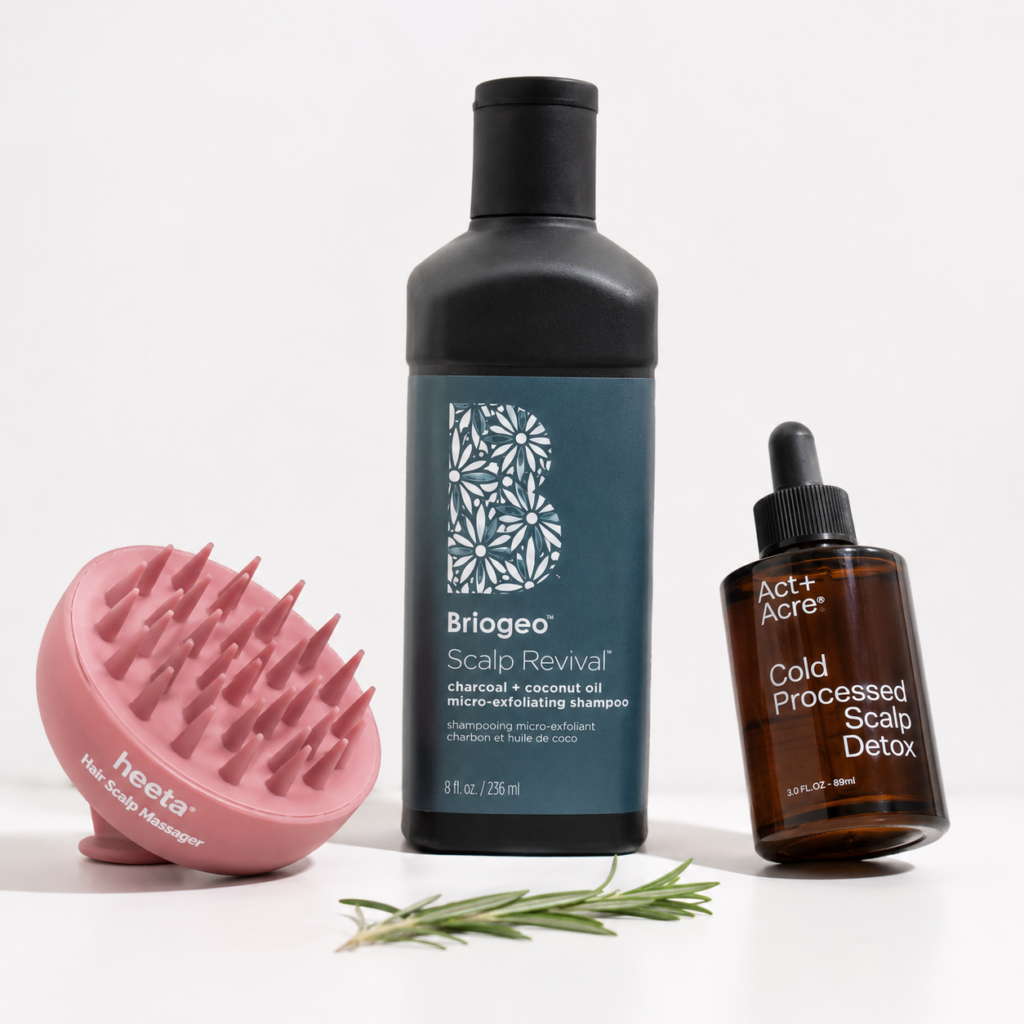
Here’s the deal, most people spend a small fortune on conditioners and hair masks while completely ignoring the skin those hairs actually grow out of. Scalp exfoliation is the step that clears the dead cell buildup, excess sebum, and product residue sitting at your follicle openings, blocking the whole system before a strand even has a chance. I picked up Briogeo Scalp Revival Charcoal + Coconut Oil Micro-Exfoliating Shampoo last winter after noticing my roots went flat within 24 hours of washing, classic congestion sign. Furthermore, once I understood what was actually happening under the surface, I couldn’t believe I’d skipped this step for years. Healthy hair runs follicle to tip, and the follicle is where everything starts.
How Scalp Exfoliation Works
Let’s look at the chemistry. Your scalp sheds dead skin cells roughly every 21 days, but styling products, hard water minerals, and sebum can slow that process down. As a result, the buildup accumulates around the follicle opening, called the infundibulum, and creates a physical plug that restricts both new growth and proper product absorption.
Scalp exfoliation works in two ways: physical and chemical. Physical methods use micro-granules or a silicone brush to manually dislodge that debris. Chemical methods use acids like salicylic acid or glycolic acid to dissolve the bonds holding dead cells together. Salicylic acid is oil-soluble, which means it actually penetrates sebum buildup better than most physical scrubs.
For anyone dealing with dandruff and hair loss concerns, the connection is real — chronic scalp congestion creates an environment where Malassezia yeast thrives. That inflammation signals the follicle to slow production. This means that exfoliating regularly doesn’t just feel good; it actively improves the conditions your hair grows in, all the way follicle to tip.
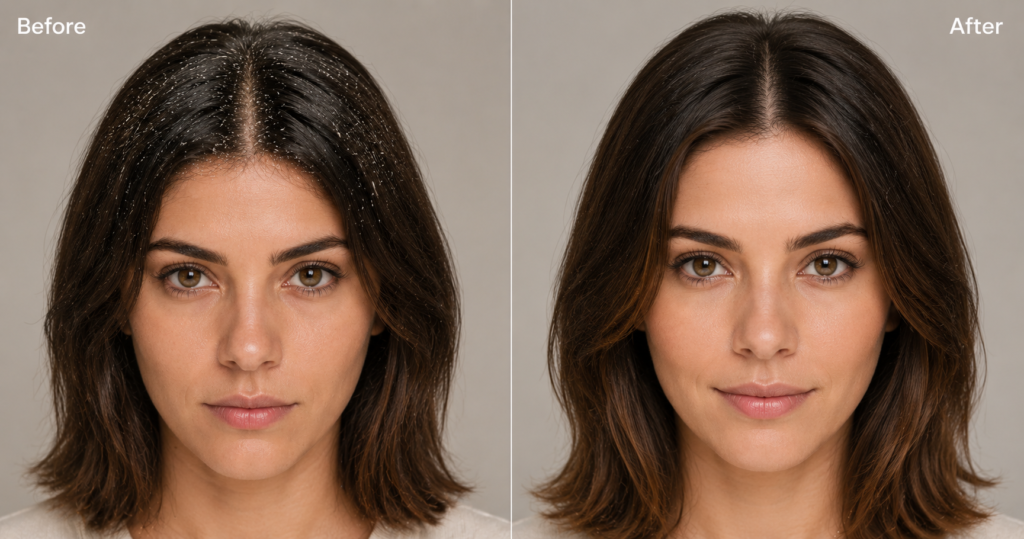
Before and After: What to Expect
| Feature | Before (Common Mistake) | After (Optimized Approach) |
|---|---|---|
| What most people do | Shampoo scalp daily, skip exfoliation entirely | Exfoliate once a week, shampoo 2–3 times weekly |
| Product choice | Standard clarifying shampoo with high pH (7–8) | Scalp scrub or salicylic acid treatment at pH 3.5–4.5 |
| Application method | Rubbing product aggressively with fingernails | Gentle circular motions with fingertip pads or silicone brush |
| Frequency | Daily or never — both cause problems | Once weekly for oily scalps, every 10 days for dry scalps |
| Result | Persistent flatness, flaking, slow-growing hair | Reduced sebum overproduction, fuller roots, better product absorption |
The Protocol
Here’s exactly how I run my weekly scalp exfoliation routine. No guessing, no over-complicating.
- Pre-rinse the scalp thoroughly. Wet hair completely before applying anything. Dry application of a physical scrub on a dry scalp creates microtears — I learned this the hard way after one particularly aggressive session left my crown tender for three days.
- Section the hair into four quadrants. This sounds fussy but takes about 30 seconds. Most people apply scrub only to the top layer and miss the nape and crown entirely. For anyone whose hair density concerns are concentrated at the temples and nape, this step matters most.
- Apply and massage with a silicone scalp brush. Heeta Hair Scalp Massager Brush with flexible silicone bristles works in small circles without snagging. Use light pressure — you’re clearing debris, not sanding the surface. Spend about 60 seconds per section.
- Let a chemical exfoliant sit for 3–5 minutes. If you’re using a salicylic acid scalp treatment instead of a physical scrub, apply and wait. The acid needs contact time to break sebum bonds. Rinsing immediately is one of the most common mistakes.
- Rinse, then follow with a scalp-friendly conditioner. Apply conditioner from mid-shaft down only. Putting conditioner directly on a freshly exfoliated scalp clogs what you just cleared. That’s a counterproductive loop most people don’t realize they’re in.
For people building a complete hair care routine from scratch, fixing your hair care routine in 5 steps gives you a smart foundation to layer this into.
Drugstore Gems vs. Salon Standards
| Feature | Drugstore Pick | Salon Professional |
|---|---|---|
| Physical exfoliant | Dove Amplified Textures Hydrating Scalp Scrub — gentle sugar base, widely available | Christophe Robin Cleansing Purifying Scrub with Sea Salt — larger granules, marine mineral content |
| Chemical exfoliant | Neutrogena T/Sal Therapeutic Shampoo (3% salicylic acid) — solid and cheap | Act+Acre Cold Processed Scalp Detox with salicylic acid and watermelon extract |
| Scalp brush tool | Basic silicone finger brush from drugstore — gets the job done for under $5 | Leonor Greyl Scalp Massager — firm but flexible, built for longer sessions |
| Best for sensitive scalps | Head & Shoulders Scalp Detox — milder formula, no risk of over-exfoliation | Aveda Scalp Solutions Exfoliating Scalp Treatment — botanical acids, pH-balanced |
| Price per use | Under $0.80 per session for most drugstore options | $1.50–$3.00 per session for salon-grade treatments |
Porosity Check Sidebar
Before you exfoliate, know your porosity. Low-porosity hair has tightly packed cuticles that resist moisture — this type actually benefits most from chemical exfoliation because it helps product absorption. High-porosity hair already has open cuticles, so physical scrubs can cause unnecessary friction damage. Not sure which you are? This hair porosity test tells you in about two minutes.
Frequently Asked Questions
How often should I do scalp exfoliation?
Once a week works well for most people. However, if your scalp runs oily and you use a lot of dry shampoo or styling products, twice weekly is fine. On the other hand, dry or sensitive scalps do better every 10 to 14 days. Over-exfoliating strips the skin barrier and triggers rebound oil production — which is actually worse than skipping it.
Can scalp exfoliation help with hair growth?
Yes, but with a realistic expectation. Scalp exfoliation removes the follicular buildup that slows circulation and restricts new hair growth. Studies on scalp massage — which accompanies most exfoliation routines — show measurable increases in hair thickness after 24 weeks of consistent practice. It won’t reverse androgenic hair loss, but it does create the cleanest possible growing environment.
What’s the difference between a scalp scrub and a clarifying shampoo?
Clarifying shampoos use high-pH surfactants to strip product buildup from the hair shaft. Scalp scrubs and chemical exfoliants target the actual skin surface — dissolving or dislodging dead cells and sebum plugs from the follicle opening. Therefore, they do completely different jobs. You can use both, just not on the same day.
Is scalp exfoliation safe for color-treated hair?
Generally yes, but the type matters. Physical scrubs are safe on color-treated hair if applied to the scalp only, not the hair length. Chemical exfoliants with salicylic acid are also fine. Most importantly, avoid anything with sulfates or very high pH at the scalp the same week you’ve colored, because the cuticle is more vulnerable in those first 72 hours post-color.
The Amber Verdict
The bottom line is that scalp exfoliation is probably the most skipped step in hair care — and the one that makes every other product work better. I saw a visible difference in my root volume after about six weeks, and the itchy tight feeling I’d had all winter basically disappeared. If your hair feels stuck no matter what you put on it, start at the scalp. Pin This so you can find it before your next wash day.