
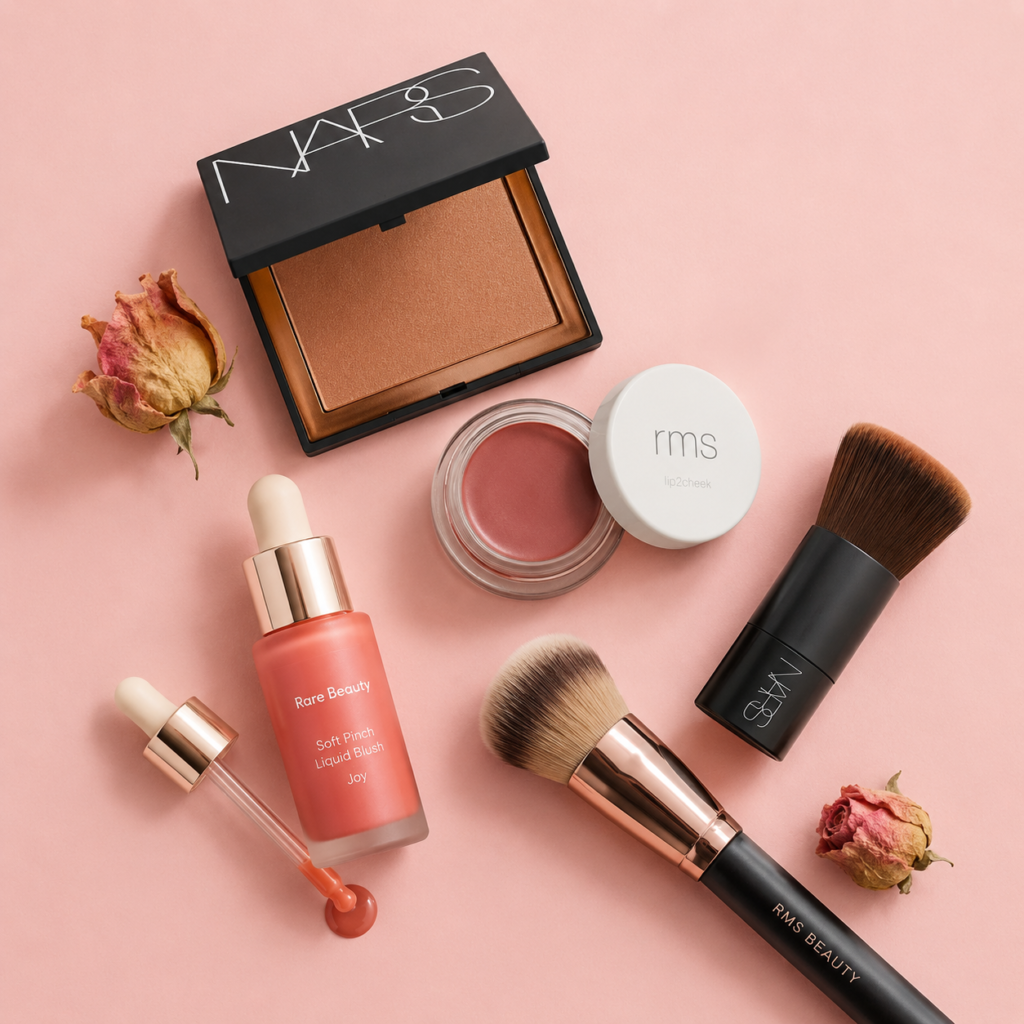
Here’s the deal, I spent most of last winter convinced my cream blush was broken. It looked patchy, it sat weird over my moisturizer, and by noon it had basically evaporated. Turns out, the product was fine. My technique was the problem. Learning how to apply cream blush correctly changed my whole routine, and honestly, I wish someone had just shown me the steps instead of letting me waste three bottles figuring it out. I’ve been testing the RMS Beauty Lip2Cheek Cream Blush in Modest for about six weeks now, and this little pot is the benchmark I compare everything else against. Furthermore, the way it melts into skin is exactly what cream blush should do.
How Cream Blush Works
Cream blush is pigment suspended in an emollient or wax base instead of a powder carrier. Because of this, it fuses with the skin’s surface oils rather than sitting on top like a powder does. The result is that “your skin but flushed” look that powder genuinely cannot replicate.
Most formulas contain either a wax binder, a silicone slip agent, or a water-based gel carrier. Each one behaves differently on different skin types. That said, all three reward the same application principle: blend while the formula is still workable, usually within the first 15 to 20 seconds after contact.
The science of seamless integration here is real. Cream pigment physically disperses into the upper layers of the stratum corneum, which is why it photographs so naturally. However, that same property means prep matters enormously, more on that below.
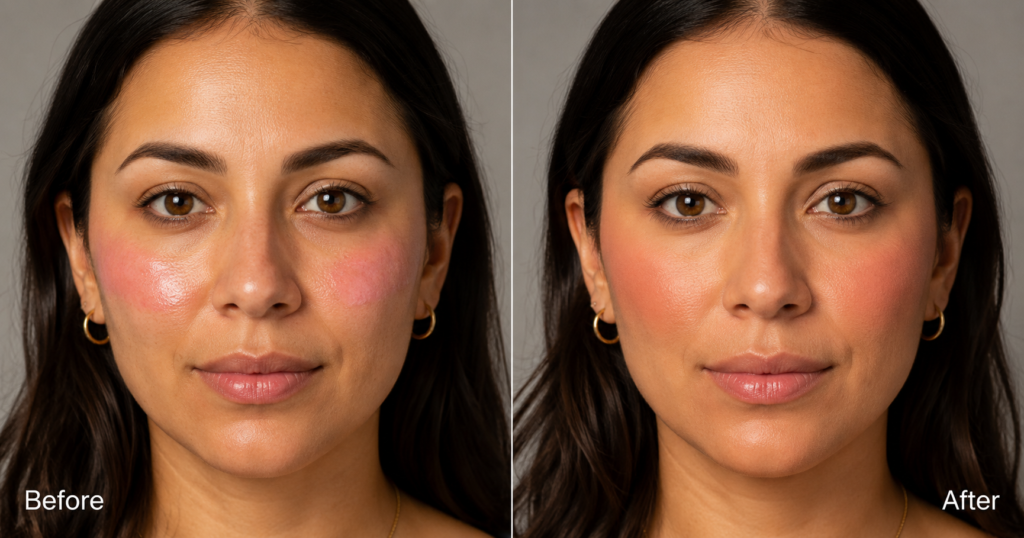
Before and After: What to Expect
| Feature | Before (Common Mistake) | After (Optimized Approach) |
|---|---|---|
| Skin prep | Applied cream blush over heavy moisturizer — product slid and pilled | Waited 90 seconds post-moisturizer; blush gripped and blended cleanly |
| Product choice | Used a cream blush with a waxy binder over dry skin — looked chalky | Matched formula type to skin: gel-based for oily, wax-based for dry |
| Application method | Swiped directly with brush in one stroke — left streaks and harsh edges | Stippled with fingers or a damp sponge in light tapping motions |
| Placement | Applied flat on the apples of cheeks — looked flat and costume-y | Started at the cheekbone, blended upward toward the temple |
| Setting step | Skipped powder entirely — blush faded within two hours | Dusted translucent powder over blush to lock color for 8+ hours |
| Result | Patchy, unnatural, short-lived flush that looked cakey by midday | Skin-fused, long-wearing natural flush that still looked fresh at 5pm |
The Protocol
Prep Step, Skin Timing Is Everything
Wait at least 90 seconds after your moisturizer before picking up any cream product. I measure this by brushing my teeth after skincare. That brief window lets the humectants absorb and gives the cream blush something to grip. Skipping this is genuinely the number one reason cream blush pills on people’s cheeks. In fact, if you’re learning how to apply cream blush, this simple 90-second waiting period is one of the most important steps because it helps the color blend evenly, stay in place longer, and create a natural flush instead of a patchy finish.
- Start with a light base. Apply foundation or tinted moisturizer as usual. Cream blush layers best over another cream or bare skin, not over powder. If you set your foundation with powder first, apply blush before that step.
- Pick up a small amount. We’re talking a pea-sized portion of product, maximum. For liquid formulas like the Rare Beauty Soft Pinch Liquid Blush in Joy, one drop is genuinely enough. I over-apply every single time when I skip this mental check.
- Stipple, don’t swipe. Tap the product onto the high point of the cheekbone first. Then use your ring finger or a damp beauty sponge to pat outward and upward in quick, light taps. This builds color gradually and prevents the streaky line that a brush swipe often leaves.
- Blend the edges immediately. Cream blush has a short working window, about 15 seconds before it starts to set. Therefore, blur any visible edges fast with clean fingertips using circular buffing motions. If it sets before you blend, a tiny drop of facial oil on your fingertip usually rescues it.
- Set with translucent powder (optional but effective). A light dusting of loose powder over the blush locks it for hours. Most importantly, use a fluffy brush and just skim the surface, pressing too hard will lift the color underneath.
- Check placement in natural light. Step to a window. Artificial lighting lies about blush intensity more than any other makeup product in my experience. Adjust by buffing down with a clean sponge if needed.
Cream Blush Comparison: 3 Formulas Worth Knowing
| Product | Coverage | Finish | Skin-Loving Ingredients | Best For |
|---|---|---|---|---|
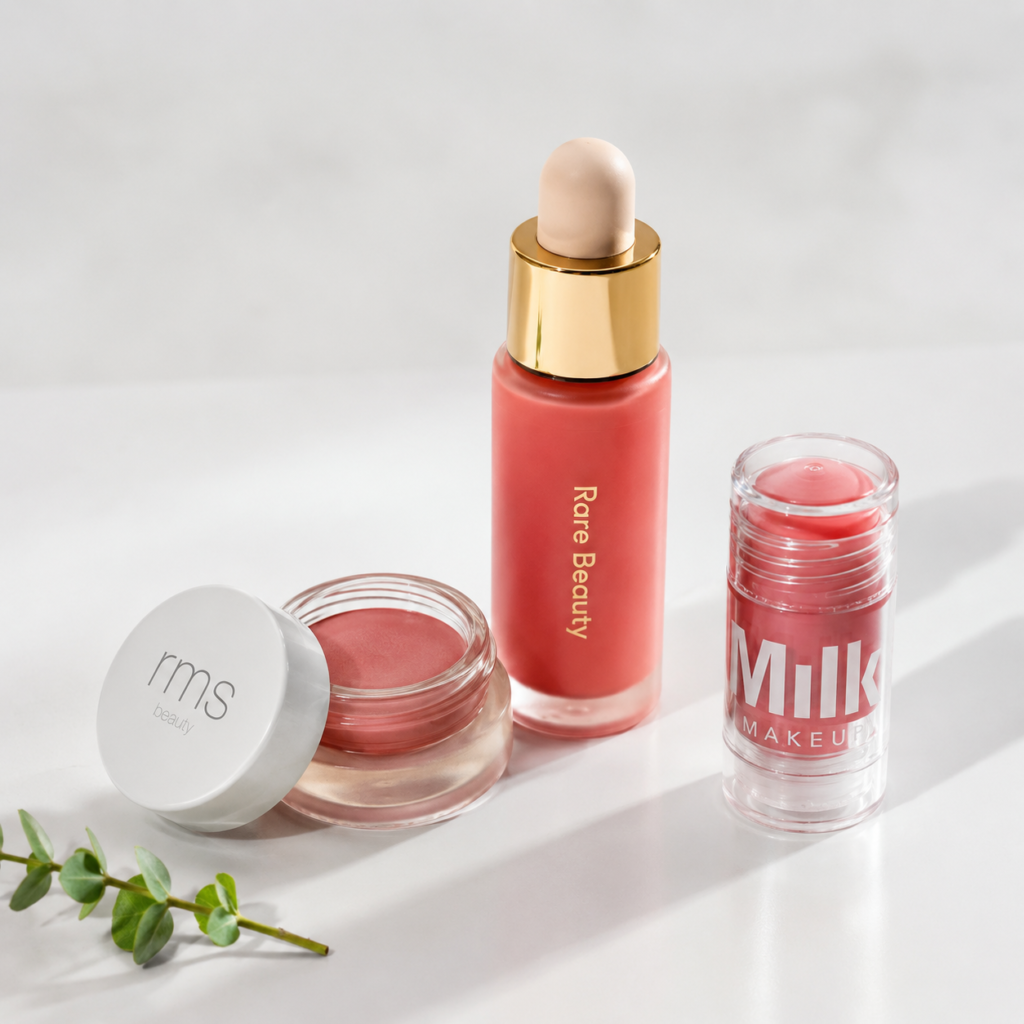
| RMS Beauty Lip2Cheek in Modest | Buildable, sheer to medium | Natural satin, no shimmer | Organic coconut oil, jojoba, buriti | Dry to normal skin; versatile lip and cheek use |
| Rare Beauty Soft Pinch Liquid Blush in Joy | Sheer — one drop goes far | Dewy, skin-like glow | Niacinamide, vitamin C, hyaluronic acid | Oily and combination skin; humid climates |
| Milk Makeup Cooling Water Jelly Tint | Low, tint-level coverage | Glossy, fresh, wet-skin effect | Watermelon extract, sea water minerals | Minimal makeup looks, no-foundation days |
Frequently Asked Questions
Does cream blush work over powder foundation?
It tends to work, but with caveats. Applying cream over a heavily powdered base often results in a patchy, almost cakey texture because the powder disrupts the cream’s ability to fuse with skin. For most people, the better approach is applying cream blush before any powder setting step. That order keeps blending easy and the finish seamless.
What is the best brush for cream blush?
Fingers and a damp sponge are genuinely my top recommendation, especially for beginners. However, if you prefer a brush, a dense flat-top kabuki or a stippling brush tends to work best. Avoid fluffy powder brushes, which spread cream blush too thin and create uneven edges that are harder to blend out.
How do I stop cream blush from fading?
Two things help most. First, let your skincare fully absorb before application, an oily base causes product to slip and fade faster. Second, a light layer of translucent setting powder over the blush adds meaningful longevity. I’ve found that at around pH 5.5 skin, which is most people’s natural range, a powder lock keeps cream blush vibrant for eight-plus hours.
Can I use cream blush on mature skin?
Yes, and honestly, cream blush is often more flattering on mature skin than powder. Because of its skin-fusing finish, it avoids settling into fine lines the way matte powder blush can. The key is to use a light hand and blend upward toward the temple, not downward. That upward direction creates a natural lifted effect that works with the face’s structure.
The Amber Verdict
Cream blush is genuinely forgiving once you understand how to apply cream blush using the 90-second moisture rule and the stipple-don’t-swipe technique, those two adjustments alone fixed every problem I had with this formula category. Once I learned how to apply cream blush correctly, the patchiness, fading, and streaking disappeared almost immediately. That said, I’ll push back slightly on the mainstream advice to always use a brush: your ring finger is warmer, more precise, and blends cream pigment better than most tools on the market. Pin this, save it for your next makeup bag refresh, and actually try the finger technique before you dismiss it.