
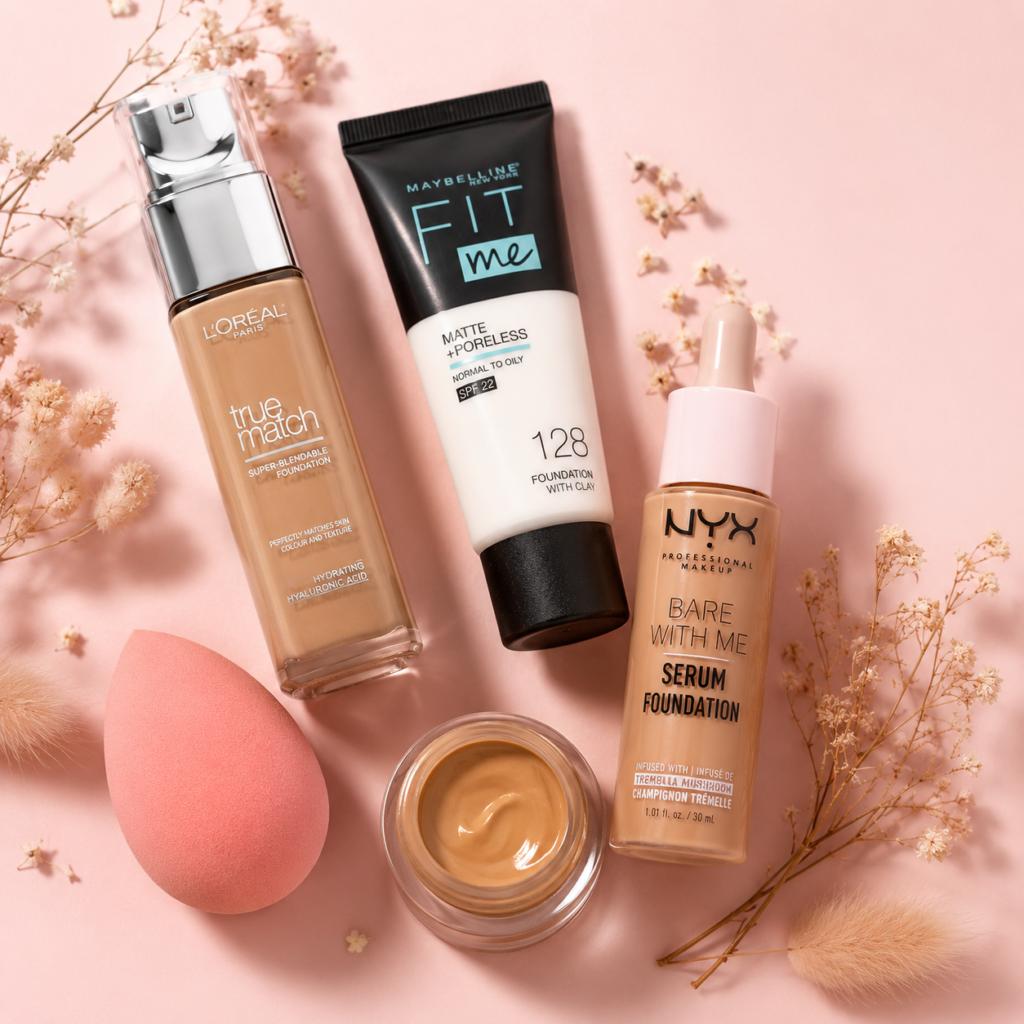
Here’s the deal, last winter I swatched eleven drugstore foundations on my forearm in a CVS aisle for a solid twenty minutes, and the woman next to me definitely thought I was having a crisis. I wasn’t. I was trying to figure out why my Maybelline Fit Me kept oxidizing by noon while my combination-skin friend swore it was the best foundation she’d ever used. That’s when it clicked: the best drugstore foundation isn’t one product. It depends almost entirely on your skin type, undertone, and what your skin is doing that week. I’d been using the L’Oréal Paris True Match Hyaluronic Tinted Serum Foundation as a lighter option, and honestly? For my dry patches in winter, it worked better than foundations twice the price.
How Drugstore Foundation Works
Most foundations, drugstore or not, rely on a blend of film-forming agents, pigments, and either a water or silicone base to create coverage. The formula type determines everything: how it sits on skin, how long it holds, and whether it emphasizes texture or smooths it out.
Here’s the chemistry part, but I’ll keep it quick. Water-based formulas tend to feel lighter and work better for sensitive or acne-prone skin. Silicone-based foundations fill fine lines and pores temporarily, giving that blurred finish, but they can trap sebum on oily skin if you’re not careful with your primer underneath.
The seamless integration of pigment into your skin’s actual undertone is what separates a “natural” finish from a cakey, gray, or orange result. This is why undertone matching matters more than shade matching. Most people grab the shade closest to their arm color and skip the undertone step entirely. That’s usually where things go wrong.
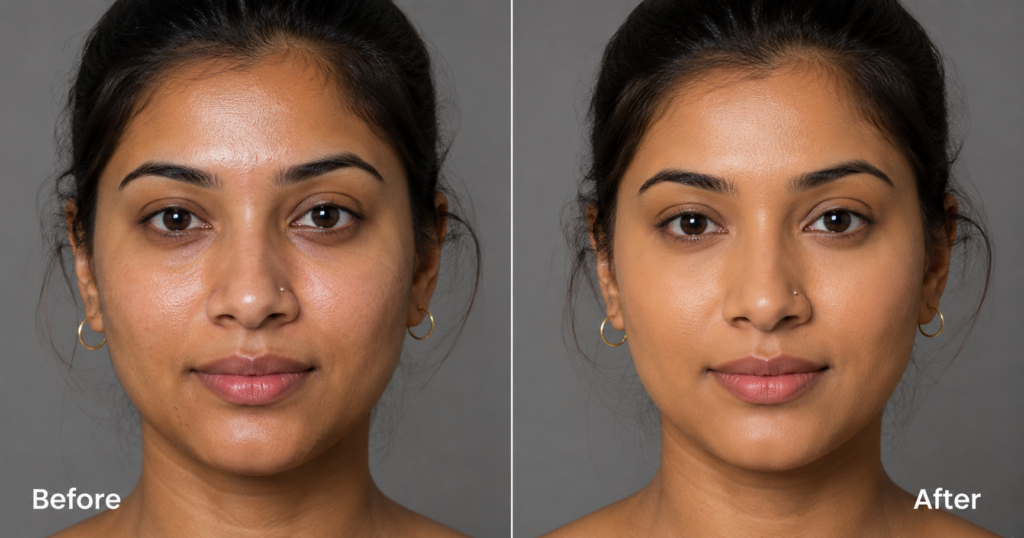
What Changes When You Do It Correctly
| Feature | Before (Common Mistake) | After (Optimized Approach) |
|---|---|---|
| Shade selection | Matching only to arm or hand color | Testing on jawline and checking in natural light for undertone match |
| Skin prep | Applying foundation directly to bare skin | Moisturizer, wait two minutes, then a skin-type-matched primer |
| Product choice | One foundation for all skin types and seasons | Formula chosen specifically for your skin type, matte for oily, serum-based for dry |
| Application method | Stippling all over with a dry brush | Damp sponge for skin types prone to texture, brush for oily skin needing control |
| Oxidation management | Ignoring the fact foundation darkens by midday | Going half a shade lighter and setting with a translucent powder in the T-zone |
| Result | Cakey, mismatched, or separated by 2 p.m. | Even, skin-like coverage that holds through the day without patching or oxidizing |
How to Get the Best Results
Think of this as a step-by-step system, not just product application. Most foundation failures happen in the prep phase, not during application itself.
Prep Step, This is non-negotiable. Cleanse, apply your moisturizer, and give it a full two minutes to absorb before anything else touches your face. I cannot stress this enough. Applying foundation over still-tacky moisturizer is the number one cause of pilling.
- Match your undertone first, shade second. Hold three or four shades against your jawline, not your wrist. Check in natural light by a window. Cool undertones need foundations with pink or neutral bases. Warm undertones need yellow-leaning formulas. Neutral undertones tend to work with almost anything, which is honestly unfair.
- Choose your formula by skin type. Oily skin generally does better with a matte or semi-matte water-based formula like the Maybelline Fit Me Matte + Poreless Foundation. Dry skin tends to need something with humectants like hyaluronic acid or glycerin built into the base. Combination skin usually benefits most from a flexible medium-coverage formula applied lightly and built up only where needed.
- Prime specifically, not generically. A silicone pore-filling primer under a silicone foundation can cause sliding. A water-based primer under a water-based foundation holds all day. Mixing bases is where most people accidentally sabotage themselves.
- Apply with the right tool for your finish. A damp sponge gives the most skin-like, blended result on textured or dry skin. A flat foundation brush gives more coverage and control on oily skin. Never apply to completely dry skin, a light mist of facial spray on the sponge first makes a real difference.
- Set strategically, not everywhere. Translucent setting powder on the T-zone and any area that oxidizes or moves first. Avoid setting powder on dry cheeks, it ages the finish fast.
Drugstore Foundation Comparison: 3 Formulas Worth Knowing
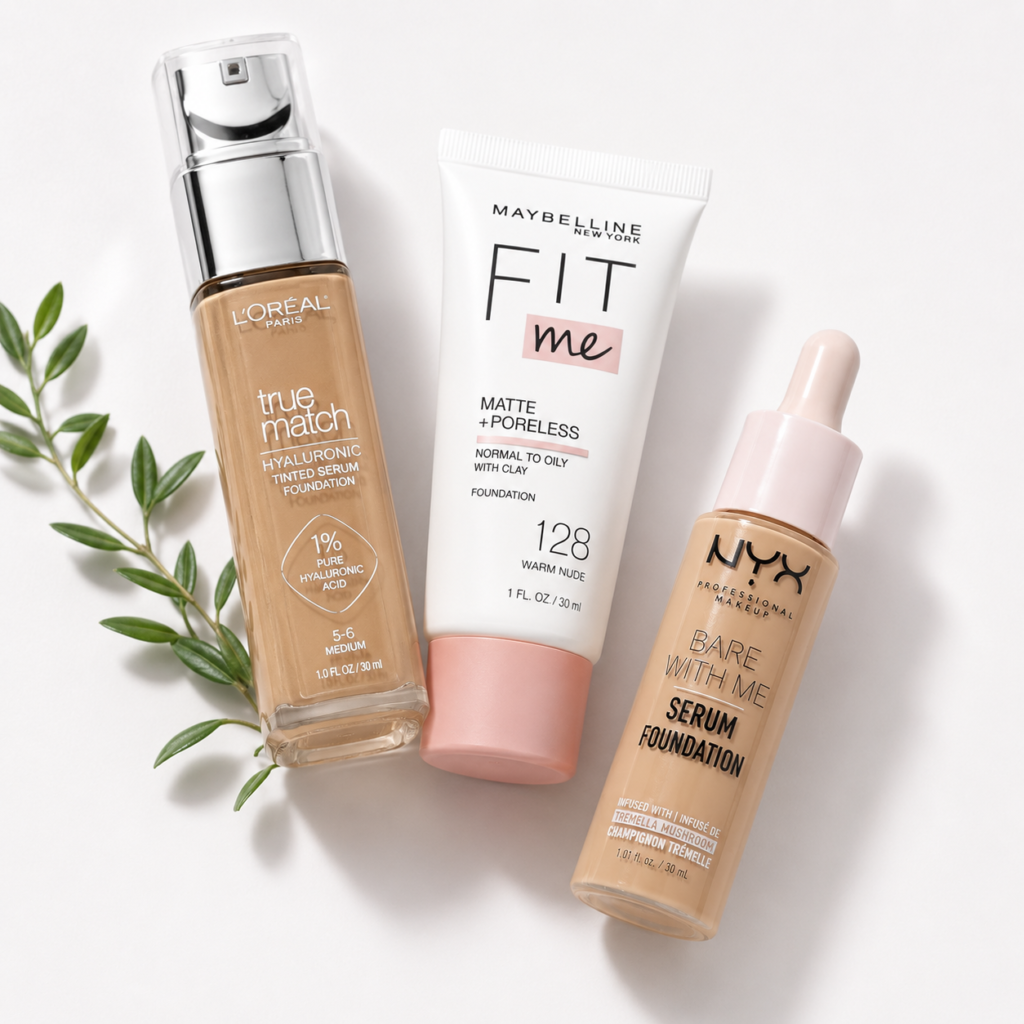
| Feature | L’Oréal True Match Tinted Serum | Maybelline Fit Me Matte + Poreless | NYX Bare With Me Serum Foundation |
|---|---|---|---|
| Coverage level | Light to medium, buildable | Medium, buildable to full | Light, skin-tint feel |
| Finish | Natural satin | Matte with soft blur | Dewy, glassy |
| Best skin type | Dry to normal | Oily to combination | Dry, mature, or dull skin |
| Skin-loving ingredients | Hyaluronic acid, glycerin | Kaolin clay, silica | Turmeric, vitamin C precursor |
| Shade range | 40 shades, strong undertone variety | 40 shades, includes deep and fair extremes | 30 shades, lighter on deep tones |
| Price range | ~$14 | ~$10 | NYX Bare With Me Serum Foundation ~$16 |
| Wear time | 6-8 hours with setting spray | 8+ hours on oily skin | 5 to 6 hours, needs setting |
Frequently Asked Questions
Does drugstore foundation look as good as high-end?
Honestly, for most skin types, yes, with the right formula and prep. I’ve tested a $12 Maybelline foundation against a $58 designer option on the same skin type, and the difference came down to longevity, not appearance. However, high-end formulas often carry more sophisticated skincare actives, which can matter for sensitive or reactive skin.
Why does my foundation oxidize and turn orange?
Oxidation happens when the iron oxide pigments in your foundation react with your skin’s natural oils and oxygen. Oily skin tends to speed this process up significantly. Going half a shade lighter than your match usually compensates, and setting with a mineral-based powder helps slow the reaction through the day.
What is the best drugstore foundation for mature skin?
Serum-style formulas with hyaluronic acid tend to sit most comfortably on mature skin, they don’t settle into fine lines the way heavy matte foundations do. In addition, applying with a damp sponge rather than a brush usually gives a more flattering, less powdery result. Avoid heavy-coverage formulas unless you’re really building up only where needed.
Can I build coverage with a light drugstore foundation?
Yes, most light-coverage drugstore foundations build well if you use a damp sponge and work in thin layers. Wait 60 seconds between layers, applying wet product over wet product is usually what causes patchiness. That said, some skin types with very uneven texture may still need a medium-coverage formula as a starting point.
The Amber Verdict
The best drugstore foundation isn’t a single product, it’s the one formulated for your skin type, matched to your undertone, and applied over the right prep. Most people skip at least two of those three, then blame the foundation. Get those right and you’ll spend $12 and look like you spent $60. Pin this for your next drugstore run.