
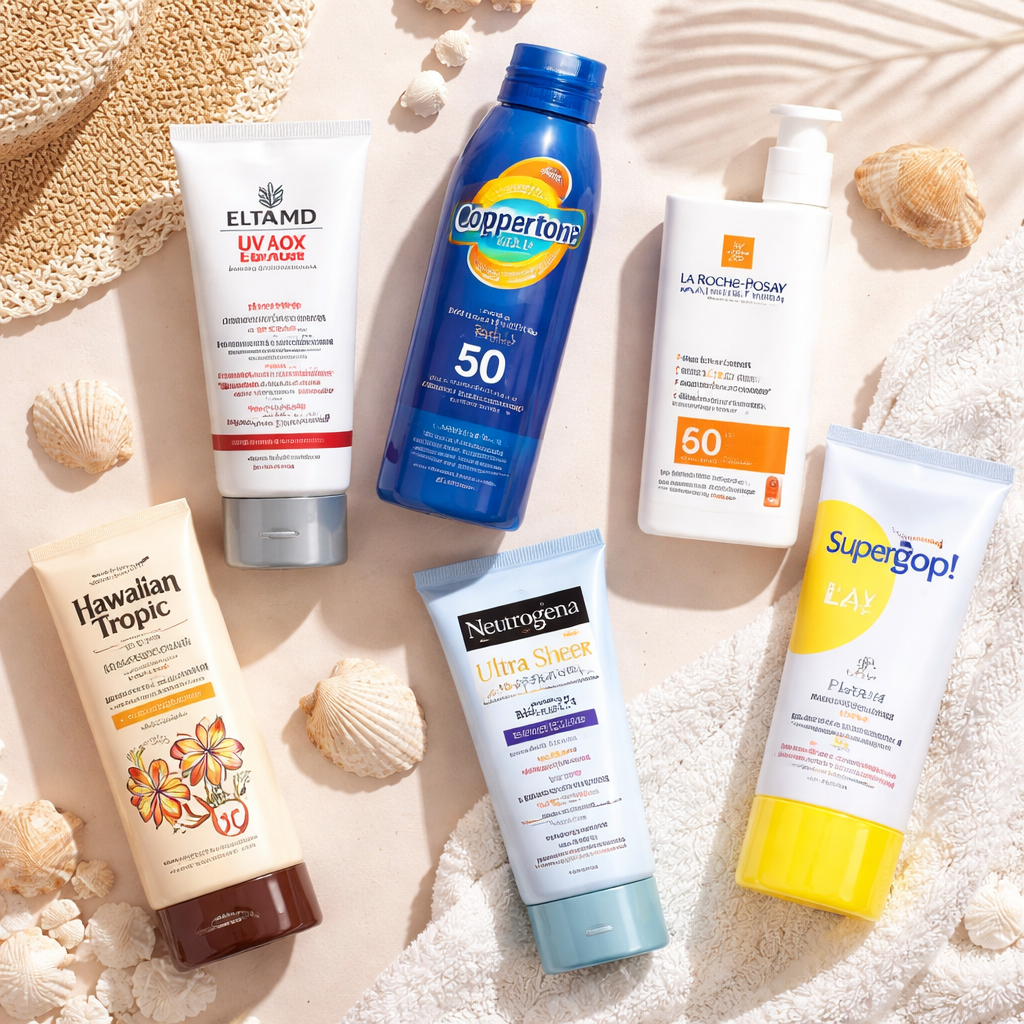
Finding the best sunscreen for body isn’t just about grabbing the first SPF bottle you see. Your body is exposed to UVA and UVB rays daily — whether you’re heading to work, walking outside, or relaxing at the beach. The right body sunscreen protects against sun damage, prevents premature aging, and supports long-term skin health.
This guide will help you choose the right sunscreen for body, understand SPF levels, and discover top-rated options for different skin types — all without overcomplicating things.
Why Your Body Needs a Different Sunscreen Than Your Face
Face sunscreens are often lighter, more expensive per ounce, and designed for delicate facial skin. Your body, however:
- Has a larger surface area
- Is more exposed to sweat and friction
- Often needs higher water resistance
- Requires generous application
Using a dedicated body sunscreen SPF 50 or SPF 30 formula ensures better coverage and affordability for daily use.
Quick SPF Breakdown (Without the Confusion)
Understanding SPF makes choosing easier.
- SPF 30 blocks about 97% of UVB rays
- SPF 50 body sunscreen blocks about 98%
- Broad spectrum sunscreen protects against both UVA (aging) and UVB (burning) rays
For daily wear, SPF 30 is usually enough. For beach days or outdoor sports, SPF 50 with water resistance is ideal.
What Does Water Resistant Mean?
- 40 minutes = short swimming or sweating
- 80 minutes = longer outdoor exposure
Reapplication every 2 hours is still essential — especially during summer body care routines.
How to Choose the Right Body Sunscreen
For Sensitive Skin
Look for:
- Mineral sunscreen for body
- Zinc oxide or titanium dioxide
- Fragrance free formulas
These are gentler and less likely to cause irritation.
For Dry Skin
Choose a hydrating sunscreen with moisturizing ingredients. Cream-based body sunscreen lotion formulas work beautifully for dryness.
For Oily or Acne-Prone Skin
Yes, body sunscreen can clog pores — but not all formulas do. Look for:
- Oil free sunscreen
- Non-comedogenic labels
- Lightweight sunscreen for body
- Non-greasy finish
For Dark Skin Tones (No White Cast)
Many mineral formulas leave a residue. If white cast is a concern, try:
- Clear chemical sunscreen for body
- Gel-based or spray sunscreen
- Tinted mineral formulas
For Sports & Outdoor Activities
If you’re swimming, hiking, or working out:
- Choose sweat-resistant sunscreen
- Look for water resistant sunscreen (80 minutes)
- SPF 50 is safer
Lotion vs Spray vs Stick: Which Works Best?
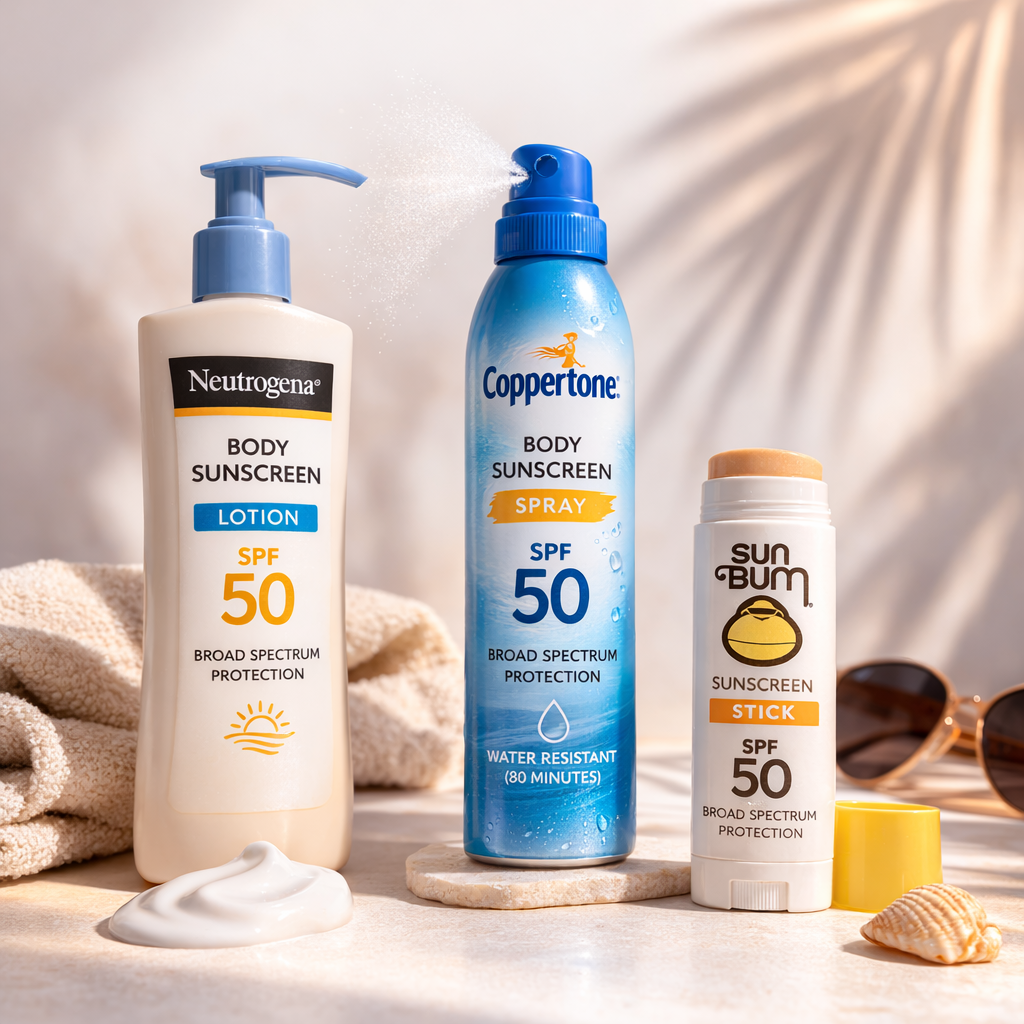
Body sunscreen lotion
- Best coverage
- Ideal for dry skin
Body sunscreen spray
- Quick and convenient
- Great for beach days
Sunscreen stick for body
- Travel-friendly
- Good for touch-ups
Each format provides broad spectrum protection, but lotion ensures more even application.
Best Sunscreen for Body (Top Rated Picks)
Here are popular types worth considering:
Best Overall Body Sunscreen
Balanced hydration + SPF 50 + non-greasy texture
Best Mineral Sunscreen for Body
Gentle, fragrance-free, ideal for sensitive skin
Best Non-Greasy Formula
Absorbs quickly, works under clothes
Best Budget-Friendly Option
Affordable, drugstore sunscreen, reliable SPF protection
Best Premium Pick
Luxury texture, antioxidant-rich formula
Sunscreen Mistakes That Reduce Protection
Even the best sunscreen won’t work if:
- You apply too little
- You forget reapplication
- You skip cloudy days
- You don’t use enough on arms and legs
- You rely only on spray without rubbing in
For full coverage, use about one ounce (a shot-glass amount) for the body.
Special Situations Most Guides Ignore
Sunscreen for Tattoos
Protects ink from fading. Choose high SPF.
Pregnancy-Safe Sunscreen
Mineral-based formulas are generally preferred.
After Laser Hair Removal
Skin is sensitive — use fragrance-free mineral sunscreen.
For Gym Workouts
Choose sweat-proof, lightweight sunscreen.
For Winter Sun Exposure
Yes, UV rays still penetrate clouds.
Frequently Asked Questions
Can you use face sunscreen on the body?
Yes, but it’s often more expensive and less practical for large areas.
Is SPF 100 necessary?
Not usually. SPF 30–50 offers excellent protection.
Does sunscreen prevent tanning?
It reduces sun damage but doesn’t block all UV exposure.
Can sunscreen clog pores on the body?
Heavy formulas might. Choose oil free options if acne-prone.
Is mineral or chemical sunscreen better?
Both work. Mineral sunscreen reflects rays, chemical sunscreen absorbs them.
Final Thoughts
Choosing the right sunscreen for body comes down to your skin type, lifestyle, and comfort. Whether you prefer a lightweight spray, hydrating lotion, or mineral formula, daily sun protection should be part of your routine — not just for beach days.
Protecting your skin today means healthier, smoother skin tomorrow.