
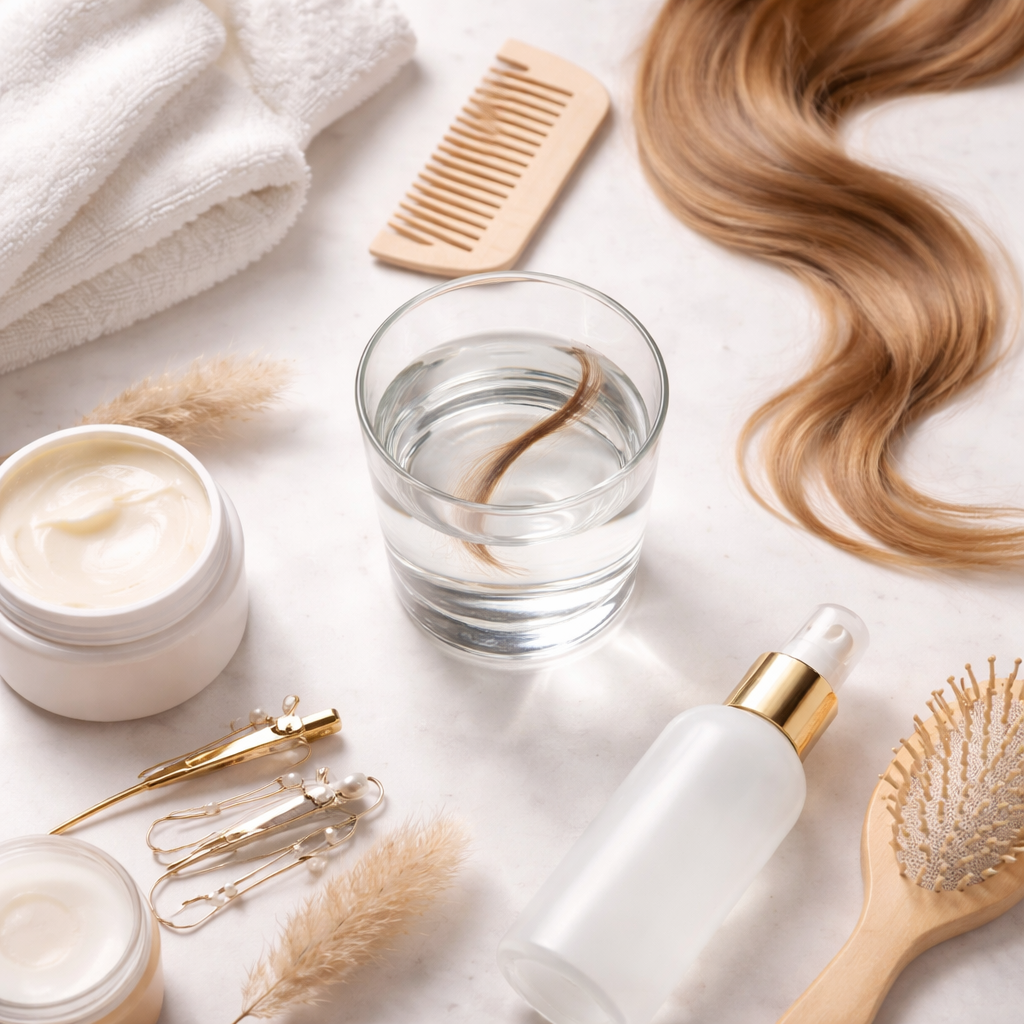
Understanding your hair starts with one simple thing: a hair porosity test. If your hair feels dry, frizzy, or doesn’t absorb products properly, your porosity level could be the reason.
In this guide, you’ll learn how to test hair porosity at home, understand your results, and adjust your routine for softer, healthier hair.
What Is Hair Porosity and Why It Matters
Hair porosity refers to how well your hair absorbs and retains moisture. It depends on the condition of your hair cuticle, the outer layer of your strands.
- Low porosity hair → tightly closed cuticle, hard for moisture to enter
- Medium porosity hair → balanced moisture absorption
- High porosity hair → open cuticle, loses moisture quickly
If your hair struggles with moisture retention, feels dry after conditioning, or gets frizzy easily, your porosity level is likely affecting it.
Signs Your Hair Might Have Low, Medium, or High Porosity
Before doing a hair porosity test, you can often spot clues:
Low Porosity Hair
- Products sit on top of hair
- Takes long to get fully wet
- Slow drying time
Medium Porosity Hair
- Holds styles well
- Absorbs products evenly
- Looks healthy and shiny
High Porosity Hair
- Gets wet quickly
- Dries very fast
- Feels dry or frizzy after washing
The Best Hair Porosity Tests You Can Do at Home
The Water Glass Test (Most Popular Method)
This is the classic hair porosity test water method.
Steps:
- Take a clean strand of hair
- Drop it into a glass of water
- Wait 2–4 minutes
Results:
- Floats → low porosity
- Mid-level → medium porosity
- Sinks → high porosity
The Spray Bottle Test (More Accurate Method)
This method works better if your hair has product buildup issues.
Steps:
- Spray a small section of dry hair
- Watch how water reacts
Results:
- Water sits on top → low porosity
- Slowly absorbs → medium
- Instantly absorbs → high
The Slip Test (Quick Texture Check)
A simple way to check your hair cuticle health.
Steps:
- Take a strand
- Slide your fingers upward
Results:
- Smooth → low porosity
- Slight texture → medium
- Rough/bumpy → high porosity
Common Mistakes That Give Wrong Results
Many people get inaccurate results because of:
- Testing hair with product buildup
- Using dirty or oily strands
- Testing wet hair instead of clean, dry hair
Always test clean hair for the most accurate results.
Understanding Your Results (What Your Hair Is Telling You)
Low Porosity Hair
- Moisture struggles to enter
- Products may feel heavy
Focus on lightweight hydration and gentle heat.
Medium Porosity Hair
- Balanced hydration
- Easy to maintain
Stick to a simple, consistent routine.
High Porosity Hair
- Moisture escapes quickly
- Often linked to heat damage or chemical damage
Needs deep conditioning and protein support.
What to Do After Your Hair Porosity Test
Now that you know your type, your routine should match your hair’s needs.
- Balance protein vs moisture
- Avoid using random products
- Adjust your routine based on your results
This is the step most people skip—but it’s what actually transforms your hair.
Best Hair Care Routine Based on Your Porosity Type
Routine for Low Porosity Hair
- Use lightweight, water-based products
- Apply heat to help absorption
- Avoid heavy oils
Routine for Medium Porosity Hair
- Maintain moisture balance
- Use occasional deep conditioning
Routine for High Porosity Hair
- Focus on moisture retention
- Use protein treatments to repair damage
Can Hair Porosity Change Over Time?
Yes, your porosity isn’t fixed.
It can change due to:
- Heat styling tools
- Chemical treatments
- Environmental exposure
If your hair starts feeling different—like drying faster or becoming harder to manage—it may be time to test your hair porosity again.
Quick Comparison: Low vs Medium vs High Porosity
| Feature | Low Porosity | Medium Porosity | High Porosity |
|---|---|---|---|
| Moisture absorption | Slow | Balanced | Fast |
| Drying time | Slow | Normal | Fast |
| Product behavior | Sits on hair | Absorbs well | Absorbs quickly |
| Main concern | Buildup | Maintenance | Dryness/frizz |
Final Thoughts: Find What Works for Your Hair
Doing a simple hair porosity test at home can completely change how you care for your hair.
Instead of guessing what products to use, you’ll finally understand:
- Why your hair behaves a certain way
- What it actually needs
- How to build a routine that works
Once you know your porosity type, achieving soft, shiny, and healthy hair becomes much easier.