

Damaged hair is frustrating. One day it looks manageable, and the next it feels dry, brittle, or impossible to style. If you’re searching for how to fix damaged hair, the truth is this: while you can’t reverse all damage instantly, you can significantly improve the look, feel, and strength of your hair with the right care and habits.
This guide breaks down what damaged hair really is, what helps it recover, and how to build a realistic routine that supports healthier hair over time — without miracle claims or complicated steps.
Understanding Hair Structure and Why Damage Shows Up
Hair strands are made of layers, with the outer cuticle acting as a protective shield. When that cuticle becomes rough or lifted, moisture escapes easily, and hair starts to feel dry, weak, and prone to breakage.
Damage doesn’t happen overnight. Heat styling, chemical treatments, rough handling, and even everyday habits slowly wear down this protective layer. That’s why repairing damaged hair takes consistency rather than quick fixes.
Common Types of Hair Damage (And Their Triggers)
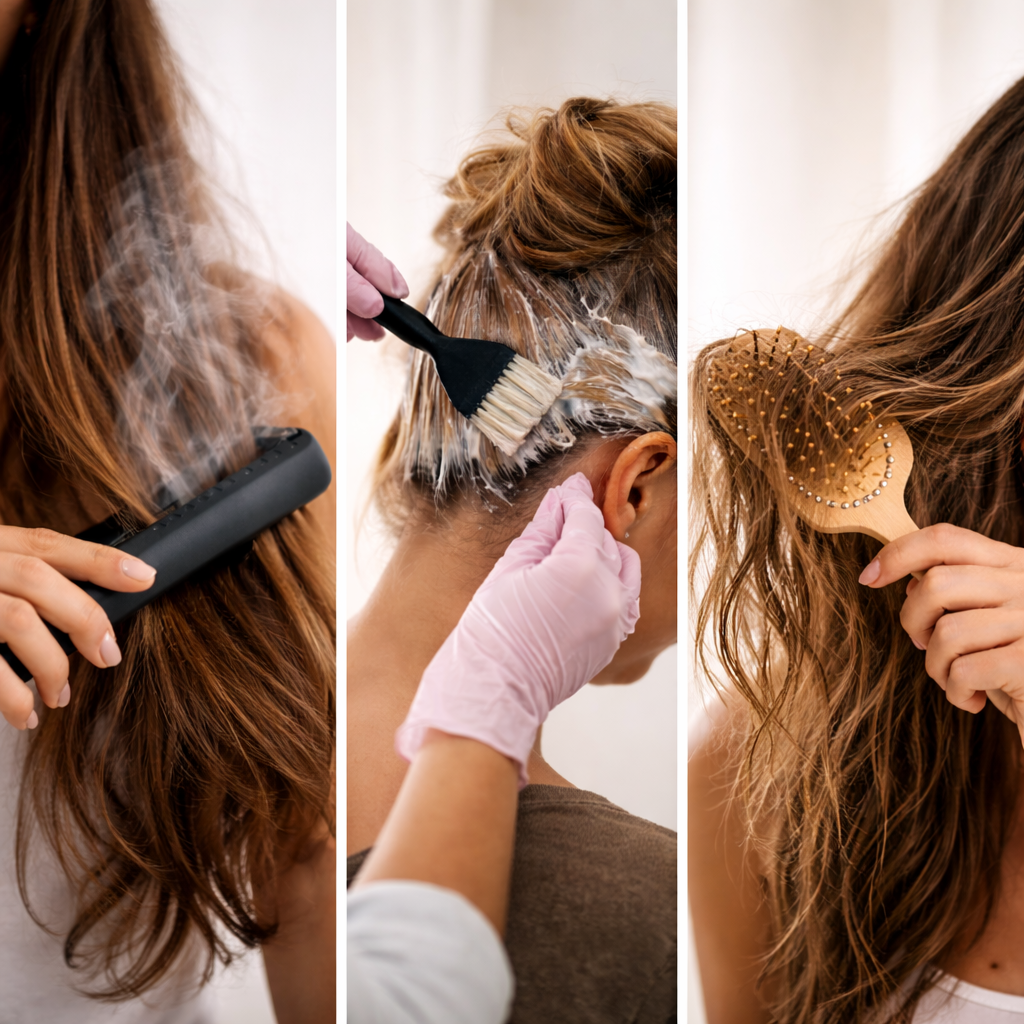
Heat-Related Damage
Frequent blow-drying, straightening, or curling weakens the hair’s structure. Over time, heat-damaged hair loses elasticity and becomes more fragile.
Chemical and Color Damage
Bleaching, coloring, and chemical treatments strip the hair of moisture and natural oils, often leading to dry and damaged hair that snaps easily.
Mechanical Damage
Brushing aggressively, using regular towels, or styling wet hair roughly can cause breakage — even without heat or chemicals involved.
Signs Your Hair Needs Repair, Not More Styling
Many people confuse styling issues with damage. Your hair may need repair if you notice:
- Split ends that return quickly
- Breakage instead of normal shedding
- Rough texture or dull appearance
- Hair that tangles easily or won’t hold moisture
These are clear signs your hair care routine needs support rather than more styling products.
What Actually Helps Repair the Look of Damaged Hair
Moisture Restoration Comes First
One of the most effective ways to fix damaged hair at home is restoring lost moisture. Deep conditioning treatments help smooth the cuticle, making hair feel softer and look healthier.
Using a nourishing hair mask once or twice a week can dramatically improve dryness and manageability.
Strengthening Without Overdoing Protein
While strengthening treatments can help, too much protein can make hair stiff and brittle. Balance is key — hydration and gentle strengthening work best together.
Building a Hair Repair Routine That Works Long-Term
Daily Care Essentials
Choose gentle cleansing habits that don’t strip moisture. Washing less frequently and focusing conditioner on mid-lengths and ends can reduce further damage.
After washing, apply a lightweight leave-in product to help protect fragile strands.
Weekly and Monthly Maintenance
Weekly treatments support damaged hair recovery, while regular trims prevent split ends from traveling up the hair shaft — an often-ignored but crucial step in damaged hair care.
Heat Styling and Damaged Hair — How to Minimize Harm
Heat doesn’t have to be off-limits, but protection is essential. Always apply a heat protectant before styling to reduce moisture loss and surface damage.
Lower heat settings and reducing how often you style can make a noticeable difference in preventing further hair breakage.
Lifestyle Factors That Affect Hair Recovery
Sleep and Friction Matter More Than You Think
Night-time friction can undo your hair care efforts. Switching to a silk or satin pillowcase helps reduce breakage and moisture loss while you sleep.
Environmental Exposure
Sun, pollution, and dry air all contribute to ongoing damage. Protective styles and barrier products help shield hair from daily stressors.
How Long Does It Take to Fix Damaged Hair?
This is one of the most common questions — and the answer depends on the type of damage.
- Minor dryness: noticeable improvement within weeks
- Moderate damage: visible progress in 1–3 months
- Severe chemical or heat damage: gradual improvement, often requiring trims
Understanding this timeline helps set realistic expectations and prevents frustration.
When Cutting Hair Is the Healthiest Choice
Some damage can’t be repaired cosmetically. If hair continues to split, snap, or feel gummy when wet, trimming damaged ends allows healthier hair to grow without further breakage.
This step is often what finally allows a damaged hair treatment routine to work effectively.
Long-Term Hair Care Habits That Prevent Future Damage
Healthy hair maintenance is about protection, not perfection:
- Be gentle with wet hair
- Avoid excessive heat
- Keep moisture levels balanced
- Stay consistent with care
These habits matter more than chasing new products or trends.
Final Thoughts
Learning how to fix damaged hair naturally is less about quick solutions and more about steady improvement. By understanding what caused the damage, adjusting daily habits, and supporting your hair with the right treatments, you can restore softness, strength, and manageability over time.
Healthy hair isn’t built in a day, but with patience and care, it’s absolutely achievable.