
Natural hair remedies are becoming more popular as people look for gentler ways to improve hair health. One ingredient that keeps appearing in beauty routines is rosemary oil for hair growth. Many people searching for this treatment want to know one thing: does rosemary oil really grow hair and what do the results look like before and after?
Rosemary essential oil has been used in hair care for years because it supports scalp circulation, follicle health, and stronger hair growth. When used consistently as part of a routine, some people notice improvements in hair density, reduced shedding, and healthier strands over time.
In this guide, we’ll explore the science behind rosemary oil, realistic hair growth results, a timeline for progress, and how to use it correctly for stronger and fuller hair.
What Is Rosemary Oil and Why It Is Used in Hair Care
Rosemary oil is an essential oil extracted from the leaves of the rosemary plant. In beauty and hair routines, it is commonly used to support scalp health and hair regrowth.
Many natural hair treatments include rosemary because it contains powerful compounds that help improve the environment around the hair follicles. A healthy scalp is one of the most important factors for maintaining thicker and stronger hair.
Some of the benefits associated with rosemary oil hair treatments include:
- Supporting scalp circulation
- Helping reduce scalp inflammation
- Strengthening hair strands
- Encouraging healthier hair growth cycles
Because of these benefits, rosemary oil has become one of the most popular natural hair growth remedies.
The Science Behind Rosemary Oil and Hair Regrowth
Research suggests that rosemary oil may support hair growth by improving blood circulation around the scalp. Better circulation allows hair follicles to receive the nutrients and oxygen they need to stay active during the anagen phase, which is the active hair growth stage.
Rosemary oil also contains antioxidants and anti-inflammatory compounds that help protect the scalp from irritation. A calmer scalp environment may reduce some causes of hair thinning and breakage.
Another reason rosemary oil receives attention is because some studies have compared it with minoxidil, a common treatment used for hair loss. While results can vary from person to person, rosemary oil showed promising improvements in hair density and hair regrowth when used consistently.
Because of these factors, rosemary oil is often included in scalp massage treatments and hair growth routines.
Rosemary Oil Hair Growth Before and After: What Results Look Like
When people search for rosemary oil hair growth before and after results, they often expect dramatic changes very quickly. However, natural treatments usually work more gradually.
Most people who use rosemary oil regularly notice improvements in several areas rather than instant hair regrowth.
Common changes people report include:
- Reduced hair shedding during washing or brushing
- Healthier scalp condition
- New baby hairs appearing near the hairline
- Stronger strands with less breakage
While rosemary oil may support hair regrowth, results often depend on factors such as hair type, scalp health, consistency of use, and overall hair care habits.
Rosemary Oil Hair Growth Timeline
Understanding the timeline helps set realistic expectations.
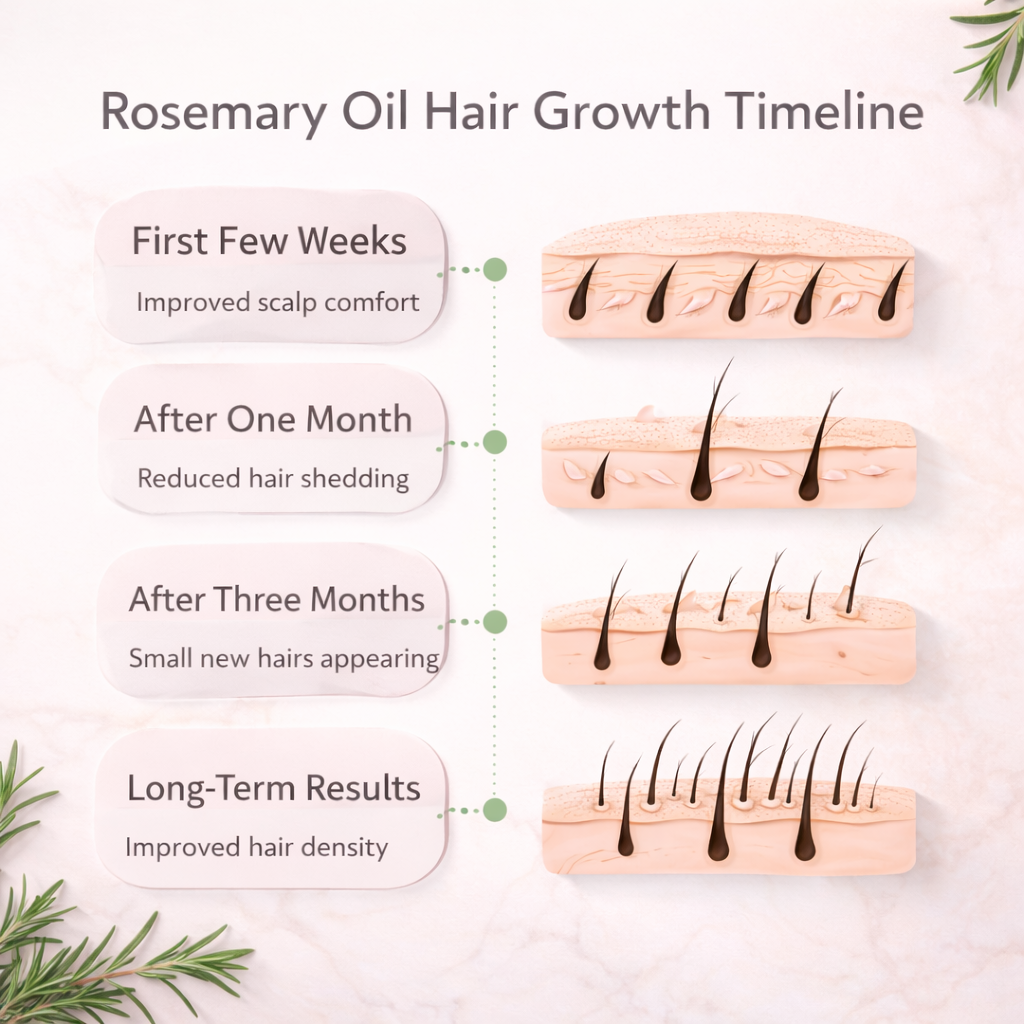
First Few Weeks
During the first few weeks, improvements usually happen on the scalp level. Many people notice less dryness and better scalp comfort.
After One Month
Around the one-month mark, some people report reduced hair shedding and stronger strands.
After Three Months
This is when small new hairs may begin appearing around the hairline or thinning areas.
Long-Term Results
With consistent use over several months, some users notice improved hair density and healthier hair growth patterns.
Since hair growth naturally happens slowly, patience and consistency are key.
How to Build a Rosemary Oil Hair Routine
Using rosemary oil correctly can make a big difference in results. Because it is a concentrated essential oil, it should always be diluted with a carrier oil before applying to the scalp.
Simple Routine for Rosemary Oil Hair Growth
- Mix a few drops of rosemary essential oil with a carrier oil.
- Apply the mixture directly to the scalp.
- Gently massage the scalp for several minutes.
- Leave it on for at least 30 minutes or overnight.
- Wash hair as usual.
Repeating this routine two to three times per week may help support scalp stimulation and healthier hair growth.
Carrier Oils That Improve Rosemary Oil Absorption
Carrier oils help dilute essential oils and make them easier to spread across the scalp.
Some of the best carrier oils to combine with rosemary oil include:
- Jojoba oil – closely resembles natural scalp oils
- Castor oil – commonly used for thicker hair appearance
- Coconut oil – helps moisturize the scalp
These oils allow rosemary oil to penetrate more evenly into the scalp and support overall hair strengthening.
Lifestyle Factors That Affect Hair Growth Results
Hair growth is influenced by more than just topical products. Several lifestyle factors can affect how well your hair responds to treatments.
Important factors include:
- balanced nutrition with enough protein
- stress management
- good scalp hygiene
- avoiding excessive heat styling
When these habits are combined with a consistent rosemary oil hair routine, the chances of seeing positive results may improve.
Hair Care Habits That Support Natural Hair Growth
Healthy hair habits can help protect your strands while encouraging growth.
Helpful habits include:
- gentle brushing techniques
- limiting heat styling tools
- protecting hair during sleep
- using microfiber towels instead of rough cotton towels
Natural Oils Compared With Rosemary Oil
Many oils are used in natural hair care routines, but each one works slightly differently.
Castor oil is often used to improve hair thickness and shine.
Peppermint oil may provide a cooling sensation and stimulate the scalp.
Onion oil is sometimes used for hair strengthening due to its sulfur content.
Rosemary oil stands out because it focuses on scalp circulation and follicle support, which are essential parts of healthy hair growth.
Signs That Rosemary Oil May Be Helping Your Hair
There are several signs that indicate rosemary oil may be supporting healthier hair.
These signs include:
- less hair breakage
- stronger strands
- improved scalp condition
- new baby hairs appearing near thinning areas
These improvements often appear gradually as the scalp environment becomes healthier.
When to Consider Professional Hair Treatments
Natural remedies can support scalp health, but they may not always solve every hair loss concern. If hair thinning continues or worsens, it may be helpful to consult a professional.
A dermatologist or hair specialist can evaluate factors such as hormonal changes, nutrition deficiencies, or medical conditions that affect hair growth.
Final Thoughts
Rosemary oil has become one of the most talked-about natural solutions for improving hair health. While it may not produce instant results, consistent use can help support scalp circulation, healthier follicles, and stronger hair growth over time.
When combined with good hair care habits and a balanced routine, rosemary oil may contribute to noticeable improvements in hair strength, density, and overall scalp health.
Natural hair treatments work best when used patiently, and rosemary oil remains one of the most promising options for those exploring gentle, plant-based hair care routines.