
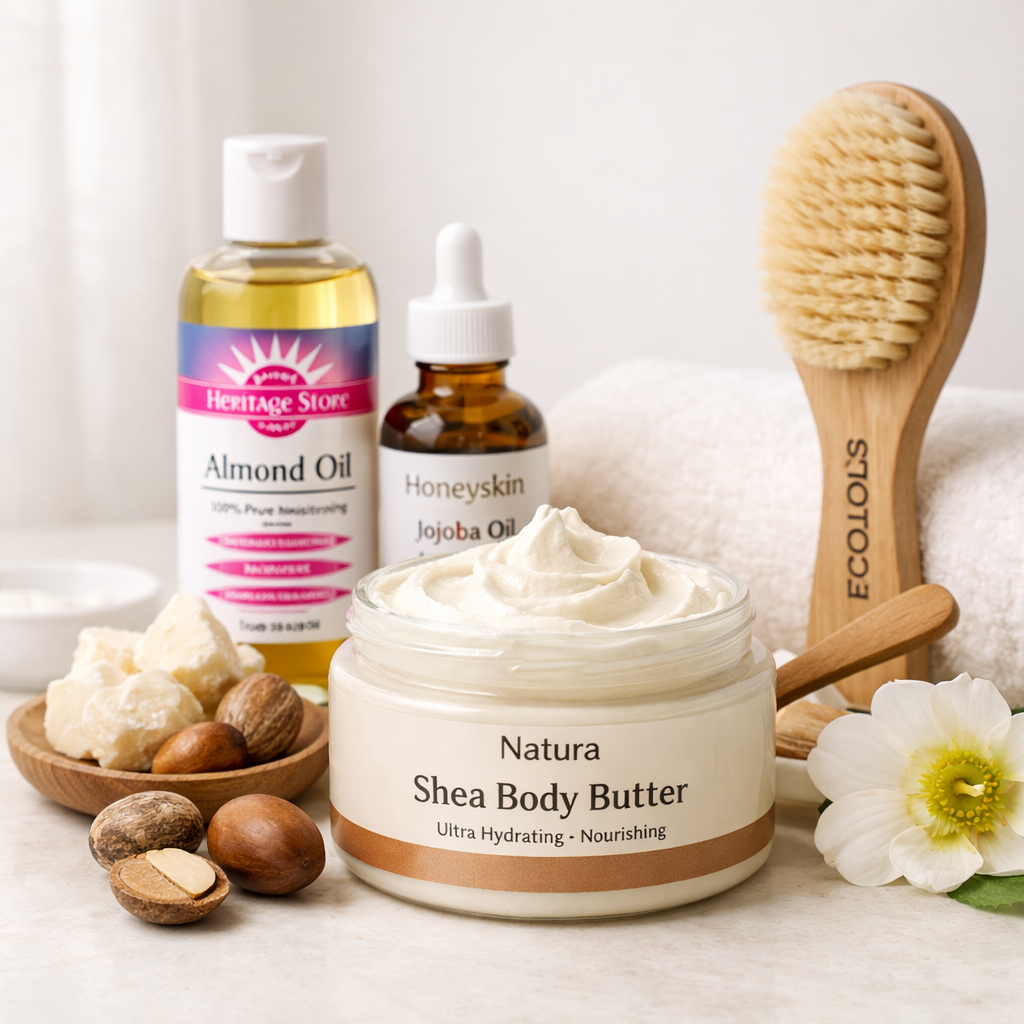
If your skin often feels dry, tight, or rough, adding a richer moisturizer to your routine can make a noticeable difference. One product that many skincare enthusiasts rely on is body butter. Known for its thick texture and nourishing ingredients, it helps replenish moisture and keep skin feeling soft for longer periods.
Unlike lightweight lotions that absorb quickly, this type of moisturizer is usually made with plant-based butters and natural oils. These ingredients help support the skin barrier and reduce moisture loss, which is especially helpful during colder months or for people with very dry skin.
In this guide, we’ll explain what body butter is made of, how it benefits the skin, and the best way to use it in a simple body care routine.
What Is Body Butter?
Body butter is a rich moisturizing product formulated with plant butters and oils that provide deep hydration. Its thicker consistency comes from ingredients such as shea butter or cocoa butter, which are naturally high in fatty acids and nourishing compounds.
Because it contains less water than many lotions, it tends to create a protective layer on the skin. This helps keep moisture from evaporating and allows the skin to stay hydrated for longer.
Many people turn to body butter when their skin feels:
- dry or flaky
- rough around elbows or knees
- tight after showering
- dull due to dehydration
For these reasons, it’s often used as a deep moisturizer within a body care routine.
What Is Body Butter Made Of?
Most formulas combine natural plant butters with nourishing oils. Together, these ingredients help soften the skin while supporting hydration.
Plant Butters That Provide Moisture
The base usually comes from natural butters known for their moisturizing properties.
Common examples include:
- Shea butter, valued for its ability to nourish and soften the skin
- Cocoa butter, often used to improve skin smoothness
- Mango butter, which provides a lighter yet still hydrating texture
These butters contain fatty acids and vitamins that support skin conditioning and help maintain softness.
Oils That Help Lock In Hydration
Many products also include plant oils that help improve moisture retention.
These may include:
- coconut oil
- almond oil
- jojoba oil
These oils help strengthen the skin barrier while improving overall hydration.
Benefits of Using Body Butter for Skin
One reason this moisturizer is so popular is its ability to deliver long-lasting hydration. Because of its concentrated formula, it can provide several benefits for the skin.
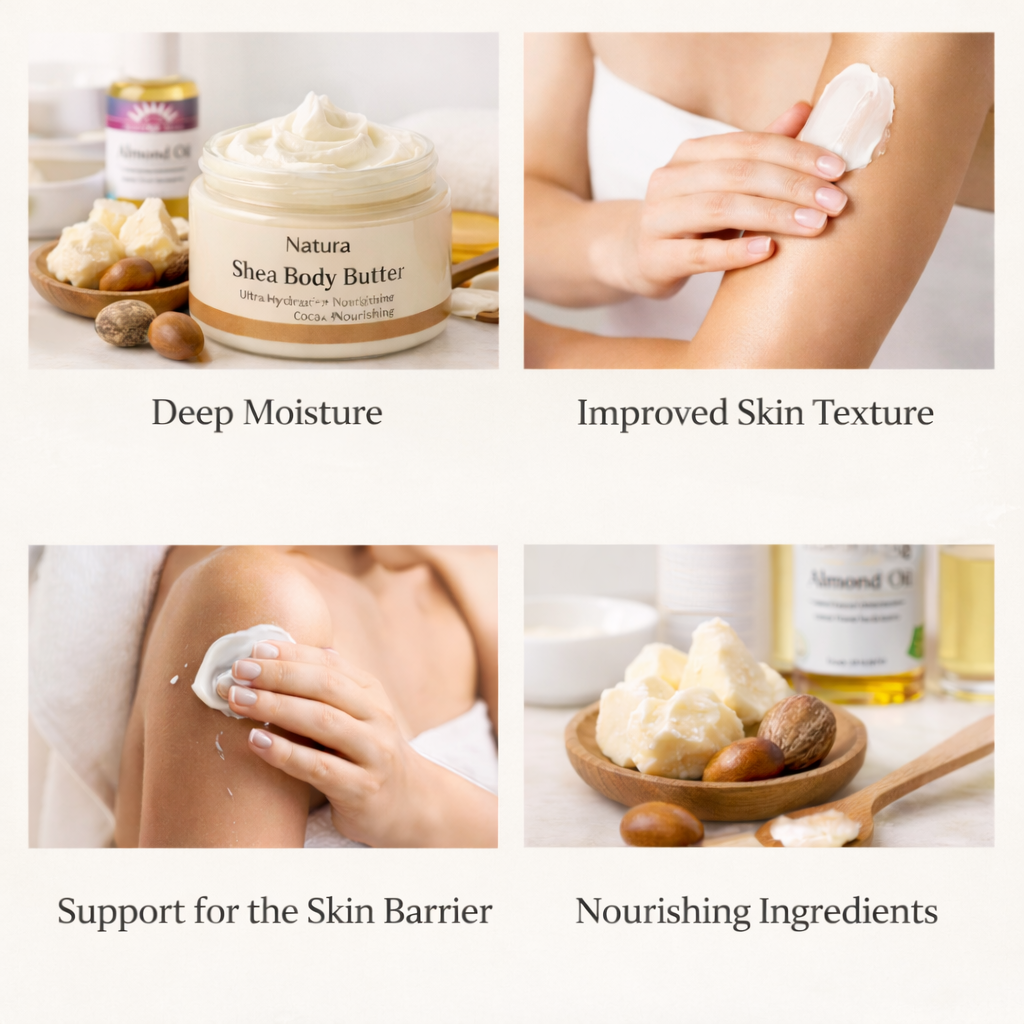
Deep Moisture
The blend of natural butters and oils helps replenish moisture and prevent dryness.
Improved Skin Texture
Regular use can soften rough areas such as elbows, heels, and knees.
Support for the Skin Barrier
The thicker formula creates a protective layer that helps keep hydration from escaping.
Nourishing Ingredients
Many formulas contain antioxidants and vitamins that help support healthy-looking skin.
These qualities make body butter especially useful for people with very dry skin or seasonal dryness.
Body Butter vs Lotion: Understanding the Difference
Both products help hydrate the skin, but they differ in texture and formulation.
| Body Butter | Lotion |
|---|---|
| Thick and creamy texture | Lightweight consistency |
| Higher oil content | Higher water content |
| Longer-lasting hydration | Absorbs quickly |
| Often used for dry skin | Suitable for normal skin |
Those who prefer lightweight products may choose lotion for everyday use, while people with very dry skin often rely on body butter for deeper hydration.
How to Use Body Butter Properly
Applying this product correctly can help maximize its moisturizing effect.
Apply After Showering
Skin absorbs moisture more effectively when it is slightly damp after bathing.
Use a Small Amount
Because the formula is concentrated, a little goes a long way.
Massage Into Dry Areas
Focus on areas that tend to feel rough, such as elbows and heels.
Allow Time to Absorb
Let the product settle into the skin before getting dressed.
Recommended product (Shea Butter Body Butter)
Who Should Use Body Butter?
This type of moisturizer can work for many skin types, but it is especially helpful for people experiencing:
- persistent dryness
- rough patches
- winter skin concerns
- dull or dehydrated skin
It’s also commonly used to improve the feel of rough areas such as elbows, knees, and feet.
Best Time to Apply Body Butter for Maximum Hydration
Timing can influence how well your moisturizer performs.
The most effective times to apply it include:
- right after a shower
- before bedtime
- during colder seasons when the skin loses moisture faster
Applying it at night can be particularly helpful, as the skin has time to absorb the nourishing ingredients while you sleep.
Common Mistakes When Using Body Butter
Even high-quality skincare products may not perform well if used incorrectly.
Some common mistakes include:
Using Too Much
Applying excessive product can make the skin feel greasy.
Skipping Exfoliation
Dead skin buildup can prevent moisturizers from absorbing effectively.
Applying to Very Wet Skin
Skin should be slightly damp rather than dripping wet.
Recommended tool (Exfoliating Body Brush)
How Body Butter Fits Into a Simple Body Care Routine
A balanced routine can help maintain smooth, healthy skin.
A basic body care routine may include:
- Cleansing with a gentle body wash
- Exfoliating once or twice a week
- Applying a rich moisturizer to lock in hydration
Following these steps regularly can help maintain softness and support overall skin health.
Final Thoughts
Body butter is a nourishing moisturizer designed to provide deeper hydration than many traditional lotions. Its combination of plant butters and natural oils helps soften the skin while supporting the moisture barrier.
When used consistently as part of a body care routine, it can help keep the skin feeling smooth, hydrated, and comfortable throughout the year.