
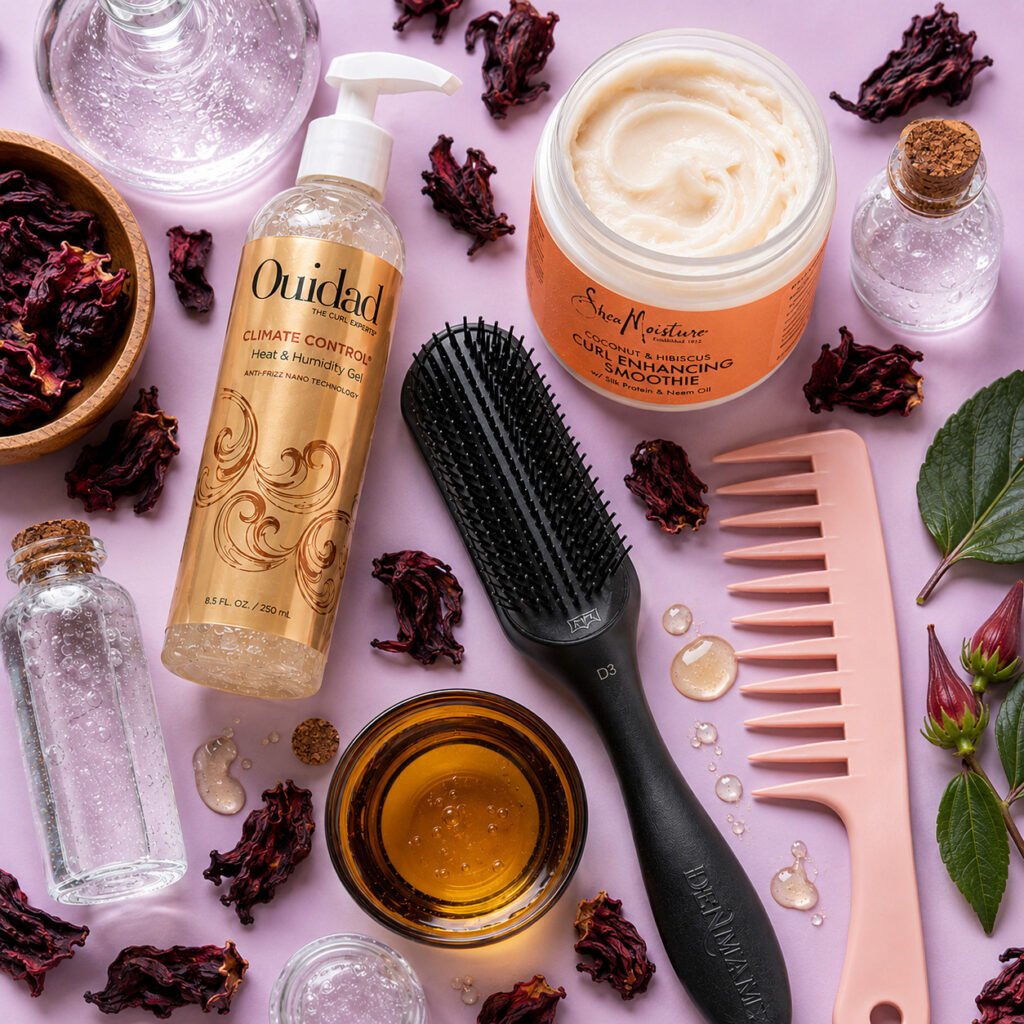
Here’s the deal: most curly hair advice online is written by people who clearly air-dry their hair once a year and call it a curl routine. Hairstyles for curly hair for women are not just about which braid looks cute on Pinterest. They’re about working with your curl pattern, porosity, and density so your hair doesn’t fight you every single morning. My 3A coils used to frizz into a full cloud shape until I stopped following generic style tutorials and started paying attention to actual hair structure. I’ve been testing the SheaMoisture Coconut & Hibiscus Curl Enhancing Smoothie since last spring, and it’s genuinely changed how my styles hold. Furthermore, the right approach takes way less time than you’d think once you know what your hair actually needs.
How Curly Hair Works
Curly hair has an elliptical follicle shape. Round follicles produce straight hair whereas flattened ones produce curls. That asymmetry is why the hair shaft bends as it grows. As a result, each curve in the strand creates a potential weak point where moisture escapes and frizz sneaks in.
The curl’s shape also means sebum from your scalp has a harder time traveling from follicle to tip. Straight hair gets naturally coated, but hairstyles for curly hair often require extra moisture because curly strands are structurally drier and more prone to frizz.
Understanding your curl type matters, but honestly, porosity matters more. High-porosity hair absorbs products fast and loses moisture fast. Low-porosity hair resists everything until you add heat to open the cuticle. Your styling approach and your hairstyle choices should account for both.
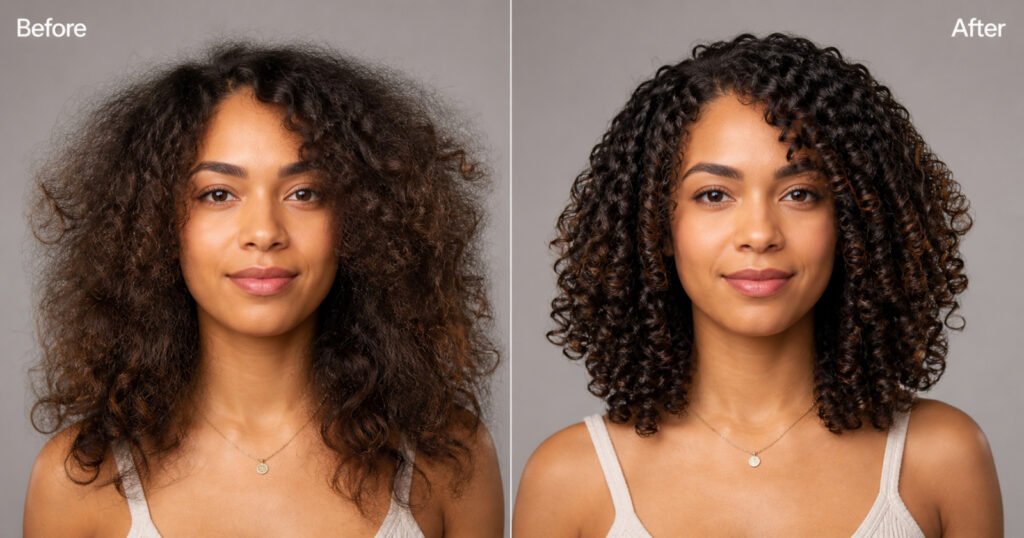
Before and After: What to Expect
| Feature | Before (Common Mistake) | After (Optimized Approach) |
|---|---|---|
| Product application | Applied to dry or towel-dried hair | Applied to soaking-wet hair, section by section |
| Product choice | Generic smoothing serum with silicones | Curl-specific cream or gel with humectants like glycerin |
| Styling technique | Brushing or combing dry curls | Finger-coiling or Denman brush on wet, product-coated hair |
| Drying method | Rubbing with a cotton bath towel | Plopping with a microfiber towel or cotton T-shirt |
| Frequency of washing | Daily shampoo stripping natural oils | Co-wash or low-poo every 3-4 days, deep condition weekly |
| Result | Undefined, frizzy, crunchy, or flat curls | Bouncy, defined curl pattern that holds shape for 2-3 days |
The Protocol
Here’s exactly how I style curly hair for definition that actually lasts past day one.
- Start with a clarifying wash once a month. Product buildup kills curl definition faster than anything. Use a sulfate-free clarifying shampoo, then follow immediately with a deep conditioner. First, clear the slate, then build.
- Detangle only on wet, conditioned hair. Work a wide-tooth comb or Denman brush through small sections while conditioner is still in. This is where you set the foundation for your curl pattern. Detangling dry curls causes breakage — and if you’ve been dealing with breakage, this single step alone makes a difference.
- Apply styling products in the shower before rinsing conditioner fully. I leave about 30% of my conditioner in, then layer gel over it on soaking-wet hair. The water acts as a carrier and helps the product spread evenly from root to tip.
- Choose your style while hair is still wet. Twist-outs, braid-outs, wash-and-go coils, pineapple updos as your curls are most pliable wet. I used the Ouidad Climate Control Heat & Humidity Gel last winter to set a two-strand twist-out and it held for four days straight without reapplying.
- Plop for 20 minutes, then air-dry or diffuse. Plopping removes excess water without disrupting your curl pattern. After plopping, either air-dry fully or use a diffuser on low heat. Never scrunch out the crunch until your hair is 100% dry as breaking the cast early ruins definition.
- Refresh second-day curls with water and a light cream. Mix water and a small amount of leave-in into your palms, then scrunch upward. This also protects your dry hair from getting worse between wash days.
Porosity Check Sidebar
Quick at-home porosity test: Drop a clean, product-free strand into a glass of room-temperature water. After two minutes, if it floats, you have low porosity. Sinks fast? High porosity. Stays in the middle? Normal porosity.
| Porosity Type | Signs | Best Styling Approach |
|---|---|---|
| Low Porosity | Products sit on hair and take forever to dry | Use lightweight liquids, apply products to warm damp hair, and use steam for better absorption |
| Normal Porosity | Holds moisture well and styles easily | Standard curl routines and most hairstyles for curly hair work well |
| High Porosity | Dries fast, frizzes quickly, and tangles easily | Layer heavier creams and seal moisture with oils to reduce frizz and dryness |
If you’re not sure where you land, check out our full hair porosity test guide — it walks through exactly what each result means for your routine.
Drugstore Gems vs. Salon Standards
| Feature | Drugstore Pick | Salon Professional |
|---|---|---|
| Defining cream | Cantu Shea Butter Leave-In Conditioning Repair Cream ($8-10) | Ouidad Curl Immersion No-Lather Coconut Cream Cleanser ($26) |
| Hold level | Light to medium (good for 2C-3A waves and loose curls) | Medium to strong (better for 3B-4C tighter coils) |
| Ingredients quality | Shea butter, glycerin (solid basics) | Botanical blends, climate-control technology, higher glycerin concentration |
| Frizz control | Works well in low humidity (below 60%) | Performs better in high humidity and heat |
| Longevity | Style holds 1-2 days | Style holds 3-4 days with proper technique |
| Best for | Low-porosity hair, everyday wash-and-go | High-porosity, color-treated, or heat-damaged curls |
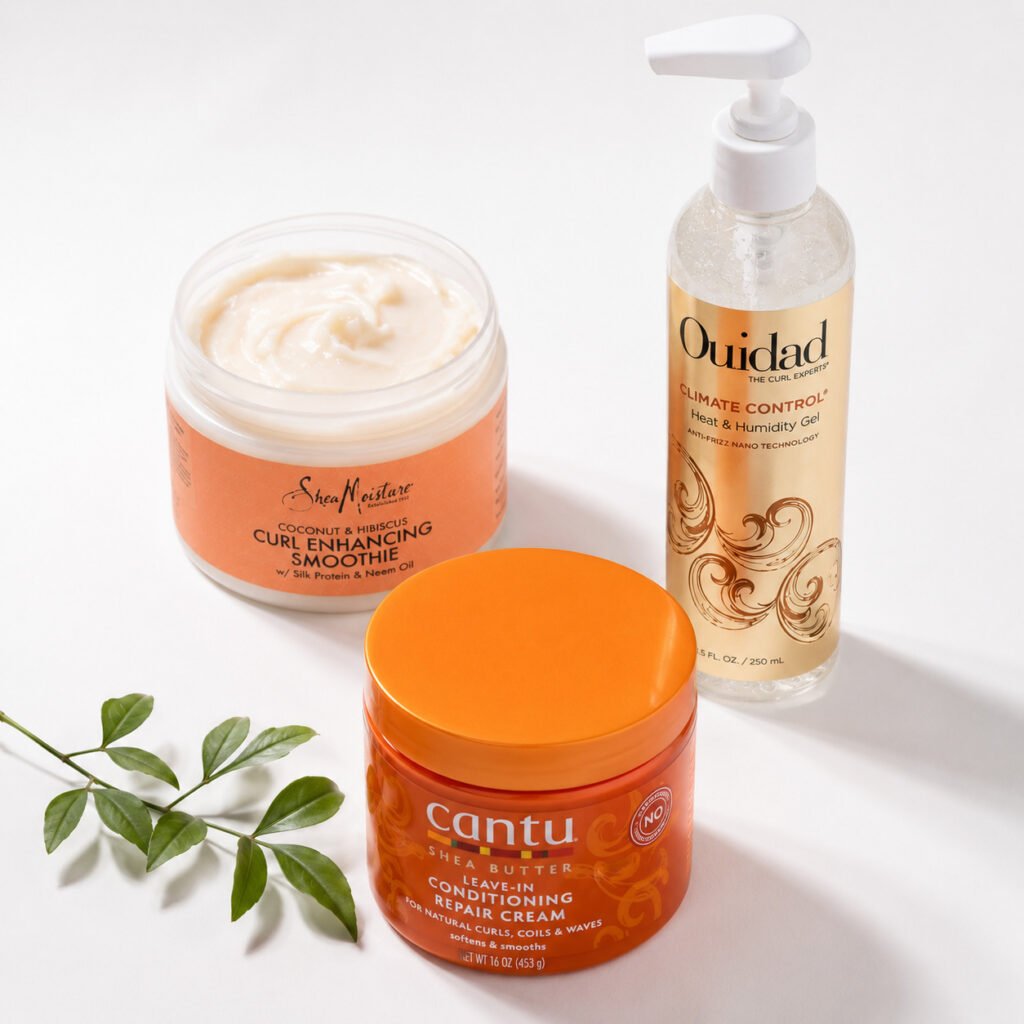
Honestly? The drugstore picks outperform salon products more often than the beauty industry wants to admit. I tested Cantu against a $45 curl cream side-by-side on my own 3A hair last summer, and the frizz results at the 24-hour mark were nearly identical. The main difference showed up at humidity levels above 75%.
Frequently Asked Questions
What hairstyles work best for tight 4C curls?
Protective styles are your best friend here, think twists, braids, flat twists, bantu knots, and high puff updos. These hairstyles for curly hair reduce daily manipulation, help retain length, and keep coils healthier over time. For wash-and-go looks, apply a thick cream and seal with a light oil like jojoba to lock in moisture and define curls without crunch.
How do I make curly hairstyles last more than one day?
Refresh with a water-based spray and a small amount of leave-in cream. Pineapple your hair at night using a loose scrunchie — never a tight elastic. Sleep on a satin pillowcase or use a satin bonnet. Furthermore, don’t over-manipulate roots in the morning, as that’s where frizz starts.
Can I wear curly hairstyles at work without looking undone?
Yes. A polished bun, low chignon, or sleek half-up style with defined curl sections looks completely professional. The key is second or third-day curls as they’re often more defined than fresh wash day curls. Tame edges with a light-hold edge control gel and you’re done.
Does cutting curly hair dry change the final look?
It genuinely does. Dry cutting lets your stylist see your curl pattern in its natural state. As a result, the shape is cut to your actual shrinkage, not an estimated length. Most curly hair specialists recommend asking for a dry cut, especially if you’ve been getting cuts that look uneven once your hair dries.
The Amber Verdict
Hairstyles for curly hair for women work best when you stop fighting shrinkage and start building a routine that respects your actual texture, porosity, and density. The styles aren’t complicated but the prep is what most people skip. Get that right, from follicle to tip, and your curls will do 80% of the styling work themselves. Pin this before your next wash day. You’ll want it.