
Here’s the deal, I almost ruined my hair chasing a long layered haircut off a Pinterest board last winter. My stylist warned me about face-framing angles and I ignored her. Three months later I was dealing with chunky, disconnected layers that made my already-fine hair look like it had given up on life. That experience sent me deep into layering techniques, and what I found genuinely surprised me. A long layered haircut is one of the most versatile cuts out there, but only when the technique matches your hair texture, density, and natural growth pattern. Get that wrong and you get what I got.
How a Long Layered Haircut Works
Let’s look at the chemistry, or rather, the geometry. Layers are created by cutting sections of hair at different elevations. Higher elevation means more length removed, which creates more movement and less bulk.
For most hair types, a long layered haircut uses a base length below the shoulders with internal layers starting anywhere from the chin down. The stylist controls weight distribution by adjusting the angle and tension at each section. Because of this, the cut behaves completely differently on straight, wavy, and curly hair.
Follicle to tip, what you’re actually doing is managing where the hair’s weight sits. Fine hair usually benefits from layers that remove bulk mid-shaft. Thick hair tends to need point-cutting or texturizing at the ends so it doesn’t puff outward like a triangle. These are not the same cut, even if they’re both called “long layers.”
The Role of Face-Framing Layers
Face-framing layers are the most misunderstood part. Most people ask for them without specifying how short. That detail matters enormously.
Short face frames hit around the chin and can look disconnected on oval and round faces if the angle is too steep. Longer, softer frames that begin near the collarbone tend to work for a wider range of face shapes. In my experience, a 45-degree graduation from the base weight line gives you movement without that harsh “curtain” effect.
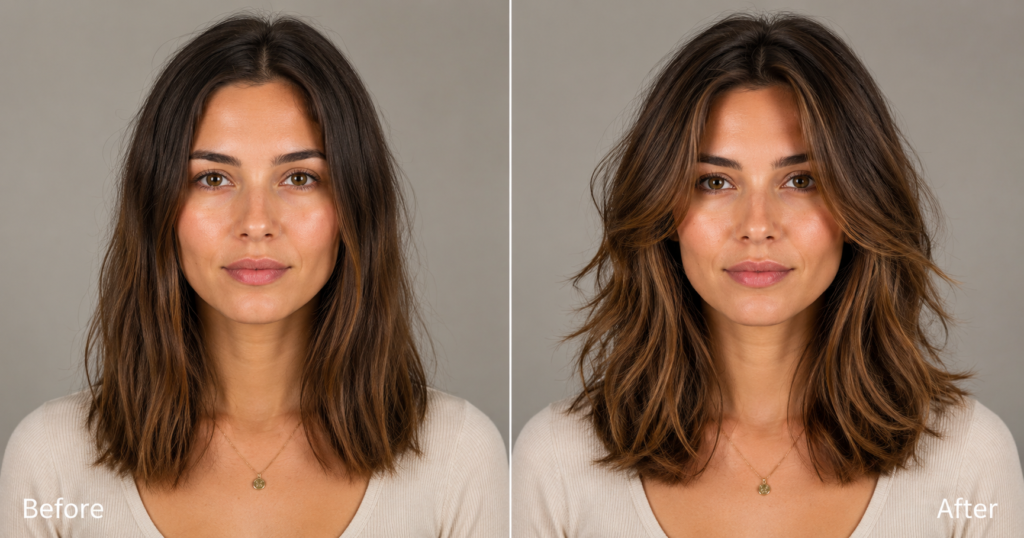
Before and After: What to Expect
| Feature | Before (Common Mistake) | After (Optimized Approach) |
|---|---|---|
| Layer placement | Layers starting too high, near crown | Internal layers beginning below the chin for length retention |
| Technique for texture | Blunt horizontal cuts on all hair types | Point-cutting or razor finishing matched to density |
| Face-framing angle | Steep 90-degree angle creates harsh disconnect | Soft 45-degree graduation blends seamlessly |
| Maintenance frequency | Skipping trims for 6+ months, layers grow out boxy | Shape-up trim every 10 to 12 weeks keeps movement intact |
| Styling approach | Blow-drying all sections in one direction, flattening layers | Diffusing or round-brushing section by section, lifting at roots |
| Result | Flat, shapeless length with visible weight buildup | Defined movement, volume at crown, blended ends |
The Protocol
Getting a long layered haircut right is about preparation before the chair and care after it. Here’s how I approach it now, after the disaster of my own misjudged Pinterest experiment.
- Bring three reference photos, not one. A single photo leaves too much interpretation. Bring one showing the layer length you want, one showing the face-frame style, and one showing the finish you want at the ends. Specificity protects you.
- Tell your stylist your texture when wet, not dry. Dry hair hides a lot. My 2A waves shrink about 15 percent when they fully dry, that matters for where your shortest layer actually lands. Most importantly, mention any spots where your hair grows in a different direction.
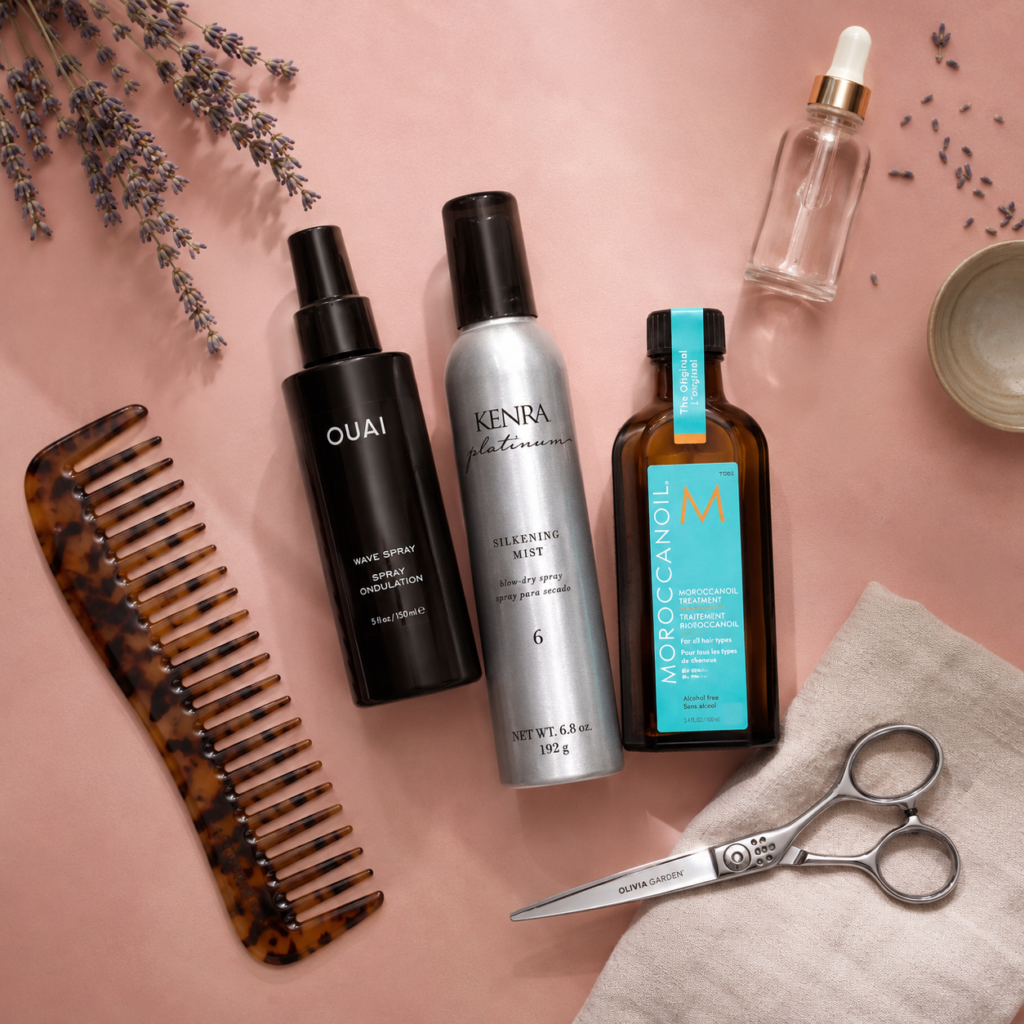
- Apply a pre-cut treatment the night before. Healthy, hydrated hair cuts more cleanly and holds its shape better after layering. I used Moroccanoil Treatment original formula the night before my last appointment — applied to damp hair, left overnight, shampooed out in the morning. The difference in how the ends behaved under the scissors was noticeable, genuinely.
- Ask for a dry check. Any stylist worth their scissors will check the cut while your hair is dry and styled the way you actually wear it. If they skip this step, ask for it. Layers can look perfect wet and completely wrong dry, especially on wavy or curly hair.
- Start your styling routine the same day. Don’t wait weeks to figure out how to work with your new layers. That first blowout or diffuse session is when you learn where the movement wants to go naturally. Follow that, not some YouTube tutorial filmed on different hair.
- Book your next trim before you leave the salon. Ten to twelve weeks is the sweet spot for most people. After that, the shortest layers start blending into the length and you lose the shape entirely.
Porosity Check: Why It Affects Your Layers
Before you choose a styling product for layered hair, knowing your porosity saves you a lot of wasted money.
Quick test: Drop a clean, dry strand of hair into a glass of room-temperature water. Check back in two minutes.
| Result | Porosity Level | What This Means for Layers |
|---|---|---|
| Strand floats at the top | Low porosity | Layers may feel stiff and resist moisture. Avoid heavy oils and use lightweight leave-ins. |
| Strand sits in the middle | Medium porosity | Most products work well. A balanced moisture-protein routine helps layers stay soft and defined. |
| Strand sinks quickly | High porosity | Layers may frizz and dry out fast. Use protein treatments and sealing products to maintain shape. |
Low porosity hair tends to resist moisture absorption, so heavy creams just sit on the surface and make layers look greasy. High porosity hair, often caused by color or heat damage, absorbs moisture fast but loses it just as fast. For those of you with high porosity, a protein-moisture balance routine makes the biggest difference in how your layers hold their shape.
Drugstore Gems vs. Salon Standards
| Feature | Drugstore Pick | Salon Professional |
|---|---|---|
| Finishing spray for layers | Aussie Instant Freeze Hair Spray, lightweight hold, accessible | Kenra Platinum Silkening Mist, smoother finish, controls frizz better on fine layers |
| Pre-style oil | OGX Argan Oil of Morocco, decent heat protection, slight residue | Moroccanoil Treatment Original, lighter feel, faster absorption, no greasy buildup |
| Wave enhancer for textured layers | Herbal Essences Curl Defining Cream, good hold, can feel stiff | Ouai Wave Spray, flexible definition, more natural movement on loose waves |
| Deep conditioning for cut health | Pantene Repair & Protect Mask, solid protein boost, widely available | Olaplex No. 3 Hair Perfector, repairs disulfide bonds, better for chemically treated layered hair |
| Price range | $5 to $12 per product | $18 to $45 per product |
| Best for | Low-maintenance routines, budget-conscious styling | Color-treated or high-porosity layered hair needing precise results |
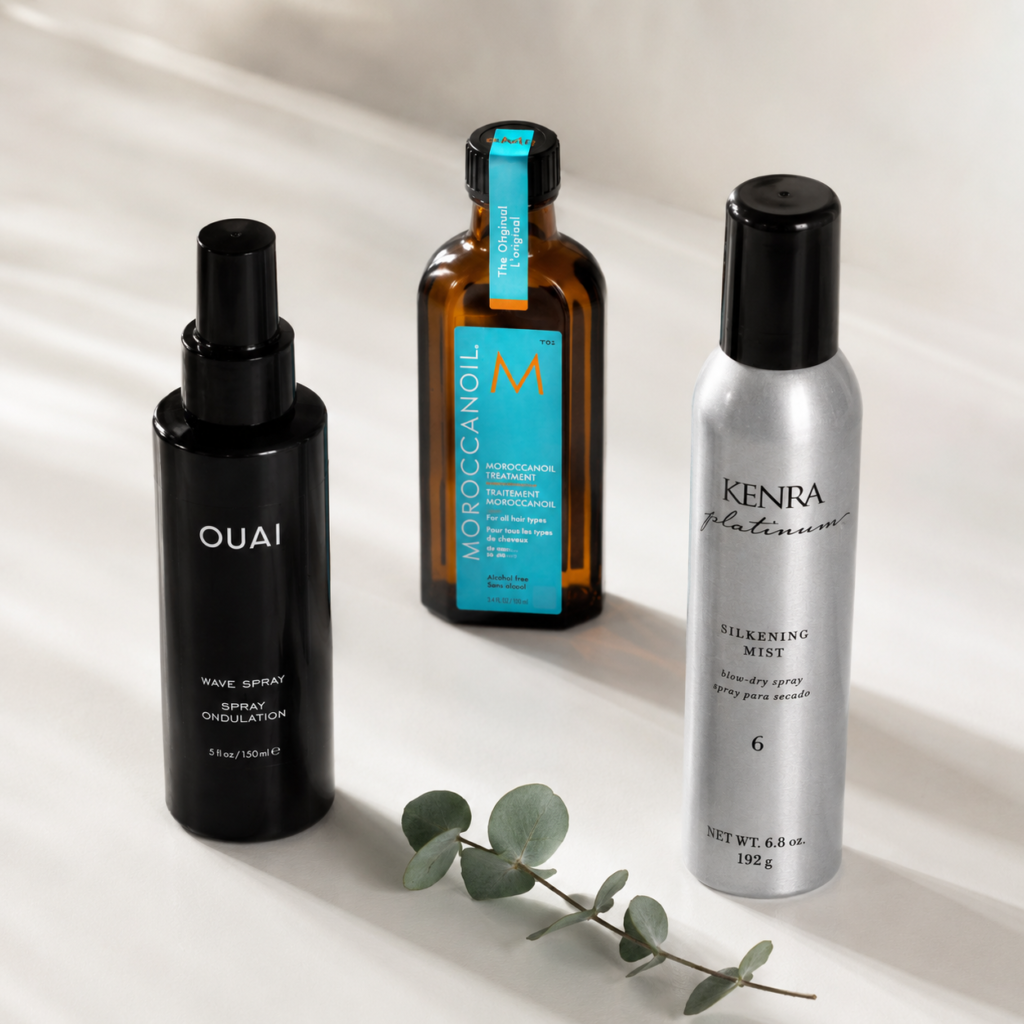
Honestly, I don’t think you need the salon version of everything. The drugstore wave cream and finishing spray perform well on healthy, uncolored hair. But for anyone with chemical processing or high porosity, the salon options earn their price difference.
Frequently Asked Questions
Does a long layered haircut work on fine hair?
It tends to work really well on fine hair, actually, with one caveat. The layers need to start lower, around the collarbone rather than the crown. Layers cut too high remove the weight fine hair relies on for body. Furthermore, avoiding razor cuts on fine hair helps, since razoring thins the ends in a way that can make fine hair look sparse.
How often should I trim a long layered haircut?
Every 10–12 weeks is the general rule, but it depends on how fast your hair grows and how defined you want your layers. If your hair grows faster than average, roughly half an inch per month, you may notice the shortest layers blending into the length around week eight. In other words, don’t wait for a full season to pass.
Can I get a long layered haircut on curly hair?
Yes, but the technique needs to change significantly. Curly hair should almost always be cut dry, because shrinkage affects where each layer actually sits when worn naturally. Most importantly, the layers need to follow the curl pattern rather than cutting across it. A stylist trained in Deva Cut or similar curl-specific methods tends to get better results.
What’s the difference between long layers and curtain bangs?
Curtain bangs are a specific face-framing element, they part in the center and taper toward the cheekbones. Long layers refer to the overall structure throughout the entire length of the hair. However, curtain bangs are often added alongside a long layered haircut because the two styles complement each other. You can have one without the other.
The Amber Verdict
A long layered haircut is one of the most flattering cuts across hair types, but the technique details matter more than most people realize before they sit in the chair. Bring specific references, ask for a dry check, and match your styling products to your porosity, not just your hair type label. Pin this before your next salon appointment and bring it with you, it’ll save you the three-month regret spiral I went through.