
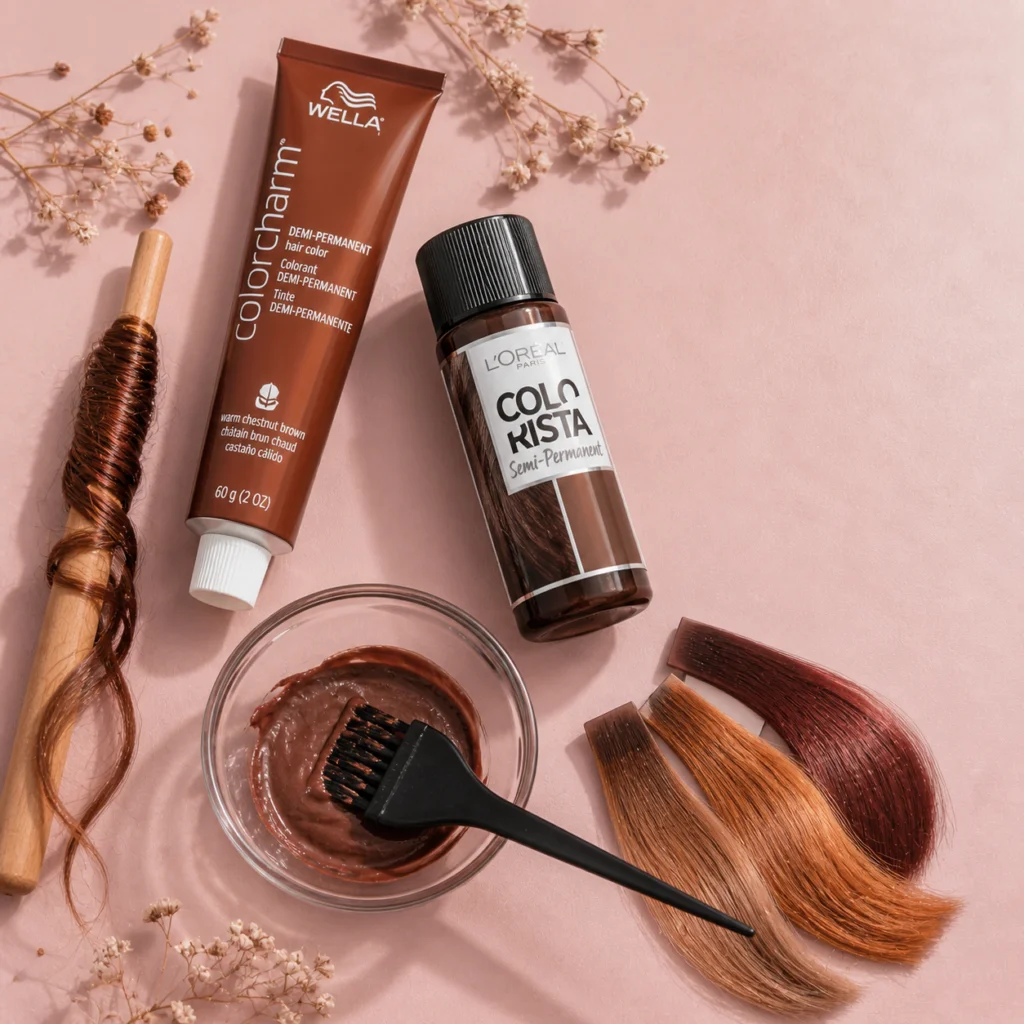
Here’s the deal, most people grab whatever box color looks pretty at the drugstore, without realizing that choosing the wrong formula type can wreck their hair over time. What is demi permanent hair color, exactly? It’s the low-commitment, low-damage middle ground between a rinse and a full permanent color, and it deserves way more attention than it gets. If you’ve been bleaching or permanently coloring on repeat, the Wella ColorCharm Demi-Permanent Hair Color in warm chestnut might genuinely shift your whole approach to coloring.
Demi-permanent color uses a low-volume developer, usually 5 or 10 volume, to deposit pigment just inside the outer layer of your hair shaft. Because of this, it adds shine and tone without stripping your natural color first.
How Demi Permanent Hair Color Works
Let’s look at the chemistry here, because it’s actually fascinating. Your hair shaft has an outer layer called the cuticle, and beneath it sits the cortex — that’s where permanent color plants its pigment permanently. Demi-permanent color, on the other hand, only partially lifts the cuticle to deposit color molecules just at the cortex’s edge.
This means that the color molecules aren’t anchored as deeply. As a result, they fade gradually with each wash instead of growing out with a harsh root line. That gradual fade is the whole reason colorists love demi formulas for toning, refreshing, and blending grays.
The process uses a low-volume hydrogen peroxide developer, typically 5 to 10 volume. This is far less oxidizing than the 30 or 40 volume used in permanent color. Therefore, from follicle to tip, your hair keeps more of its structural integrity and natural moisture.
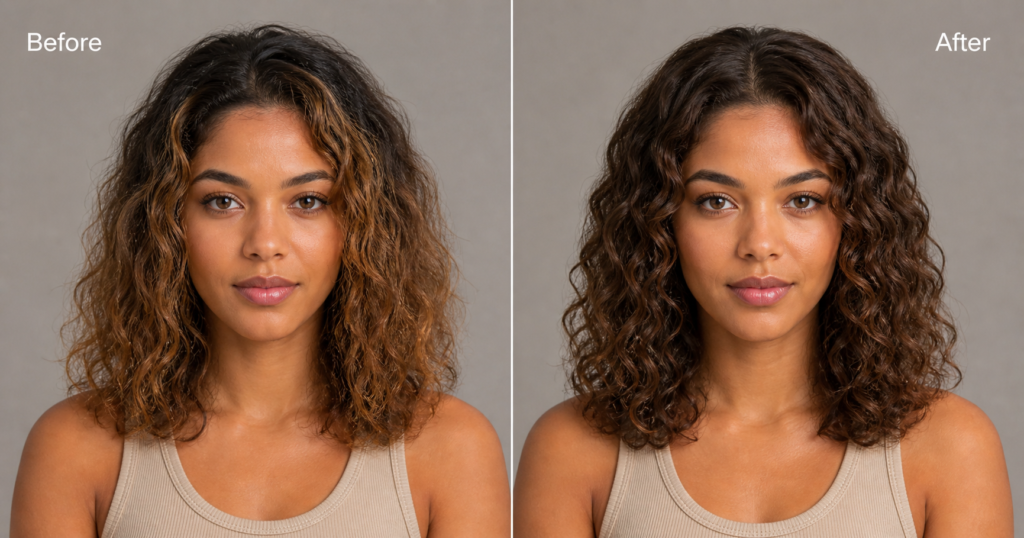
Before and After: What to Expect
| Feature | Before (Common Mistake) | After (Optimized Approach) |
|---|---|---|
| Color formula choice | Reaching for permanent box color every 4 weeks | Using demi-permanent to refresh tone between sessions |
| Developer strength | 30 volume developer that lifts and damages | 5 or 10 volume developer that deposits only |
| Application method | Applying all over from roots to ends every time | Targeting mid-lengths and ends for tone refresh |
| Frequency | Full color every 3 to 4 weeks, causing buildup and breakage | Demi toning every 6 to 8 weeks for gradual fade |
| Result | Harsh regrowth lines, dryness, and structural damage | Soft fade, boosted shine, and healthier hair over time |
The Protocol
Follow these steps to get the most out of your demi-permanent color, from prep to aftercare.
- Start with a porosity check. High-porosity hair absorbs color faster and fades quicker. First, take our hair porosity test to understand how your hair will respond to the formula.
- Choose the right shade. Demi-permanent color cannot lighten — it can only go darker or match your current level. Therefore, choose a shade equal to or darker than your natural base.
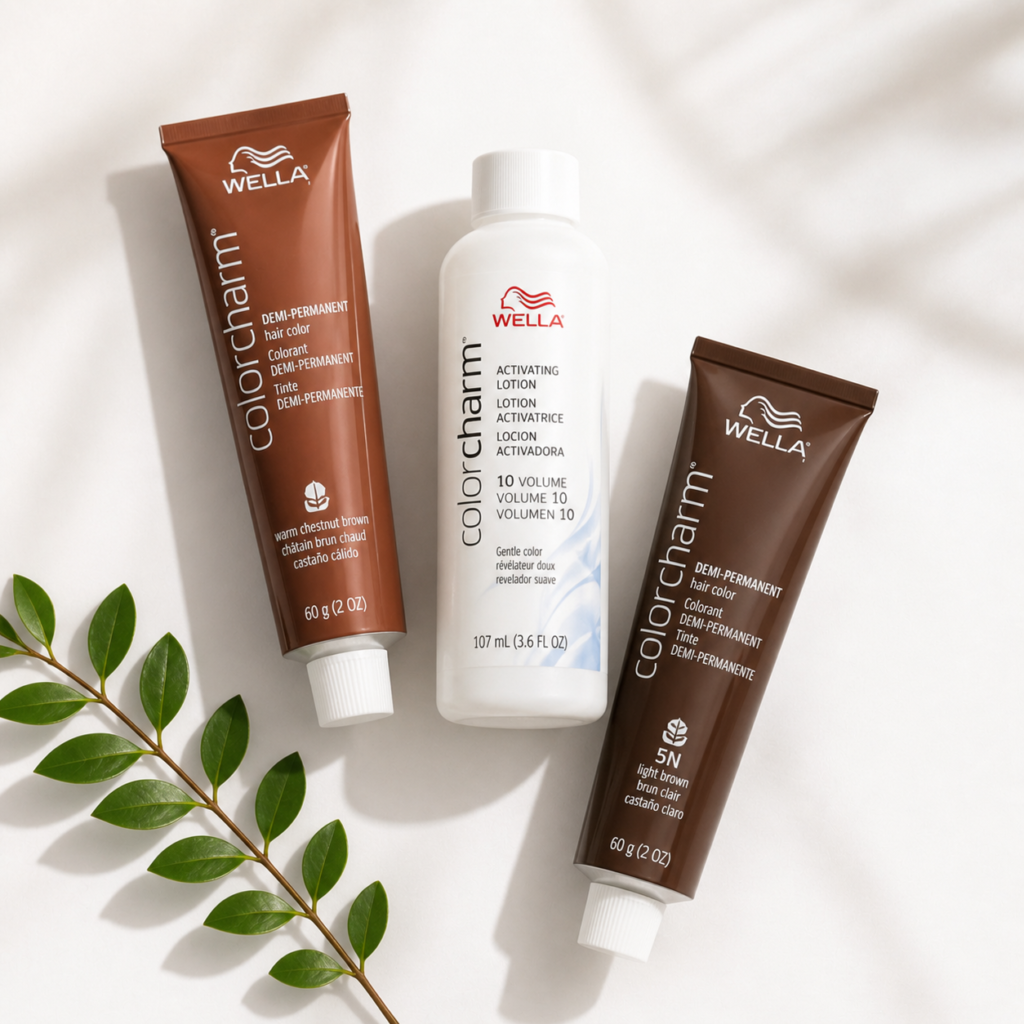
- Mix with a low-volume developer. Use a 5 or 10 volume developer only. Wella ColorCharm Activating Lotion 10-Volume Developer works specifically with demi formulas and gives consistent, even results.
- Apply to damp, towel-dried hair. Damp hair helps distribute color more evenly. Furthermore, the slightly open cuticle on wet hair allows better — but still gentle — penetration.
- Process for 20 to 30 minutes maximum. Don’t push it longer hoping for more color. On the other hand, cutting processing short means uneven tone. Set a timer and stick to it.
- Finish with a bond-supporting treatment. After rinsing, follow up with a hair treatment that fixes damage fast to lock in moisture and seal the cuticle. This is also a great time to address any existing dryness — our guide on dry hair treatment from root to tip covers that perfectly.
Drugstore Gems vs. Salon Standards
| Feature | Drugstore Pick | Salon Professional |
|---|---|---|
| Formula quality | L’Oréal Paris Colorista Demi-Permanent — good for basic toning | Wella ColorCharm — wider shade range, more precise deposit |
| Developer control | Included at fixed volume — no customization | Choose 5 or 10 volume based on porosity |
| Shade selection | Limited to 20 to 30 shades | 100+ intermixable shades for custom formulas |
| Gray blending | Softens grays up to 50% coverage | Blends up to 75% with correct formula layering |
| Shine result | Noticeable but moderate improvement | High-gloss finish, especially with acidic toners |
| Best for | First-timers and tone refreshers | Wella ColorCharm Demi-Permanent 5N Light Brown — ideal for gray blending and shine |
Porosity Check Sidebar
- Quick Porosity Test: Drop a clean, dry strand of hair into a glass of water. Wait 2 to 4 minutes.
- Floats: Low porosity — your cuticle is tight. Color takes longer to absorb, so use 10 volume.
- Sinks slowly: Normal porosity — you’re in the sweet spot. Standard processing time works well.
- Sinks fast: High porosity — your cuticle is open. Use 5 volume and shorten processing to 20 minutes.
For a deeper look at what this means for your routine, read our full hair porosity test guide.
Frequently Asked Questions
Does demi permanent hair color damage hair?
Not significantly, no. Because demi-permanent formulas use 5 to 10 volume developer — not the 30 or 40 volume in permanent color — they cause far less oxidative stress. Most people find their hair feels softer and shinier after a demi treatment. However, doing it too often or on already-damaged hair can still cause some dryness over time.
How long does demi permanent hair color last?
On average, expect 4 to 6 weeks before noticeable fading begins. This depends on your porosity level, how often you wash your hair, and your water temperature. High-porosity hair fades faster. In addition, using a color-safe shampoo and washing in cool water can easily extend your results by one to two weeks.
Can demi permanent hair color cover gray hair?
Yes, but with limits. Demi-permanent color blends grays rather than fully covering them — expect 50 to 75% coverage depending on your formula and gray percentage. This means it works best for people with less than 50% gray. For full gray coverage, a permanent color will give you more reliable results and longer hold.
Is demi permanent color the same as semi permanent?
No — these are two different things. Semi-permanent color uses no developer at all, so it only coats the outside of the hair shaft and fades in 4 to 12 washes. Demi-permanent uses a low developer to slightly open the cuticle. Therefore, demi color lasts longer, deposits deeper tone, and blends grays more effectively than a true semi-permanent rinse.
The Amber Verdict
The bottom line is this — demi permanent hair color is the smartest coloring choice for anyone who wants real tone, real shine, and zero regrowth guilt. I’d reach for it before permanent color every single time for anything that isn’t a dramatic lift. Pin this and save yourself from a bad box dye situation.