
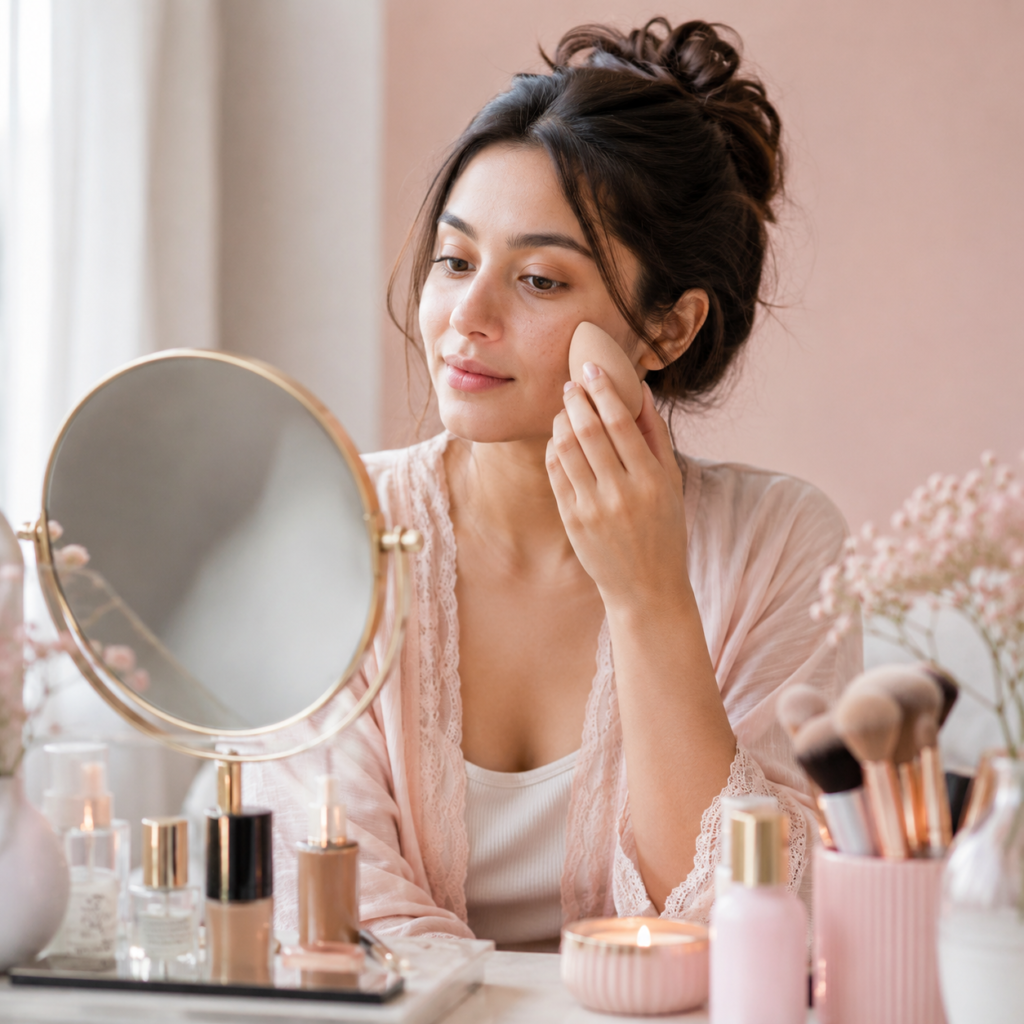
If you’ve ever applied foundation only to notice your pores looking even more noticeable, you’re definitely not alone. Many people search for the best makeup for large pores hoping to achieve that smooth, filtered finish seen in beauty campaigns, only to end up with foundation settling into textured areas around the nose, cheeks, or forehead.
The good news is that makeup doesn’t have to highlight your skin texture. With the right skin preparation, thoughtful product choices, and a few application techniques, you can create a beautifully blurred complexion that still looks like real skin.
While no makeup can permanently shrink enlarged pores, it can significantly minimize their appearance. In this guide, you’ll learn how to build a pore-friendly makeup routine, choose products that work with your skin instead of against it, and avoid common mistakes that make pores stand out.
Whether you have oily skin, combination skin, or acne-prone skin with visible pores, these practical tips will help you achieve a smoother, longer-lasting finish.
Why Makeup Sometimes Makes Large Pores More Noticeable
Many people assume that applying more foundation will hide their pores, but the opposite often happens. Heavy layers of makeup can settle into uneven texture, making enlarged pores appear even more obvious.
Several factors contribute to this:
- Excess oil breaks down foundation throughout the day.
- Thick, full-coverage products collect inside pores.
- Dry patches create uneven texture.
- Skipping primer leaves foundation with nothing to grip.
- Too much powder creates a cakey finish.
Understanding this is important because your goal isn’t to cover every pore. Instead, you’re creating an optical blur that softens the appearance of texture while keeping your makeup looking natural.
Another important point to remember is that pore size is largely influenced by genetics, skin type, age, and oil production. Makeup can blur visible pores, but it cannot permanently reduce their size.
Understanding Your Skin Before Applying Makeup
Before choosing any primer or foundation, take a moment to understand your skin type. The best makeup for textured skin often depends on what’s causing the texture in the first place.
Oily Skin
Excess sebum can cause makeup to slide throughout the day while making pores appear larger. Lightweight, oil-controlling products usually perform best.
Combination Skin
Many people experience enlarged pores only around the nose and forehead. This means you don’t need heavy pore-blurring products all over your face—targeted application often gives a more natural finish.
Acne-Prone Skin
When breakouts heal, they may leave uneven texture that catches foundation. Choosing non-comedogenic formulas helps reduce the chance of clogged pores while maintaining a smooth complexion.
Mature Skin
As collagen naturally decreases over time, pores may appear more noticeable. Lightweight hydration paired with buildable makeup generally creates a fresher finish than thick layers of coverage.
Taking a few minutes to identify your skin type allows you to choose products that work together instead of competing against each other.
Prep Your Skin for a Flawless Makeup Base
Beautiful makeup starts long before foundation touches your skin. Proper preparation helps products glide on evenly and improves makeup longevity throughout the day.
Start With Clean Skin
Wash away excess oil, sunscreen residue, and leftover skincare using a gentle cleanser. Fresh skin allows primer to adhere more effectively.
If your skin becomes oily quickly, look for cleansers containing ingredients like salicylic acid to help reduce excess oil without over-drying.
Hydrate Without Feeling Greasy
Many people skip moisturizer because they worry it will make oily skin even shinier. In reality, dehydrated skin can produce even more oil.
Choose a lightweight, fast-absorbing moisturizer that leaves your skin soft but not slippery.
Never Skip Sunscreen
Daily sunscreen protects your skin while creating a healthier canvas over time. Modern lightweight formulas work beautifully under makeup without leaving a heavy finish.
Let Products Absorb
One of the simplest ways to improve your makeup is to wait two or three minutes after applying skincare before moving on to primer. This small habit helps prevent foundation from separating later.
Choose a Primer That Creates a Blurred Effect
A quality primer is often the biggest difference between makeup that emphasizes pores and makeup that smooths them.
Pore-blurring primers temporarily fill uneven texture, creating a more even surface for foundation.
Silicone-based formulas are especially popular because they create a soft-focus finish without feeling overly heavy.
Instead of applying primer across your entire face, concentrate on areas where pores are most noticeable:
- Around the nose
- Inner cheeks
- Center of the forehead
- Chin
Using less product often produces better results than coating your entire face.
Pick Foundation That Works With Large Pores
Not every foundation is ideal for textured skin. Some formulas naturally blur pores, while others can exaggerate them.
Look For
- Lightweight foundation
- Buildable coverage
- Natural or soft matte finish
- Non-comedogenic formulas
- Long-wearing ingredients
These products create a smooth complexion without sitting heavily inside pores.
Be Careful With
- Extremely dewy foundations
- Thick cream formulas
- Glitter-infused products
- Heavy layers of full-coverage foundation
These aren’t necessarily bad products, but they often reflect light in ways that make skin texture more noticeable.
Instead of trying to hide every imperfection, focus on evening out your complexion while allowing your natural skin to show through.
The Best Way to Apply Makeup for Large Pores
Even the best foundation for large pores won’t perform well if it’s applied incorrectly.
Use Thin Layers
One thick coat usually settles into pores faster than two light layers.
Apply a small amount first, then build coverage only where you need it.
Press Instead of Dragging
Instead of wiping foundation across your face, gently press it into the skin using a damp beauty sponge.
This pressing motion helps foundation sit smoothly over uneven texture.
Sponge or Brush?
Both tools work well, but each creates a slightly different finish.
A damp makeup sponge creates a soft, natural-looking blur and is especially forgiving on textured skin.
A dense synthetic foundation brush provides slightly more coverage while still blending beautifully when used with light pressure.
Many makeup artists actually combine both tools—using a brush for application and a sponge to soften everything afterward.
Blend Carefully Around Problem Areas
Large pores are often most noticeable around the nose and cheeks.
Use the very tip of your sponge to gently press foundation into these areas rather than dragging product back and forth.
This simple adjustment creates a smoother, more airbrushed appearance without adding extra makeup.
Concealer and Powder Without Emphasizing Texture
Once your foundation is blended, it can be tempting to apply concealer everywhere. However, using too much product is one of the biggest reasons makeup for large pores starts looking heavy or cakey.
The goal is to brighten and perfect specific areas rather than masking your entire face.
Apply Concealer Only Where You Need It
A lightweight concealer works best around the:
- Under-eye area
- Around the nose
- Blemishes
- Dark spots
- Areas with redness
Instead of spreading concealer across large sections of your face, use a small amount and gently tap it into the skin with your fingertip or the pointed end of a damp makeup sponge.
Layering small amounts creates a much smoother finish than applying one thick coat.
Set Makeup Carefully
Many people think more powder equals longer-lasting makeup. In reality, too much powder can settle into enlarged pores and make skin texture appear rough.
For the smoothest finish:
- Use a fluffy brush or powder puff.
- Pick up a small amount of loose setting powder.
- Press, not sweep, the powder into the skin.
- Focus mainly on the T-zone where excess oil usually appears first.
If your cheeks are normal or dry, they may not need additional powder at all.
Remember, the purpose of powder is to reduce shine and lock makeup in place, not completely mattify your face.
Lock Everything in Place
Even beautifully applied makeup can begin separating after several hours if it isn’t properly set.
A quality setting spray helps melt powder products together, reduces a dry appearance, and improves makeup longevity throughout the day.
Look for a setting spray that offers:
- Long-lasting wear
- Lightweight feel
- Natural finish
- Oil control without excessive dryness
Hold the bottle about 8 to 10 inches away and spray in an “X” followed by a “T” motion to distribute the product evenly.
Allow it to dry naturally instead of touching your face.
Midday Touch-Up Tips
If your skin becomes oily later in the day, avoid applying another layer of powder immediately.
Instead:
- Use oil blotting papers first.
- Lightly touch up only shiny areas.
- Reapply powder only if necessary.
This prevents product buildup that can make visible pores more noticeable.
Makeup Mistakes That Make Large Pores Look Bigger
Sometimes it’s not the products themselves that cause problems, it’s how they’re used.
Avoiding these common mistakes can instantly improve how your makeup looks.
Applying Too Much Primer
Primer is designed to smooth the skin, but applying a thick layer can cause foundation to slide around instead of adhering properly.
A pea-sized amount is usually enough.
Choosing the Wrong Foundation Finish
Very luminous or glittery foundations reflect light across uneven texture.
If enlarged pores are your main concern, soft matte or natural-finish foundations generally create a more flattering blurred skin effect.
Building Heavy Coverage Everywhere
Trying to completely cover every pore often leads to thick makeup that draws even more attention to texture.
Build coverage only where you need it and allow the rest of your complexion to look natural.
Skipping Skin Preparation
Even the best primer for large pores cannot compensate for dry, dehydrated, or oily skin that hasn’t been properly prepared.
Healthy skin preparation creates the perfect canvas for makeup.
Using Dirty Makeup Tools
Brushes and beauty sponges collect oils, old makeup, and bacteria over time.
Dirty tools not only affect blending but may also contribute to clogged pores and uneven makeup application.
Wash your brushes weekly and replace makeup sponges regularly.
Applying Too Much Powder
Layer after layer of powder doesn’t create smoother skin.
Instead, it settles into texture and makes enlarged pores appear more noticeable.
A light application is almost always enough.
A 10-Minute Makeup Routine for Large Pores
If you’re getting ready for work, school, or a casual day out, this simple routine creates a polished look without spending an hour in front of the mirror.
Step 1
Cleanse and moisturize your face.
Step 2
Apply sunscreen and allow it to absorb.
Step 3
Use a pore-blurring primer only where needed.
Step 4
Apply a lightweight foundation using a damp makeup sponge.
Step 5
Conceal only dark circles, redness, or blemishes.
Step 6
Lightly press loose powder onto your T-zone.
Step 7
Finish with a setting spray.
That’s it.
This quick routine helps create a smooth complexion while preventing makeup from settling into pores throughout the day.
Frequently Asked Questions
Can makeup completely hide large pores?
No. Makeup cannot permanently hide or shrink pores, but it can significantly reduce their appearance by creating a smoother-looking surface. The right primer, lightweight foundation, and application technique can make a noticeable difference.
What foundation is best for large pores?
A lightweight, buildable, non-comedogenic foundation with a natural or soft matte finish usually works best. These formulas are less likely to settle into pores while still providing even coverage.
Is matte or dewy foundation better for large pores?
A soft matte or natural finish is generally the better choice. Extremely dewy foundations can reflect more light and make textured skin and visible pores stand out.
Does primer really help hide pores?
Yes. A pore-minimizing primer creates a temporary blurred effect by smoothing the skin’s surface before foundation is applied. It won’t shrink pores, but it helps makeup sit more evenly.
Should I use a brush or a sponge?
Both work well.
A foundation brush provides slightly more coverage, while a damp beauty sponge gives a softer, more natural-looking finish. Many professional makeup artists use both together for the smoothest results.
Why does my foundation settle into my pores?
Foundation usually settles into pores because of excess oil, heavy product application, skipping primer, or using too much powder. Building thin layers and properly preparing your skin can help prevent this.
Can oily skin make pores look larger?
Yes. Excess oil stretches the appearance of pores and can break down makeup throughout the day. Using lightweight skincare and oil-controlling products helps keep makeup looking smoother for longer.
Final Thoughts
Finding the best makeup for large pores isn’t about hiding every bit of skin texture, it’s about learning how to work with your skin instead of against it.
A well-prepared complexion, a pore-blurring primer, a lightweight foundation, thoughtful application techniques, and a light hand with powder can completely change how your makeup looks and feels.
Remember that everyone has visible pores to some degree. Beautiful makeup doesn’t require perfectly poreless skin. By focusing on healthy skin preparation, choosing products that suit your skin type, and applying makeup in thin, even layers, you can achieve a naturally smooth, fresh finish that lasts throughout the day.
The next time you sit down to do your makeup, try these techniques one step at a time. Small adjustments often make the biggest difference, and you may discover that your favorite foundation performs better than ever when paired with the right routine.