
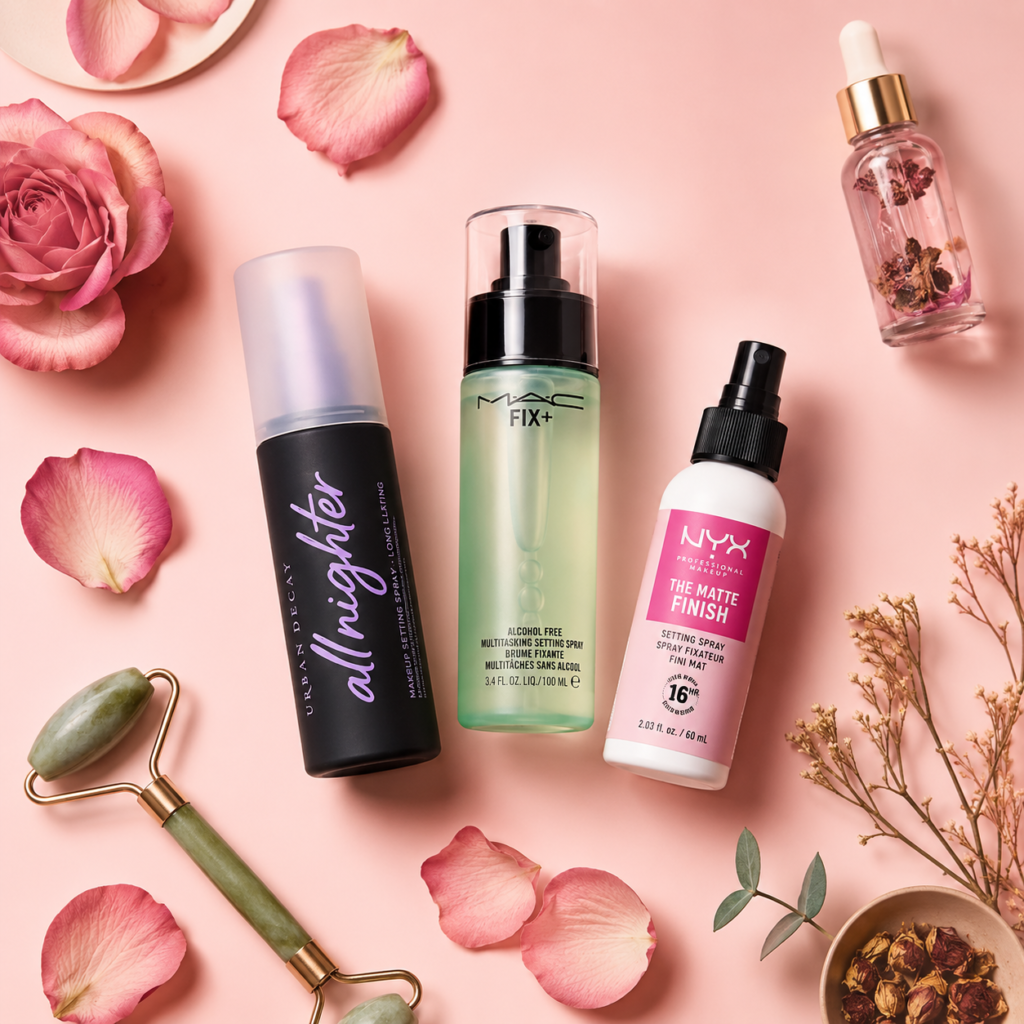
Here’s the deal, I spent three bottles of Urban Decay All Nighter deep in a humidity experiment last August, testing whether the best setting spray actually does what the label promises, or whether we’re all just misting our faces with expensive water. Spoiler: the chemistry is real, but most people apply it completely wrong. The Urban Decay All Nighter Long-Lasting Setting Spray is still my go-to benchmark for longevity testing, but it’s not right for every skin type, and I’ll explain exactly why below. Setting sprays sit at this strange intersection of makeup chemistry and skincare, and understanding how they work changes everything about how you use them.
How Setting Spray Works
Let’s look at the chemistry. Most setting sprays use a polymer-based formula, ingredients like PVP (polyvinylpyrrolidone) or acrylates copolymer, that form a flexible, invisible film over your makeup. That film reduces the rate at which your skin’s natural oils and sweat break down foundation pigments. Think of it as a breathable net holding everything in place.
However, not all setting sprays work through the same mechanism. Hydrating sprays, like MAC Fix+, lean on glycerin and water to melt layers together for a seamless integration of skin and product, they blur rather than lock. Matte-finish sprays add oil-absorbing powders or silica to the mix, which is why they feel different going on.
Temperature also matters here. The fine mist lowers skin surface temperature slightly, which helps close pores temporarily and reduces oil secretion. That’s the actual science behind that “cooling” sensation, not magic, just basic thermodynamics.
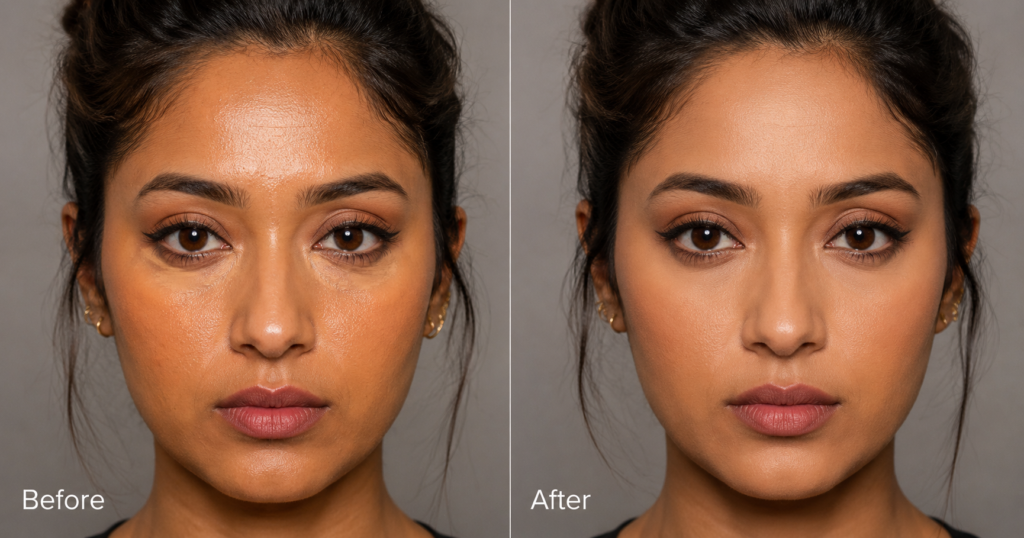
Before and After: What to Expect
| Feature | Before (Common Mistake) | After (Optimized Approach) |
|---|---|---|
| Application distance | Spraying too close, causing makeup to run | Holding 8 to 10 inches away for even mist |
| Timing | Spraying mid-routine between layers | Spraying only as the final step after all powder |
| Formula choice | Using matte spray on dry skin, causing flakiness | Matching spray type to skin type and finish goal |
| Number of spritzes | Soaking the face with 6+ sprays | Two to three light passes in an X and T motion |
| Result | Patchy, cakey makeup that slides by noon | Makeup that wears evenly for 8 to 10 hours |
The Routine That Actually Works
Prep Step, This is non-negotiable. Moisturize and allow your base to fully absorb before any makeup application. A hydrated skin surface gives the setting spray’s polymers something stable to bond to. Dry, tight skin causes uneven film formation, which leads to patchy wear.
- Apply your full makeup base. Foundation, concealer, contour, blush, all of it. Setting spray goes on last, not between steps. I once tested a mid-layer application and watched my blush literally migrate into my foundation within two hours. Not ideal.
- Set with powder first if you use it. Loose powder or a pressed setting powder should go on before the spray. The spray then locks the powder in place rather than disrupting it. This is the step most tutorials skip.
- Shake your setting spray well. Many formulas have suspended particles that separate on the shelf, I once grabbed a bottle of NYX Matte Finish that had visibly separated and the first few sprays were essentially just water. Shake it for a full ten seconds.
- Hold the bottle 8 to 10 inches from your face. Spray in a slow X motion, then a T motion, across the forehead, down the nose, across the cheeks. Two to three passes total. The NYX Professional Makeup Matte Finish Setting Spray works especially well with this technique for oily skin types because its silica particles distribute more evenly at that distance.
- Let it dry completely. No blotting, no touching. Give it 60 to 90 seconds to form that polymer film. Touching your face during this window is the single biggest reason setting spray “doesn’t work” for people.
- Reapply mid-day if needed. A single light pass at the four-to-six-hour mark can refresh wear without looking freshly made up. Most importantly, don’t layer too much, two sprays is enough for a touch-up.
Setting Spray Comparison: 3 Top Picks
| Product | Coverage Support | Finish | Skin-Loving Ingredients | Best For |
|---|---|---|---|---|
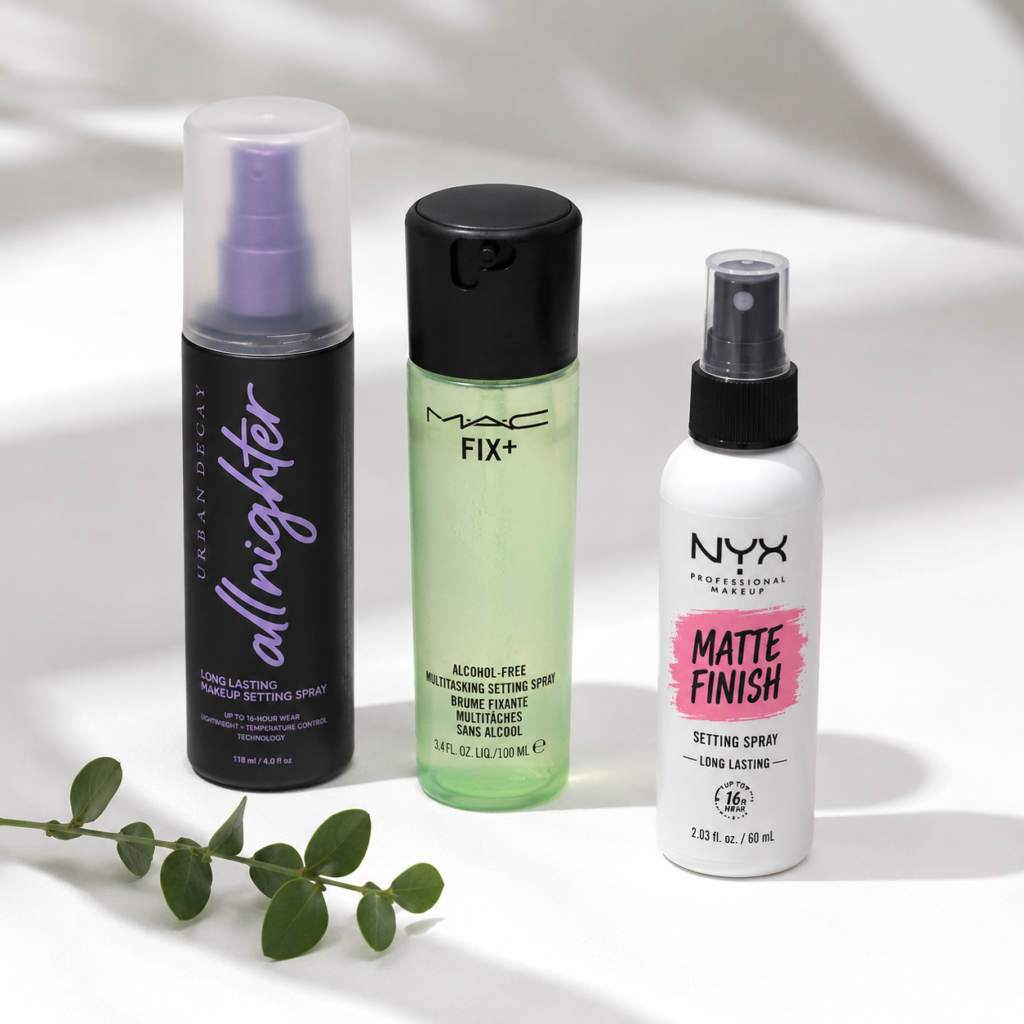
| Urban Decay All Nighter Long-Lasting Setting Spray | Full to medium coverage lock | Natural, not overly matte or dewy | Temperature control technology, minimal irritants | All skin types, long events, humidity |
| MAC Fix+ Setting Spray | Light to medium, melts layers | Dewy, skin-like glow | Green tea, chamomile, cucumber extracts | Dry and normal skin, natural finish lovers |
| NYX Professional Makeup Matte Finish Setting Spray | Medium coverage support | Matte, shine-controlled | Silica, lightweight film formers | Oily and combination skin, budget-friendly option |
Frequently Asked Questions
Does setting spray actually make makeup last longer?
Yes, for most skin types, it does add measurable wear time. In my own testing over six weeks last summer, a polymer-based spray consistently extended foundation wear by two to three hours compared to powder alone. That said, it tends to work best when your skin is properly moisturized underneath. Dehydrated skin breaks down the film faster.
Can I use setting spray on dry skin?
You can, but formula choice matters a lot here. Matte setting sprays often cause dry skin to look flaky or tight because the oil-absorbing silica exaggerates dry patches. Hydrating sprays like MAC Fix+ are generally a better fit for dry skin. I’d also suggest applying a slightly heavier moisturizer underneath on low-humidity days.
What is the difference between setting spray and fixing spray?
They are often used interchangeably, but technically they function slightly differently. Setting sprays primarily lock makeup in place through polymer film formation. Fixing sprays, sometimes called finishing sprays, tend to focus more on adjusting the finish, adding dewiness or a skin-like texture. In practice, most modern formulas do both to some degree.
Should I use setting spray before or after powder?
After. Always after your powder. This is one area where I genuinely disagree with some popular beauty advice that says you can layer spray throughout your routine. The spray’s polymer network needs all your layers already in place to work properly. Spraying before powder means the powder disrupts the film before it sets.
Amber’s Closing Thoughts
The best setting spray for you is the one that matches your skin type and your finish goal, not the one with the most influencer mentions. Matte formulas on dry skin and dewy sprays on oily skin are genuinely the two most common setting spray mistakes I see, and both are easy fixes once you understand the chemistry. Pin this for your next full-glam session.