
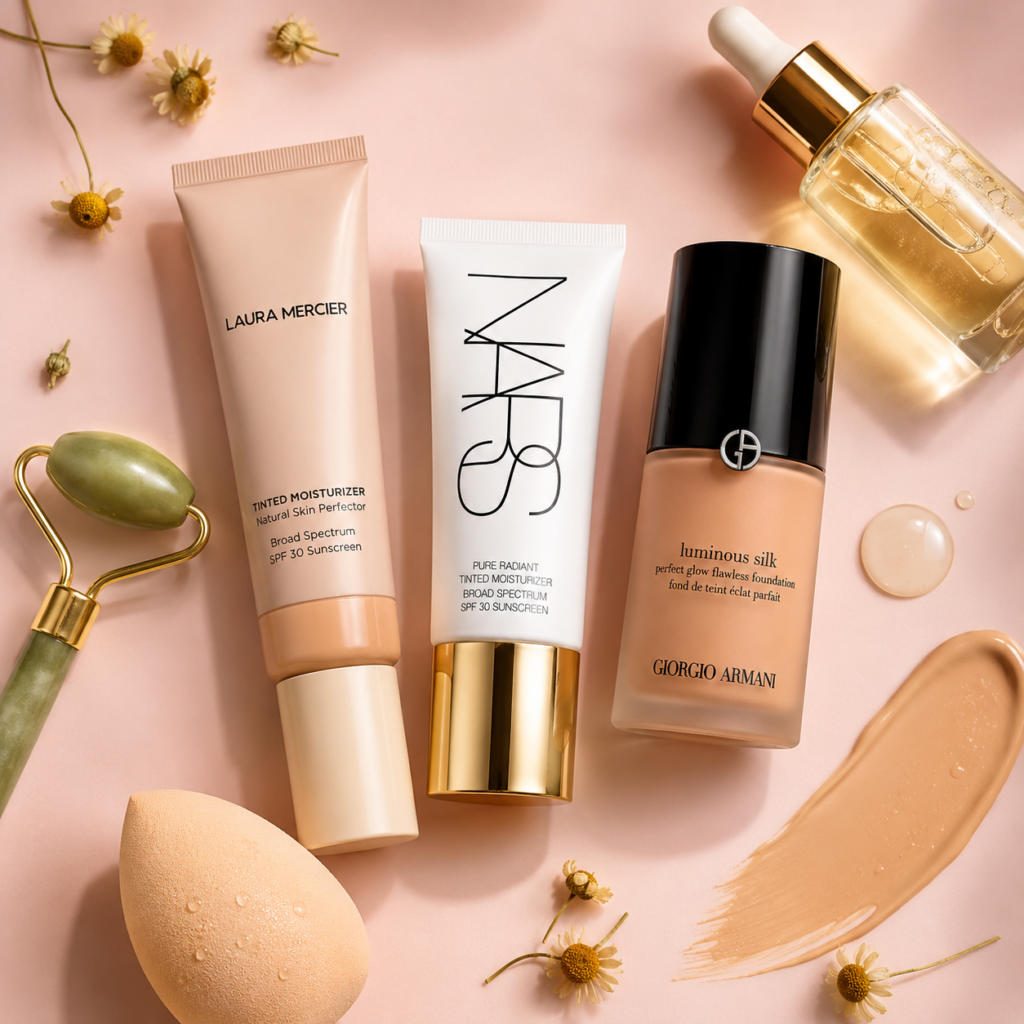
I learned this the expensive way, I went through three bottles of a popular tinted moisturizer last winter convinced it was creasing into my laugh lines because I was applying it wrong.. Turns out, the formula itself was the problem: it had silicones that settled into fine lines within two hours flat. Finding the best tinted moisturizer for mature skin is genuinely different from the general search, because what reads as “natural finish” on a 25-year-old can look powdery and dry on skin that’s lost collagen. I’ve since tested about a dozen formulas on my own skin, including the Laura Mercier Tinted Moisturizer Natural Skin Perfector, and the differences are stark once you know what to look for.
How Tinted Moisturizer Works on Mature Skin
Tinted moisturizers sit somewhere between a sheer foundation and a skincare product. Most formulas combine humectants, like glycerin or hyaluronic acid, with light pigment dispersed in a water or oil base. Because of this layered chemistry, the base formula matters far more than the tint level.
For mature skin specifically, the concern is transepidermal water loss. Skin over 40 tends to produce less sebum and has a thinner lipid barrier, which means water escapes faster. As a result, heavy silicone-based formulas that look great initially can actually pull moisture toward the surface and then let it evaporate, leaving skin looking dull by midday.
The goal is seamless integration with your skin’s existing texture. That means choosing formulas with occlusive or emollient ingredients, think squalane, shea, or ceramides, that lock hydration in rather than just sitting on top. Furthermore, SPF-inclusive options cut your layering steps, which reduces the risk of disturbing your base before it sets.
What Changes When You Get It Right
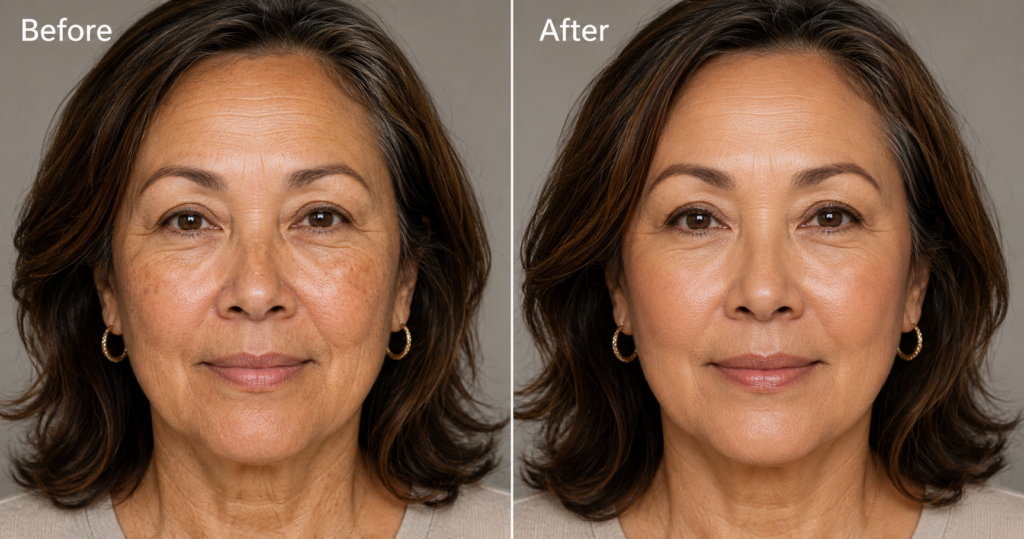
| Feature | Before (Common Mistake) | After (Optimized Approach) |
|---|---|---|
| Formula choice | Silicone-heavy base that settles into fine lines | Squalane or glycerin base that moves with skin texture |
| Coverage expectation | Layering multiple coats to cover spots and redness | One sheer-to-medium layer that evens tone without masking |
| Application method | Dry fingers pressing product into lines | Damp sponge pressing and bouncing outward from center |
| Skin prep | Applying directly over dry skin or thick SPF | Lightweight moisturizer or serum underneath, fully absorbed |
| Finish | Powdery or cakey by hour three | Skin-like glow that holds through the afternoon |
| Result over time | Skin looks flatter and more textured | Skin looks hydrated, fine lines less exaggerated |
The Protocol
This is the application order that actually changed my results after six weeks of testing. Small tweaks, like fully absorbing your base layer, make the difference between glowy and greasy.
Prep Step: Apply a lightweight hydrating serum or a thin layer of moisturizer with at least 5% glycerin. Wait a full 60 seconds for it to absorb before touching your tinted moisturizer. This is the step most people skip, and it’s the one that matters most for preventing creasing.
- Dispense a pea-sized amount onto the back of your hand first. Mature skin needs less product than you think, about half what you’d use for a regular foundation.
- Warm it between fingertips for 5 seconds. This makes the formula more fluid and helps it blend without dragging across the skin. Most importantly, it prevents patchy application over dry patches.
- Press with a damp sponge starting at the center of your face and bouncing outward. Use the Beautyblender Original Makeup Sponge dampened under cold water, the cold water keeps the sponge firm enough for controlled placement. Drag motions tug at skin and emphasize texture.
- Spot-cover only what you need. Add a tiny dab of product directly to any redness or dark spots and tap, don’t blend. This gives you more coverage exactly where you want it without thickening the whole face.
- Set only the T-zone if needed. A light dusting of translucent powder on the nose and forehead controls shine without drying out cheeks. Skip the powder entirely on any areas with visible fine lines.
- Do not touch your face for 10 minutes. The formula needs time to bond with your skin’s moisture. Touching it early pulls the pigment and creates patchy spots.
Comparing the Top Options
| Product | Coverage Level | Finish | Skin-Loving Ingredients | Best For |
|---|---|---|---|---|
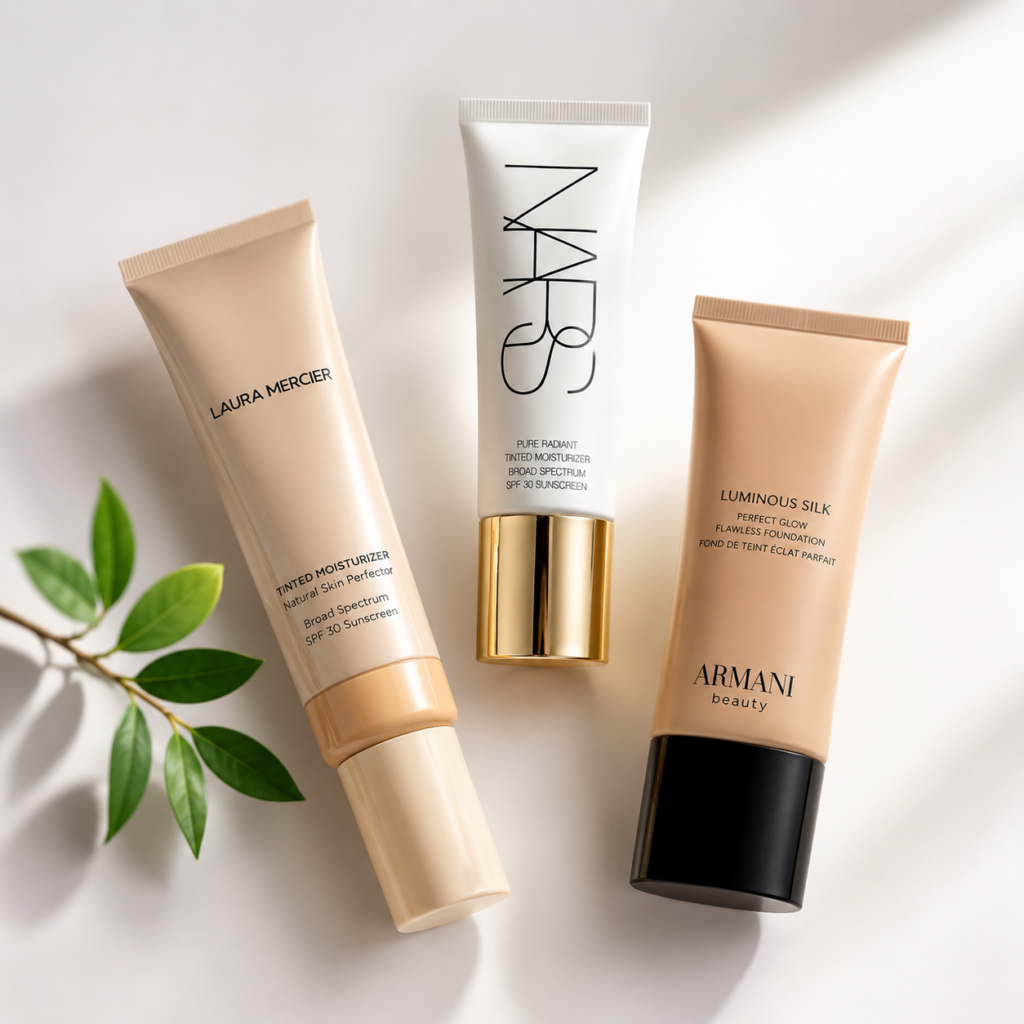
| Laura Mercier Tinted Moisturizer Natural Skin Perfector SPF 30 | Sheer to light | Natural, skin-like | Hyaluronic acid, antioxidant complex | Daily wear, combination to normal mature skin |
| NARS Pure Radiant Tinted Moisturizer SPF 30 | Sheer | Radiant, luminous | Nordic cloudberry, vitamin C, sodium hyaluronate | Dull or dry mature skin needing a brightness boost |
| Armani Beauty Luminous Silk Perfect Glow Flawless Oil-Free Foundation | Light to medium | Satin glow | Micro-fil technology, glycerin | Mature skin with uneven texture and redness to correct |
Frequently Asked Questions
Does tinted moisturizer provide enough coverage for mature skin?
For most people, yes, and honestly, I’d argue that mature skin looks better with less coverage, not more. Heavy formulas tend to settle into fine lines and actually make them more visible. A sheer to light formula evening out skin tone tends to read as healthier than a high-coverage base trying to mask texture.
What ingredients should I avoid in tinted moisturizers for mature skin?
Heavy silicones like dimethicone near the top of the ingredient list are worth watching, they can dehydrate skin over time by forming an occlusive film that blocks active ingredients from absorbing. In addition, formulas with a lot of alcohol or talc as a base ingredient tend to dry out mature skin within a few hours.
Should I apply tinted moisturizer with fingers or a brush?
A damp sponge tends to give the most skin-like result on mature skin. Fingers work fine but can tug at thinner skin and leave streaks. Brushes, on the other hand, often deposit too much product in one spot and create visible edges, especially around the nose and mouth where lines are most concentrated.
Can I wear tinted moisturizer over retinol or active serums?
Generally, yes, but timing matters. Wait until actives like retinol or vitamin C are fully absorbed before applying any makeup base. I usually allow 20 minutes after my serum before touching any tinted formula. Otherwise, the formula can pill up or separate, which is exactly what happened to me when I rushed it last fall.
My Recommendation
Honestly, I think most mature skin does better with a tinted moisturizer than with a “real” foundation, and that’s a mild unpopular opinion in the coverage-obsessed makeup world. The right formula with the right prep step means your skin looks like skin, not like makeup wearing skin. Find your formula, lock in that damp-sponge technique, and pin this for the next time you’re standing in the beauty aisle second-guessing yourself.