
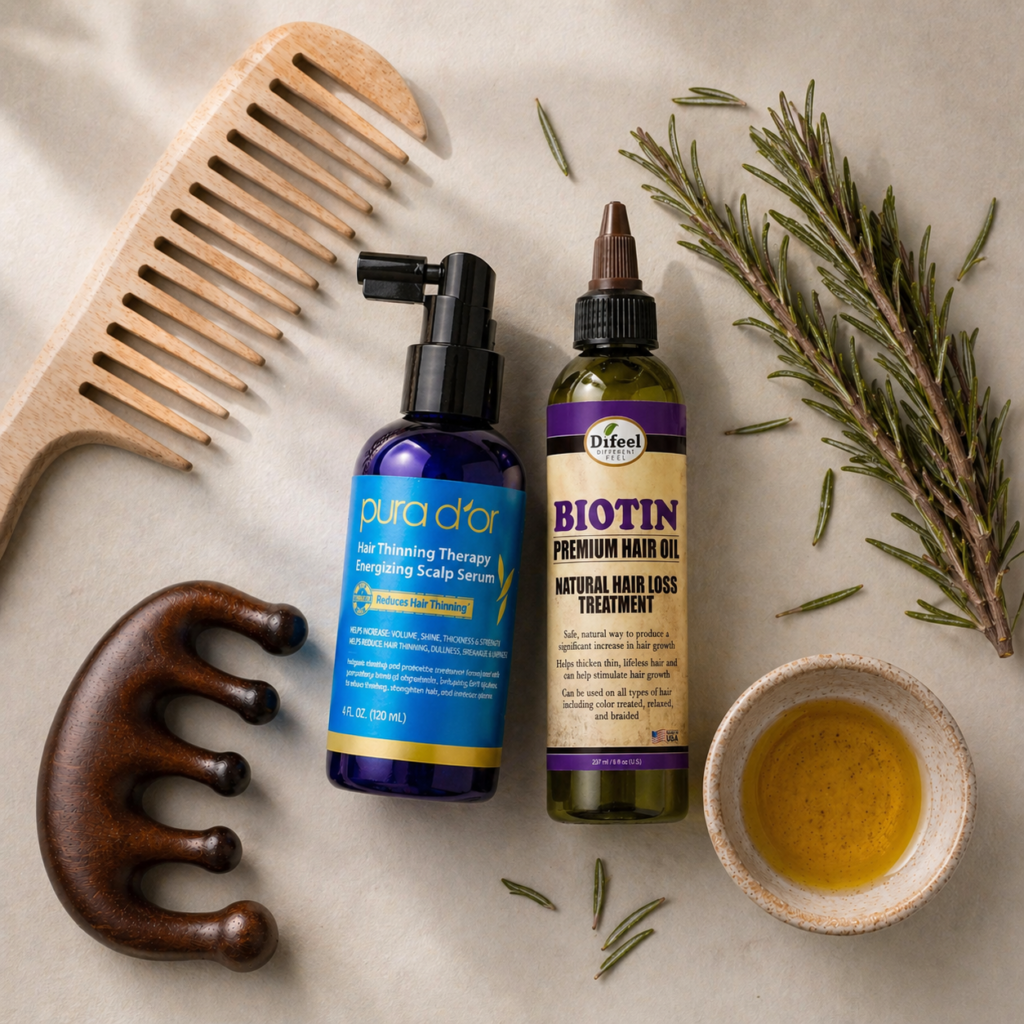
Here’s the deal most people take biotin in pill form and wait months for results, while biotin oil for hair delivers the nutrient directly where your strands actually need it. I’ve been obsessed with the topical biotin conversation for a while now, and the science is genuinely interesting. If your hair snaps, sheds, or just sits there looking sad, this article is for you. I’ve been using Pura D’Or Biotin Hair Tonic Serum in my own rotation, and the difference in breakage alone got my attention fast.
How Biotin Oil Works
Let’s look at the chemistry. Biotin, also called vitamin B7, plays a key role in keratin production. Keratin is the protein that literally builds your hair strand, follicle to tip. Without enough biotin, keratin synthesis slows down, and that’s when you start seeing thinning, brittleness, and slow growth.
Because of this, biotin oil works at two levels. First, it penetrates the scalp and supports the follicle environment directly. Second, the carrier oils it’s blended with, usually argan, jojoba, or castor, coat the hair shaft and reduce moisture loss.
This means that topical application isn’t just a trend. It’s a real delivery method when the formula is right. However, you still need healthy habits supporting you from the inside. Think of biotin oil as the topical half of a two-part strategy.
> Porosity Check: Before you apply biotin oil, know your porosity. High-porosity hair absorbs oils fast but loses them just as quickly, you’ll want a heavier carrier like castor oil. Low-porosity hair resists absorption, so a lightweight jojoba base works better. Not sure where you land? Read the Hair Porosity Test: Why Your Hair Feels Dry guide first.
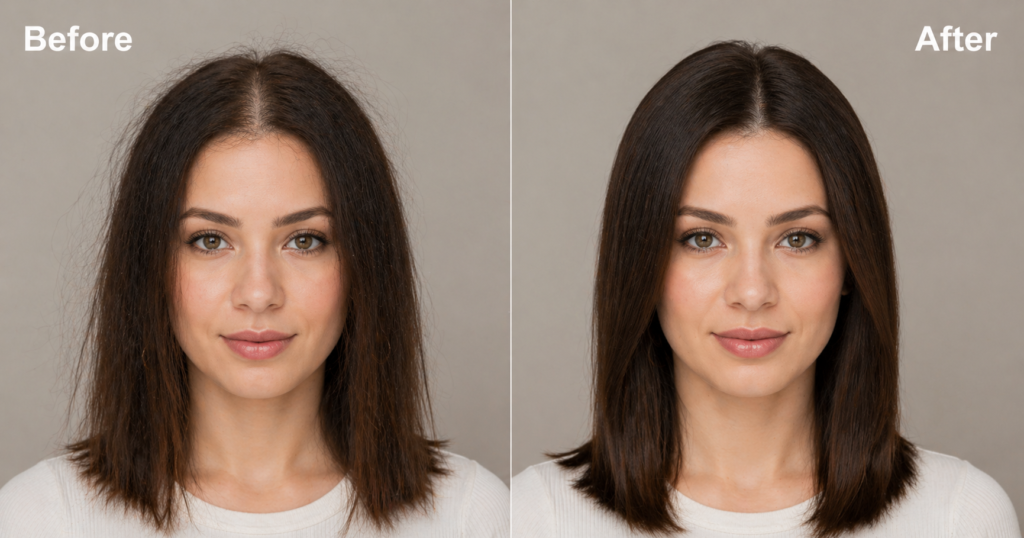
Before and After: What to Expect
| Feature | Before (Common Mistake) | After (Optimized Approach) |
|---|---|---|
| What most people do | Apply biotin oil on dry, product-coated hair | Apply on freshly cleansed, damp scalp for max absorption |
| Product choice | Any “biotin” labelled oil with low B7 concentration | Biotin oil with a verified concentration plus strengthening carrier oils |
| Application method | Slapping oil all over mid-lengths only | Scalp massage with fingertips in small circular motions for 3 minutes |
| Frequency | Random — once every few weeks when remembered | Consistent 3x per week scalp application |
| Result | Greasy roots, zero visible improvement after months | Reduced breakage and visibly denser roots within 6 to 8 weeks |
The Protocol
Follow these steps consistently and your results will be real, not wishful thinking.
- Clarify your scalp first. Product buildup blocks biotin oil from reaching the follicle. Use a gentle clarifying shampoo once a week before your oil application. A clean scalp absorbs up to 40% more active ingredients. This is the step most people skip, and it costs them results. If you want to fix your hair care routine, clarifying is where it starts.
- Apply biotin oil to a damp scalp. Damp hair opens the cuticle slightly and makes absorption easier. Part your hair into four sections. Next, use a dropper to apply the oil directly along each part line.
- Massage for 3 full minutes. Use your fingertip pads, not your nails. Circular motions stimulate blood flow to the follicle, which helps biotin reach its target faster. I use cureder Pressed Gua Sha Scalp Massager to get deeper circulation without straining my fingers.
- Layer a strengthening treatment on your lengths. Your scalp gets the biotin oil, but your mid-lengths and ends need protein support too. A good protein treatment for hair works well here as a companion step.
- Leave it in or rinse after 30 minutes. For low-porosity hair, rinse after 30 minutes so the oil doesn’t sit on the surface. For high-porosity hair, leave it in overnight under a satin cap.
- Repeat 3 times per week. Consistency beats intensity every single time. Set a reminder, biotin oil needs weeks of repeated use to show real results.
Drugstore Gems vs. Salon Standards
| Feature | Drugstore Pick | Salon Professional |
|---|---|---|
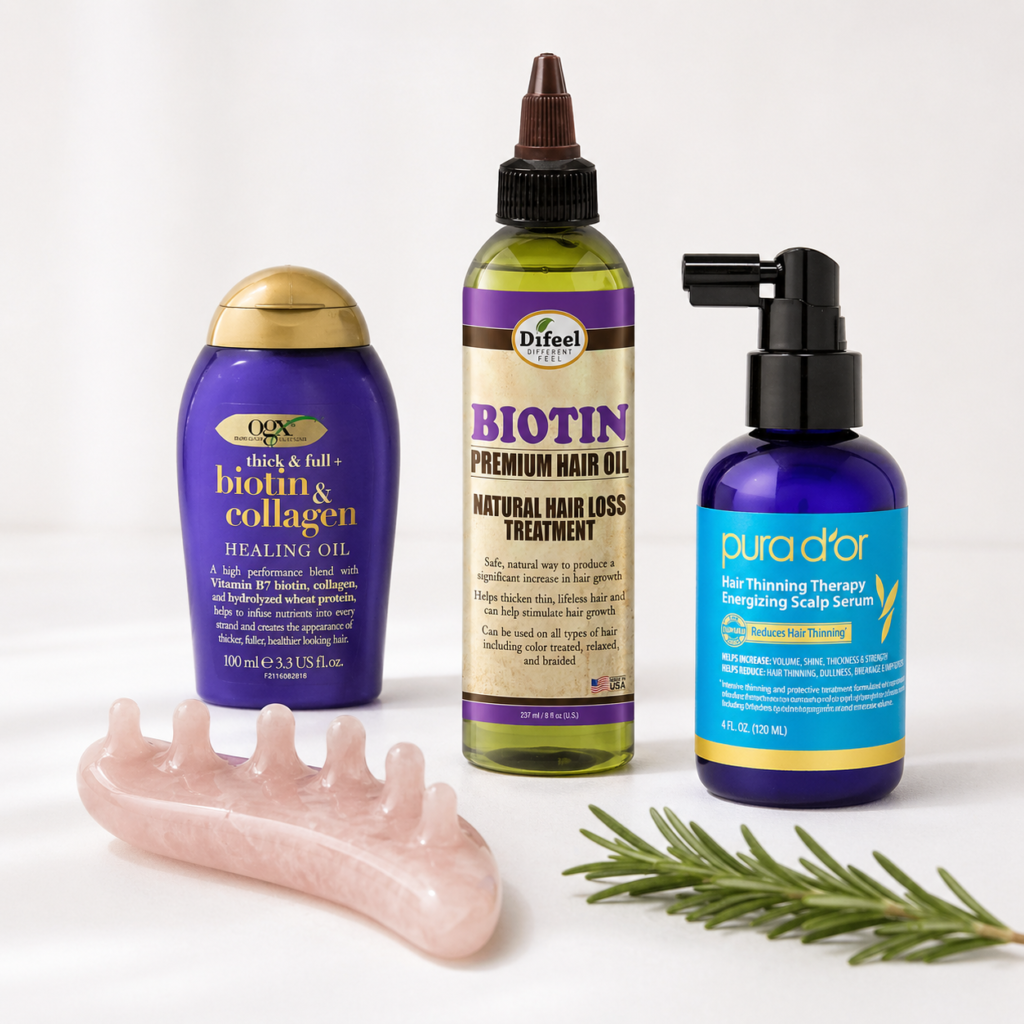
| Hero product | OGX Biotin & Collagen Weightless Healing Oil | Difeel Biotin Premium Hair Oil |
| Biotin concentration | Low — listed far down the ingredient deck | Higher — appears in top 5 active ingredients |
| Carrier oil quality | Mineral oil or silicone base | Argan, jojoba, or cold-pressed castor base |
| Scalp vs. length use | Designed for lengths only | Formulated for scalp absorption and length coating |
| Price per use | Low upfront cost, less efficient per application | Higher upfront, more concentrated — lasts longer |
| Best for | Budget-conscious beginners testing the method | Consistent users seeing measurable growth goals |
Frequently Asked Questions
Does biotin oil actually grow hair, or is it just hype?
Biotin oil supports the keratin production process that your follicles need to grow healthy strands. However, it won’t create new follicles or reverse genetic hair loss. For most people dealing with breakage, thinning, or slow growth from nutrient stress, consistent use shows real improvement within 6 to 12 weeks. It works best when paired with a balanced diet and low-manipulation styling.
How often should I use biotin oil for hair growth?
Three times per week is the sweet spot for most hair types. Daily use can overwhelm low-porosity hair and cause buildup at the scalp. Furthermore, high-porosity hair types may tolerate daily application with a lightweight formula. Start at 3 times per week, then adjust based on how your scalp responds after the first month.
Can I mix biotin oil with other oils like rosemary or castor?
Yes, and it actually works really well. Rosemary oil has clinical evidence for stimulating follicle activity, so combining it with biotin oil creates a stronger growth-support blend. For example, try 5 drops of biotin oil with 3 drops of rosemary oil in a jojoba base. You can read more about rosemary oil for hair growth to understand how the two work together.
Will biotin oil make my hair greasy?
Only if you use too much or apply it wrong. Most people over-apply on dry, unwashed hair, that’s the greasy culprit. In addition, choosing the right carrier oil for your porosity makes a big difference. Low-porosity hair needs a lighter base. Use 4 to 6 drops max, apply to a damp scalp, and massage fully before distributing downward.
The Amber Verdict
Biotin oil for hair is one of those tools that actually delivers, but only when you use it correctly and stay consistent follicle to tip. The combination of targeted scalp nutrition and a nourishing carrier base makes it smarter than swallowing a supplement and hoping for the best. Pin this, bookmark it, and check back in eight weeks because I want to hear about your results.