
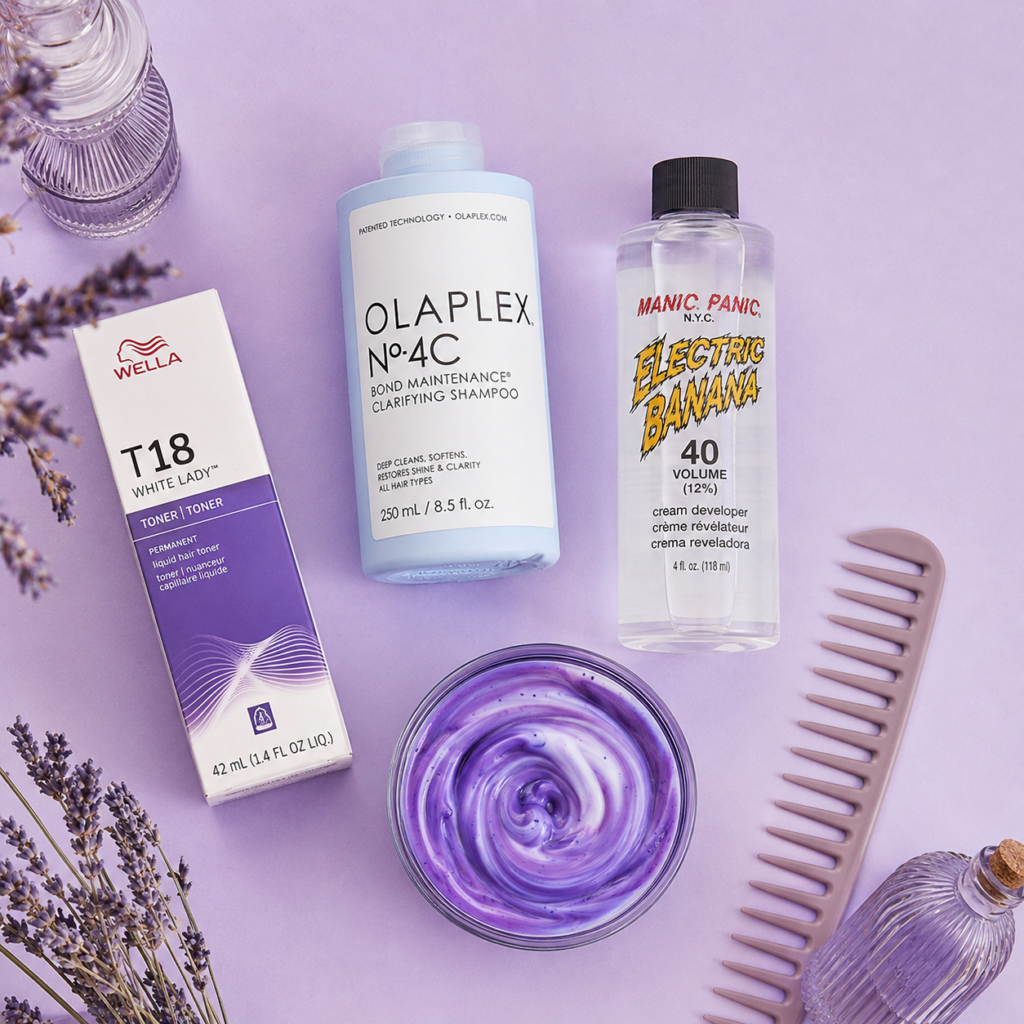
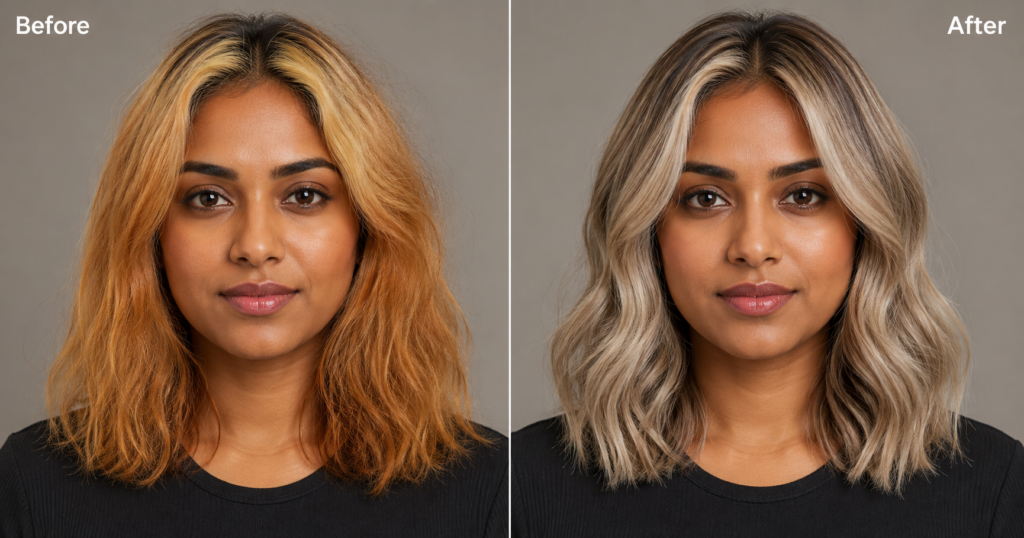
Here’s the deal, I fried my hair chasing the perfect blonde last winter, and I’m not going to let that happen to you. I started with a level 6 brunette base, used a 40-volume developer without a strand test, and ended up with the kind of orange-brassiness that no amount of purple shampoo fixes. That experience sent me deep into color chemistry, and what I learned about blonde hair color science completely changed how I approach lifting and toning. I’ve been using Wella T18 White Lady Toner ever since, and it’s kept my blonde icy without weekly purple shampoo grief.
How Blonde Hair Color Works
Let’s look at the chemistry here, because it actually matters for getting this right. Hair color is controlled by two pigments, eumelanin (brown/black) and pheomelanin (red/yellow). Lifting blonde means you’re oxidizing both of those pigments away, in that exact order.
Brown goes first, then red, then orange, then gold, and finally pale yellow. This is why going blonde in one session on dark hair almost never works, you’re literally racing through a color wheel. Because of this, most colorists work in stages instead of hammering with high-developer in one shot.
The lift level also matters more than most people think. A 10-volume developer opens the cuticle slightly and deposits. A 40-volume blows it open and lifts aggressively. For most at-home blonde attempts, 20-volume with a longer processing time tends to be safer and less damaging than 40-volume at high heat.
What Happens When You Tone Correctly
| Feature | Before (Common Mistake) | After (Optimized Approach) |
|---|---|---|
| Developer volume | 40-volume for speed | 20-volume with extended processing time |
| Toner timing | Skipping toner entirely | Toning to a level 9 to 10 pale yellow base before depositing ash |
| Shampoo choice | Daily clarifying shampoo strips color fast | Sulfate-free shampoo 2 to 3 times per week maximum |
| Brassiness response | Piling on purple shampoo every wash | Using purple shampoo once a week, conditioner every other time |
| Bond health | Skipping bond protection during color | Adding bond builder to bleach and toner mix |
| Result | Orange mid-lengths, fried ends, fast fade | Even, cool-toned blonde that holds for 6 to 8 weeks |
The Blonde Routine That Prevents Brassiness
Follow these steps from root to tip and you’ll avoid the orange disaster I had to grow out for four months.
- Strand test first. Always. Take a small section from the back underlayer and process it at the same developer volume you’re planning to use. This tells you your actual lift time, not the box’s suggested time. Most boxes overestimate how fast dark hair lifts.
- Lift to a pale yellow base, not white. Targeting level 9 (pale yellow) before toning gives you the cleanest result. Trying to lift all the way to white with bleach tends to over-process the ends before the roots catch up.
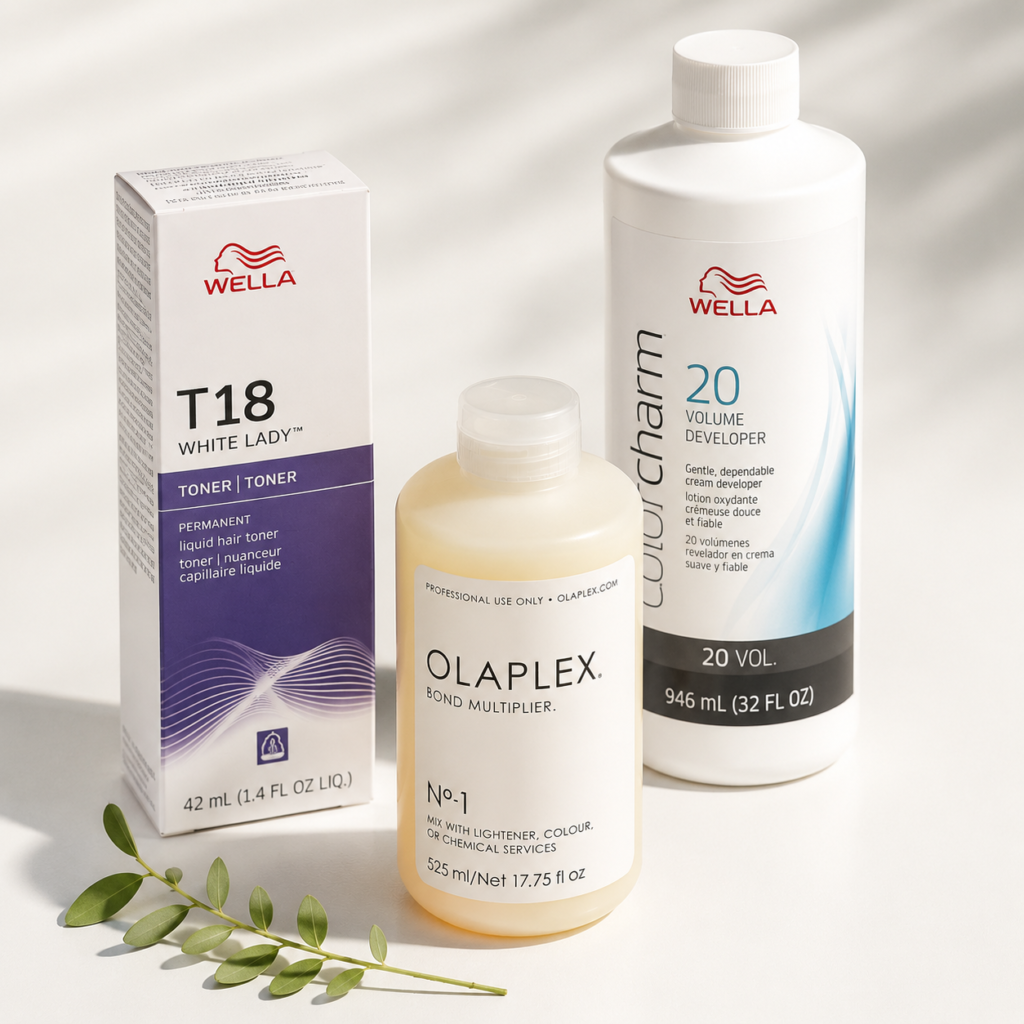
- Add a bond builder to your bleach mix. I mix a capful of Olaplex No. 1 Bond Multiplier directly into my lightener. After six weeks of testing this on my own mid-lengths, breakage dropped noticeably, the strands just snapped less on a comb-through. This step is genuinely worth the cost.
- Tone on damp, not soaking wet hair. Water dilutes toner more than people realize. I towel-dry until my hair holds shape, then apply. Processing time runs roughly 20 to 25 minutes for a true ash result, longer for stubborn warmth.
- Seal with a cool water rinse. Hot water opens the cuticle and lets pigment escape immediately. A 30-second cold rinse after toner costs nothing and adds about two weeks of color longevity in my experience.
- Wait at least 72 hours before shampooing. The cuticle needs time to close after color processing. I know it’s uncomfortable, but dry shampoo exists for this exact reason.
Affordable Picks vs. Pro-Level Formulas
| Feature | Drugstore Pick | Salon Professional |
|---|---|---|
| Toner for brassiness | Shimmer Lights Purple Shampoo (deposit only) | Wella Color Charm T18 Toner with developer (actual dye molecules) |
| Bond protection | Pantene Pro-V Repair shampoo (surface coat) | Olaplex No. 1 added to bleach mix (structural repair) |
| Developer | Generic box kit developer (often imprecise volume) | Wella or Salon Care measured professional developer |
| Purple shampoo frequency | Every wash = over-deposit, turns ashy-grey | Once weekly keeps tone balanced without overcorrecting |
| Deep conditioning | Pantene Gold Series Mask (works fine, honestly) | Olaplex No. 3 Hair Perfector (rebuilds disulfide bonds) |
| Color longevity | 3 to 4 weeks before significant brassiness returns | 6 to 8 weeks with full protocol |
The Porosity Test Most People Skip
Why porosity determines everything about blonde color.
High porosity hair (often from previous chemical processing) absorbs toner fast but releases it even faster, your blonde goes brassy within two weeks. Low porosity hair resists toner uptake, so you end up with uneven deposit. Here’s a fast test: drop a clean, dry strand into a glass of room-temperature water. If it sinks within 2 minutes, you have high porosity. If it floats past 4 minutes, porosity is low. Most bleached hair sits in the high-porosity category, which means a leave-in bond treatment before toning is non-negotiable, not optional.
Frequently Asked Questions
Does blonde hair color work on dark brown hair in one session?
For most people, no. Dark brown hair (level 4 to 5) contains dense eumelanin and pheomelanin that require multiple lifting sessions to clear. Attempting full lift in one session with 40-volume developer tends to cause extreme breakage before you reach a pale yellow base. Two-session lifting, spaced two to three weeks apart, usually produces much healthier results.
Why does my blonde turn orange so fast?
Warm undertones in your hair, pheomelanin, are the last pigment to lift and the first to resurface. Because of this, heat styling, hard water, and daily clarifying shampoo all accelerate brassiness by stripping the cooler toner pigment first. A sulfate-free shampoo and weekly purple toning treatment tend to extend cool-blonde tone significantly between color appointments.
How often should I use purple shampoo on blonde hair?
Once a week is usually enough for most blonde hair types, I have found using it more frequently deposits too much violet pigment, especially on high-porosity hair, which turns the blonde a flat, dull grey-ash instead of a bright cool blonde. On the other wash days, use a bond-strengthening or moisturizing shampoo instead to maintain hair health.
Can I tone my hair at home without a professional?
Yes, and actually the main risk isn’t the toner itself, it’s leaving it on too long. Wella T18 at 10-volume developer processes fast on pre-lightened hair, sometimes in as little as 10 minutes on very pale bases. Start checking at 10 minutes, rinse when you reach your target tone, and never apply to unwashed hair with heavy product buildup because it blocks even deposit.
The Amber Verdict
Blonde hair color is genuinely one of the most chemistry-demanding things you can do to your hair, and most brassiness and breakage problems trace directly back to skipping the strand test and overdoing developer volume. Get your base to a true pale yellow before toning, protect your bonds during every lift session, and stop washing daily, your blonde will last twice as long as it does right now. Pin this before your next color session.