
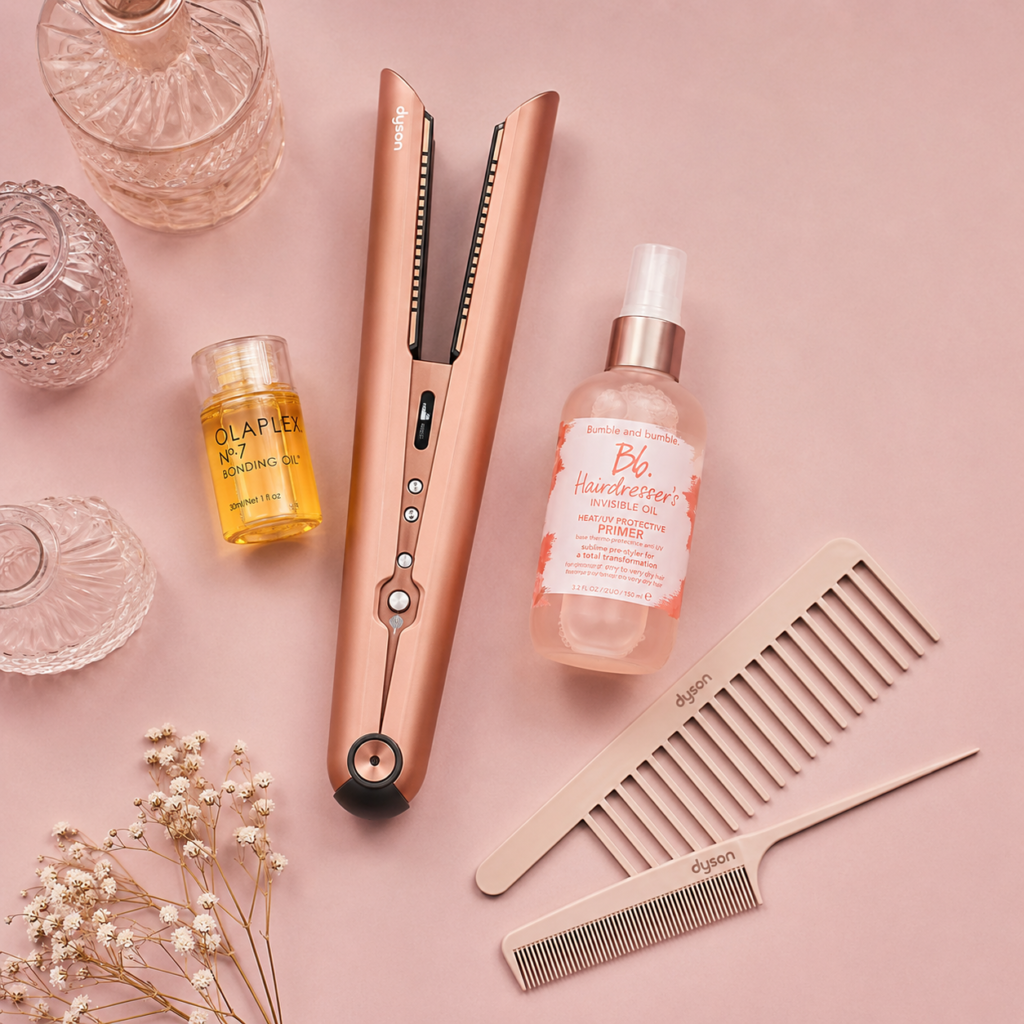
Here’s the deal, I got a blunt bob last January on a whim, walked out of the salon feeling extremely cool, and then spent the next three weeks realizing I had absolutely no idea how to maintain the thing. The blunt bob haircut looks effortless in photos. In real life, it punishes you for skipping trims. Because the cut relies on a perfectly sharp, level line from follicle to tip, even two weeks of growth turns that crisp edge into something that looks more “grew out” than “grown up.” I started using Olaplex No. 7 Bonding Oil to keep the ends smooth between cuts, and that helped enormously.
How a Blunt Bob Works
The blunt bob haircut gets its name from the cutting technique, all hair is cut to a single uniform length with zero graduation or layering. However, most stylists cut it with a very slight undercut at the nape to reduce bulk. This means the bottom line looks flat and dense from the outside.
That uniform weight line is what creates the signature “heavy” look. For example, on fine hair, this concentrated weight actually creates the illusion of thickness. On the other hand, very thick or coarse hair may need interior point-cutting to prevent the shape from going triangle on you.
From follicle to tip, every strand in a blunt bob haircut carries equal length, so the ends stack cleanly. This is why damage shows up so fast on a blunt bob haircut, split ends scatter light differently than the clean-cut ends do, and you notice it immediately.
Why Face Shape Actually Matters Here
Not every bob length flatters every face. This is one piece of mainstream advice I partly disagree with, most guides tell oval faces they can pull off anything. That’s mostly true, but oval faces with a narrow forehead actually look better with a chin-length bob than a jaw-length one.
Here’s a quick breakdown by face shape:
- Round faces: chin-length or longer works better; jaw-length can widen the face
- Square faces: a bob that hits just below the jaw softens the angles nicely
- Heart faces: collarbone-length bobs balance a wider forehead
- Oval faces: jaw-length is the classic choice, but longer suits a narrower brow
- Long faces: jaw-length bobs are genuinely flattering here, full stop
That said, these are tendencies, not rules. A skilled stylist reads your proportions in person better than any chart does.
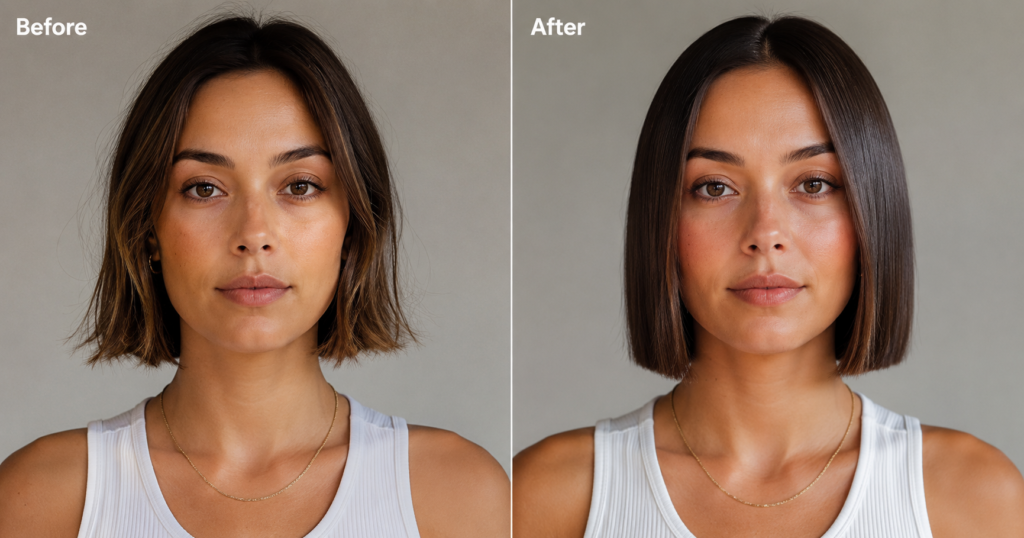
Before and After: What to Expect
| Feature | Before (Common Mistake) | After (Optimized Approach) |
|---|---|---|
| Trim schedule | Waiting 12+ weeks between cuts | Booking a trim every 6 to 8 weeks |
| Blow-dry method | Diffusing or air-drying without tension | Using a paddle brush with downward airflow to seal the ends flat |
| Heat protection | Skipping heat protectant on “just straightening” days | Applying a lightweight heat protectant oil before every heated tool |
| Product choice | Volumizing mousse that creates frizz at the cut line | A light smoothing serum or bonding oil applied mid-shaft to ends |
| Result | Blurry, uneven hem that looks grown-out within weeks | Sharp, glossy cut line that holds its shape between trims |
The Protocol
Keeping a blunt bob looking sharp is really a maintenance game. Follow these steps consistently and the cut stays crisp far longer between salon visits.
- Book trims at six to eight weeks, not longer. The blunt hem degrades faster than layered cuts. Most people wait too long and then wonder why the bob looks shapeless. Six weeks is the sweet spot for fine to medium hair.
- Blow-dry with downward tension every time. After washing, apply a heat protectant, then use a paddle brush to pull the hair straight downward while directing the airflow from roots to ends. This seals the cuticle flat at the cut line and is the single biggest factor in maintaining that glossy edge.
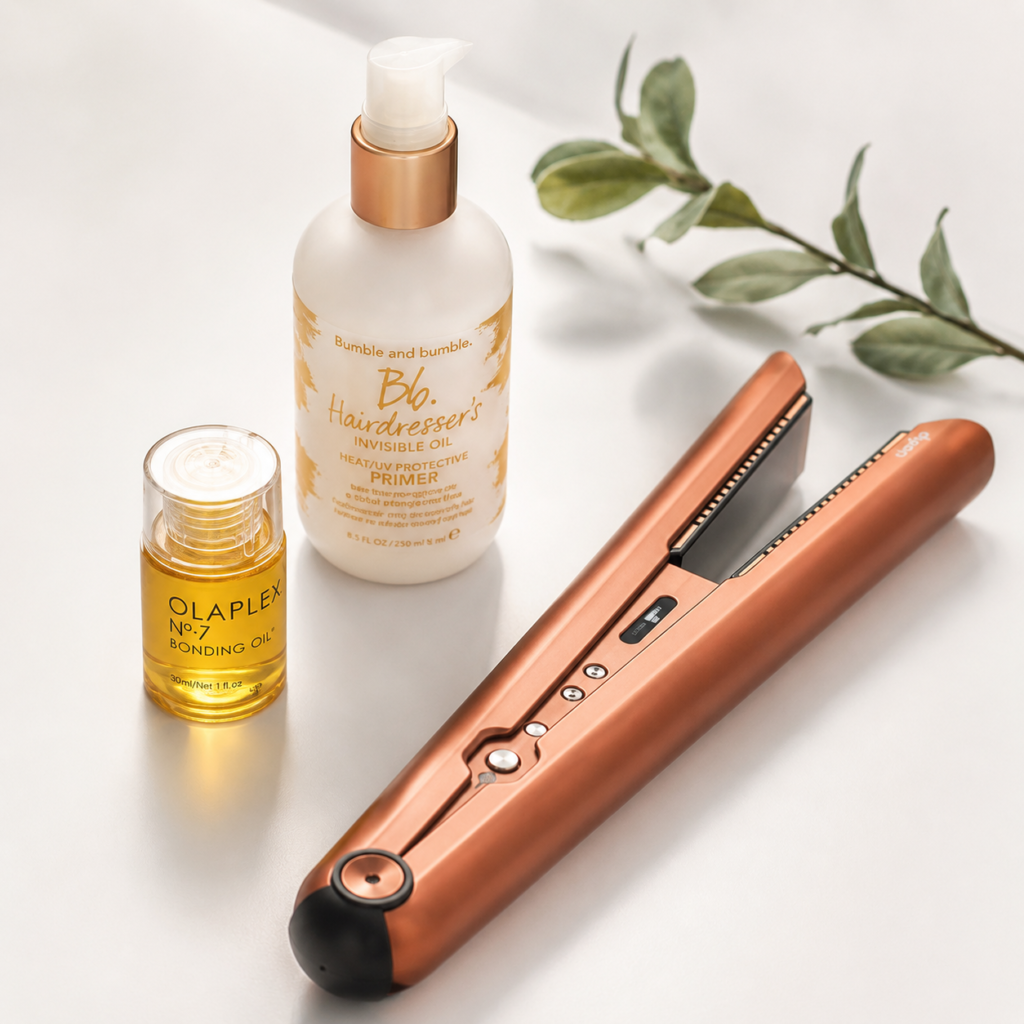
- Apply a bonding oil to dry ends before heat styling. I use Bumble and Bumble Hairdresser’s Invisible Oil heat protectant on damp hair before the paddle-brush blow-dry. It smooths the cuticle, reduces friction from the brush, and keeps the ends from splintering.
- Use a flat iron on the ends only, not the whole length. The bob’s power is in that bottom line. Run a flat iron just through the last two inches of the hair once a week to keep the hem looking freshly cut.
- Sleep on a satin pillowcase. Cotton creates friction that roughs up the cuticle overnight. After six weeks of switching to satin, my ends looked noticeably smoother at my next trim appointment.
- Do a weekly smoothing treatment on the cut line. Even a dime-sized amount of a conditioning mask worked into the ends for five minutes before shampooing makes a visible difference in how clean the hem looks.
Porosity Check: Does Your Hair Type Change the Rules?
Yes. Porosity changes how the blunt bob behaves from follicle to tip, quite dramatically, actually.
Low porosity hair resists moisture and tends to sit stiff. The blunt bob can look almost helmet-like. Use lightweight liquid leave-ins rather than thick creams, and consider point-cutting the interior very slightly to reduce stiffness.
High porosity hair absorbs everything and swells with humidity. This is the hair type that turns a blunt bob into a triangle by noon. Protein treatments every two to three weeks tend to help seal the cuticle. A strong anti-humidity finishing spray is non-negotiable on high-humidity days.
Medium porosity hair is the easiest to work with here. Standard bonding oils and a consistent blow-dry routine usually keep the shape clean.
Drugstore Gems vs. Salon Standards
| Feature | Drugstore Pick | Salon Professional |
|---|---|---|
| Heat protectant | TRESemmé Thermal Creations Heat Tamer Spray — light hold, affordable, gets the job done on fine hair | Bumble and Bumble Hairdresser’s Invisible Oil — finer texture, better frizz control, worth it for thick or coarse bobs |
| Smoothing serum | Garnier Fructis Sleek and Shine Anti-Frizz Serum — good for light smoothing before blow-dry | Olaplex No. 7 Bonding Oil — repairs while it smooths, noticeable difference on damaged ends after three bottles in |
| Conditioning treatment | Aussie 3 Minute Miracle Moist — genuinely underrated for softening the cut line | Kérastase Nutritive Masquintense — heavier, better for coarse or color-treated bobs |
| Finishing tool | Revlon One-Step Volumizer — solid paddle-brush dryer combo for smooth ends on a budget | Dyson Corrale straightener — consistent heat, less damage on the hem, expensive but lasts |
| Best for | Fine to medium hair, natural color, tight budget | Coarse, color-treated, or chemically processed blunt bobs |
Frequently Asked Questions
How often should I trim a blunt bob to keep the shape?
Every six to eight weeks tends to be the sweet spot for most hair types. Fine hair often needs the shorter end of that range because the hem looks blurry faster. Coarse or thick hair can sometimes stretch to ten weeks, but beyond that the weight line starts to look uneven rather than intentional.
Does a blunt bob work on curly hair?
It can work beautifully, but the cutting technique changes. A dry cut is usually better for curly textures because curl shrinkage means a wet blunt cut lands several inches shorter than expected. For example, a 3B curl pattern needs the bob cut longer than the target length to account for shrinkage once it dries.
Is the blunt bob high maintenance compared to other cuts?
Honestly, yes, more so than a layered bob or a shaggy cut. Because the entire style depends on that one clean line, any unevenness or split ends read immediately. However, if you commit to the six-to-eight-week trim schedule and a consistent blow-dry routine, the daily upkeep is actually minimal.
What’s the difference between a blunt bob and a classic bob?
The terms get used interchangeably, but there is a distinction. A classic bob often includes some graduation, slightly shorter at the nape, longer at the front. A blunt bob is cut to one uniform length all the way around with no graduation, which creates that dense, heavy hem that is the whole point of the style.
The Amber Verdict
The blunt bob haircut is one of the sharpest styles in hair, but it only looks that way when you treat the maintenance seriously. Skip the trims and the whole effect collapses, which is the part nobody tells you before you commit. If you’re willing to book that six-week appointment and invest five minutes in a proper blow-dry, this cut pays you back with serious impact. Pin this for your next salon visit.