
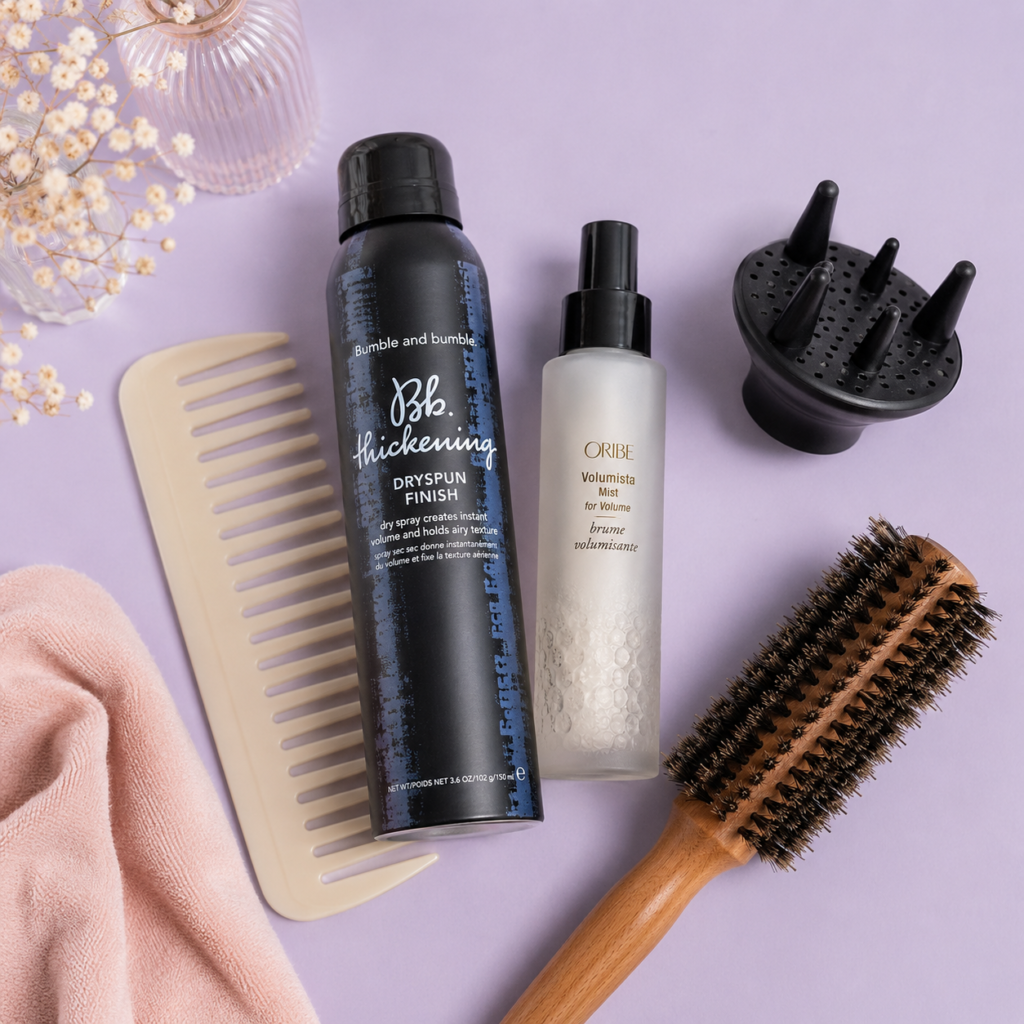
Here’s the deal, flat hair isn’t just a bad hair day problem. I tested the Bumble and bumble Thickening Dryspun Finish spray for six weeks last winter after my stylist reformulated her go-to blowout routine on me, and the difference in root lift was honestly embarrassing, in the best way. Volume isn’t about hair spray and prayers. It’s about understanding how the hair shaft actually responds to products, heat, and tension before you ever pick up a brush. This guide covers how to add volume to hair using methods that actually work at a structural level, not just surface tricks that collapse by noon.
How Hair Volume Works
Let’s look at the chemistry, or really, the physics. Each strand of hair has a cuticle layer made of overlapping keratin scales, and when those scales lie flat, your hair looks sleek but heavy. Volume comes from lifting those scales slightly and training the root to stand away from the scalp.
Because of this, the diameter of each strand matters enormously. Fine hair has fewer cortex cells packed in, which means less natural body from follicle to tip. That’s not a flaw, it just means you need different strategies than someone with thick, coarse hair.
Most importantly, scalp sebum is the enemy of volume. Oil migrates down the shaft within 12 to 24 hours for most people and weighs roots down. Therefore, your cleansing routine is actually the first step in any serious volume protocol, not a styling product.
The Role of Protein and Moisture Balance
Here’s something most volumizing guides skip entirely: your hair’s protein-moisture balance directly affects how much body it can hold. Overly conditioned hair, common after heavy masking phases, goes limp and refuses to hold a blowout for longer than two hours.
I learned this the hard way three bottles into a popular bond-building treatment phase. My hair was silky, yes. But it was also completely lifeless by 10 a.m. Pulling back on heavy conditioners and adding a lightweight protein treatment every two weeks gave me back the texture my strands needed to actually grip a style.
However, protein overload is equally real. Stiff, brittle, snapping hair is a sign you’ve overcorrected. The sweet spot tends to be alternating moisture-focused and protein-focused wash days, especially for fine or color-treated hair.
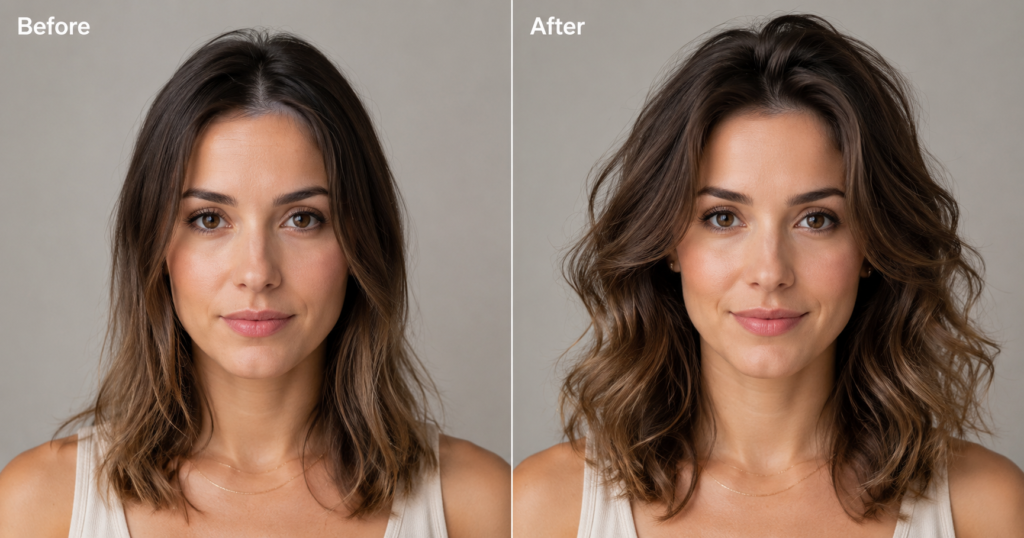
Before and After: What to Expect
| Feature | Before (Common Mistake) | After (Optimized Approach) |
|---|---|---|
| Washing method | Heavy conditioner root to tip, skipping scalp massage | Lightweight conditioner mid-shaft to ends only, with scalp massage to stimulate circulation |
| Product choice | Heavy creams and oils applied at roots for “nourishment” | Mousse or volumizing mist applied to damp roots, nothing heavy near the scalp |
| Application method | Brushing hair flat while blow-drying downward | Flipping head forward, using a round brush to lift roots upward at 45-degree tension |
| Frequency | Daily washing that strips and then over-conditions to compensate | Every other day washing with dry shampoo at roots on off days to absorb oil |
| Heat tool approach | Flat iron from roots down — kills any lift immediately | Diffuser or round-brush blow-dry first for root volume, flat iron only from mid-shaft |
| Result | Volume lasts maybe 45 minutes before roots go flat | Root lift maintained for 6 to 8 hours without touching up |
The Protocol
1. Start with a clarifying wash every 10 to 14 days.
Product buildup is the number-one killer of volume. Clarify with a sulfate-based shampoo periodically to strip residue without doing it so often that you trigger dry scalp overproduction.
2. Apply shampoo twice at the roots.
One pass doesn’t cut through scalp oil and styling product residue effectively. The second lather is where the actual cleansing happens, it emulsifies more thoroughly on clean-ish hair.
3. Condition only from the ears down.
This one change alone can add noticeable lift within the first wash. Conditioner near the scalp coats the root area and makes it impossible for strands to stand away from the head.
4. Apply a volumizing mousse or mist to soaking-wet roots.
Damp hair is most receptive to styling products. Work a golf-ball-sized amount of Oribe Volumista Mist for Volume through the root area before any heat, then scrunch gently upward.
5. Flip your head forward and blow-dry with a round brush.
Gravity does half the work here. Lift sections at a 45-degree angle from the scalp and hold the heat on the root for a full five seconds before releasing. For anyone with naturally wavy hair, a diffuser on low heat also preserves texture while adding body.
6. Finish with a cool shot at the root.
The cool air from your dryer sets the hydrogen bonds in the hair cuticle into their new lifted position. Skip this step and your root lift will soften within the hour.
Porosity Check
Why porosity matters for volume: High-porosity hair absorbs products quickly but releases moisture just as fast — meaning heavy conditioners collapse it almost immediately. Low-porosity hair resists product absorption, so lightweight sprays and heat-activated formulas tend to work better than thick mousses. Do the strand test: drop a clean, dry hair into a glass of room-temperature water. If it sinks within 2 minutes, you’re high porosity. Float for 4-plus minutes? Low porosity. This changes which volumizing products will actually grip your strands.
Drugstore Gems vs. Salon Standards
| Feature | Drugstore Pick | Salon Professional |
|---|---|---|
| Volumizing mousse | Herbal Essences Body Envy Mousse — light hold, accessible, great for fine hair | Oribe Volumista Mist for Volume, featherweight, buildable, no crunch |
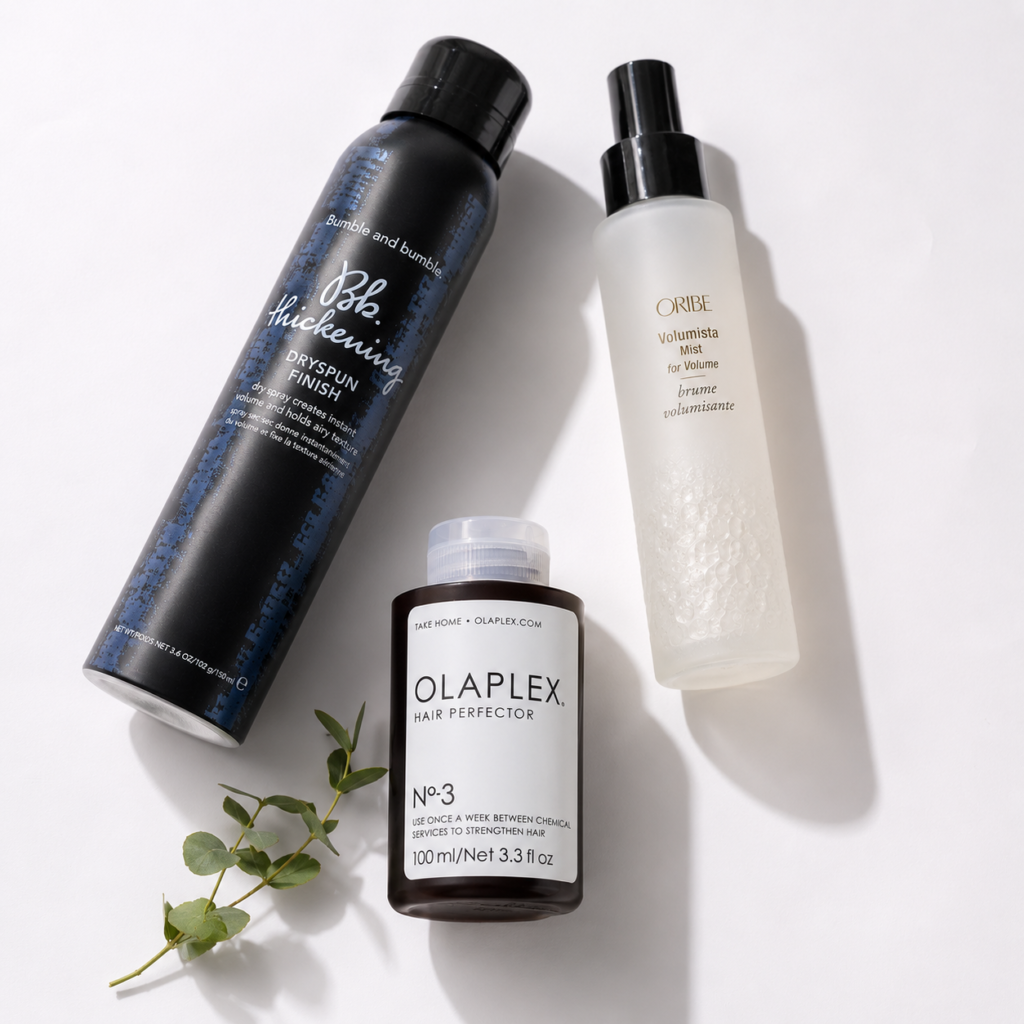
| Dry shampoo for root lift | Batiste Original Dry Shampoo — absorbs oil well, slight white cast on dark hair | Bumble and bumble Thickening Dryspun Finish — adds grit and texture, zero residue |
| Scalp treatment | Neutrogena T/Sal Shampoo for build-up control | Christophe Robin Cleansing Purifying Scrub with Sea Salt |
| Round brush | Conair Velvet Touch Round Brush — affordable, decent tension for blowouts | Mason Pearson Pure Bristle — holds heat evenly, lasts years |
| Protein treatment | Aphogee Two-Minute Keratin Reconstructor | Olaplex No. 3 Hair Perfector — targets bonds, prevents over-softening |
Frequently Asked Questions
Does volumizing shampoo actually work?
It depends on the formula. Most volumizing shampoos use hydrolyzed proteins or panthenol to temporarily swell the cuticle and add grip to each strand, that effect is real, but it’s mild. For most people, the bigger win comes from where you apply conditioner afterward. Keeping conditioner away from roots tends to add more noticeable lift than the shampoo itself.
Why does my hair go flat so fast after a blowout?
Usually it’s either product buildup, conditioner at the roots, or skipping the cool-shot step at the end of blow-drying. However, humidity is also a factor, hydrogen bonds in the hair reabsorb moisture from the air, which softens your style. A light-hold finishing spray on the roots can slow that process down significantly for most hair types.
Is volume spray the same as dry shampoo?
No — they do different things. Dry shampoo absorbs scalp oil and adds a gritty texture that grips roots. Volume spray typically contains film-forming polymers that coat the strand and add thickness. That said, some dry shampoos double as volumizers. For best results, I have found using both — dry shampoo at the root, volumizing mist through the mid-lengths, gives the most sustained lift.
Can diet affect how much volume my hair has?
Yes, genuinely. Low ferritin (stored iron) is one of the most underdiagnosed causes of limp, thinning hair, a derm I spoke with last spring pointed this out after I mentioned my hair felt thinner despite no styling changes. Iron deficiency affects the hair growth cycle before visible shedding even begins. In addition, low protein intake reduces the raw material your follicles need to build a full, dense shaft.
The Amber Verdict
Honestly, I think the beauty industry oversells volumizing products and undersells the basics, cleanse properly, condition strategically, and use heat with actual intention. Most people searching for how to add volume to hair are over-conditioning at the root or skipping the cool-shot step, and fixing those two things alone makes a bigger difference than any mousse. Start there, then layer in products once your foundation is solid, and pin this so you have the protocol handy on wash day.