
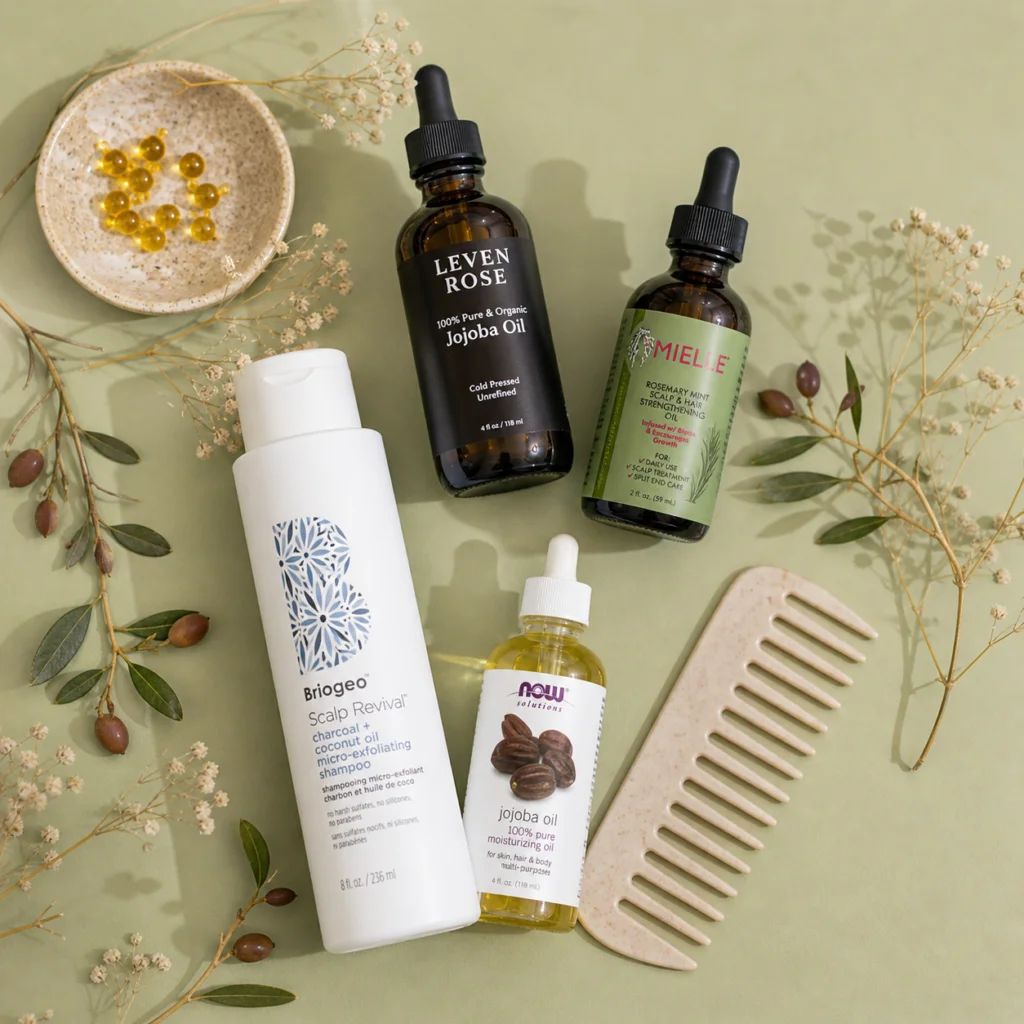
Here’s the deal, most people grab jojoba oil expecting overnight magic, then quit after two weeks. But jojoba hair oil for hair growth actually works on a slower, steadier timeline. The science backs it up. I’ve been testing it for months, and I want to show you exactly what it does, what it doesn’t do, and how to use it right. I’ve been using Leven Rose 100% Pure Jojoba Oil as my go-to, and the difference in my scalp health is genuinely noticeable. Because of this, I finally stopped rotating through a dozen oils and just committed to one protocol.
How Jojoba Hair Oil Works
Let’s look at the chemistry, because jojoba oil isn’t actually an oil. It’s a liquid wax ester, the only one found in nature. That distinction matters a lot.
Because of this unique wax structure, jojoba mimics your scalp’s natural sebum almost perfectly. Your sebaceous glands produce sebum to coat and protect each strand follicle to tip. When that sebum balance gets disrupted, the scalp gets inflamed, pores clog, and hair growth slows.
Jojoba steps in and regulates that sebum production. Furthermore, it contains vitamin E, vitamin B complex, zinc, and copper, all nutrients that support the hair growth cycle at the follicle level. This means that healthy follicle conditions create longer anagen (growth) phases.
In addition, jojoba’s anti-inflammatory properties reduce scalp irritation. Chronic scalp inflammation is one of the top reasons hair follicles miniaturize and stop producing thick strands. Therefore, calming that inflammation consistently is half the battle.
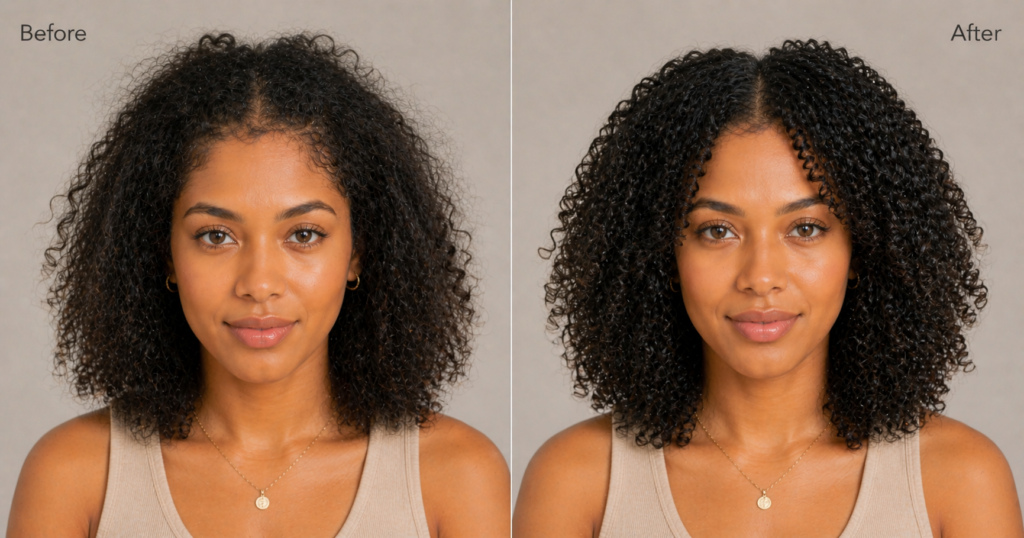
Before and After: What to Expect
| Feature | Before (Common Mistake) | After (Optimized Approach) |
|---|---|---|
| What most people do | Apply jojoba directly to dry lengths only | Apply to scalp first, then work through lengths |
| Product choice | Blended “jojoba” oil with fillers and fragrance | 100% cold-pressed, pure jojoba oil (no additives) |
| Application method | Dump oil onto hair, skip scalp massage | Warm oil, section scalp, massage in circular motions for 5 minutes |
| Frequency | Daily heavy application causing buildup | 2 to 3 times per week, lightweight application |
| Result | Greasy, limp hair with no growth change | Reduced shedding, stronger strands, improved scalp health in 6 to 8 weeks |
The Protocol
Here’s the exact routine I follow for maximum jojoba hair oil for hair growth results. Consistency is everything with this approach.
- First, do a quick porosity check. Drop a clean strand of hair into a glass of water. If it sinks fast, you have high porosity hair, jojoba absorbs quickly. If it floats, you have low porosity, warm the oil slightly before applying so it penetrates. Not sure what your result means?
- Next, section your scalp into four quadrants. Use a rat-tail comb to part your hair. This ensures you hit every section of scalp evenly, not just the easy front sections.
- Apply 4 to 6 drops per section directly to the scalp. Use Mielle Organics Rosemary Mint Scalp & Hair Strengthening Oil as a companion treatment on alternating days. The rosemary in this formula adds a clinically-studied growth booster alongside the jojoba base.
- Massage each section for 60 to 90 seconds. Use your fingertips in firm circular motions. This mechanical stimulation increases blood flow to follicles, which speeds up nutrient delivery from follicle to tip.
- Finally, leave it on for a minimum of 30 minutes, or overnight. Overnight treatments deliver the best absorption. Cap with a satin-lined bonnet to avoid pillowcase transfer. If you want to layer in additional repair, pair this with a hair treatment that fixes damage fast.
- Wash out with a sulfate-free shampoo. Sulfates strip the scalp too aggressively and undo the balancing work jojoba just did. Repeat this routine 2–3 times per week.
Drugstore Gems vs. Salon Standards
| Feature | Drugstore Pick | Salon Professional |
|---|---|---|
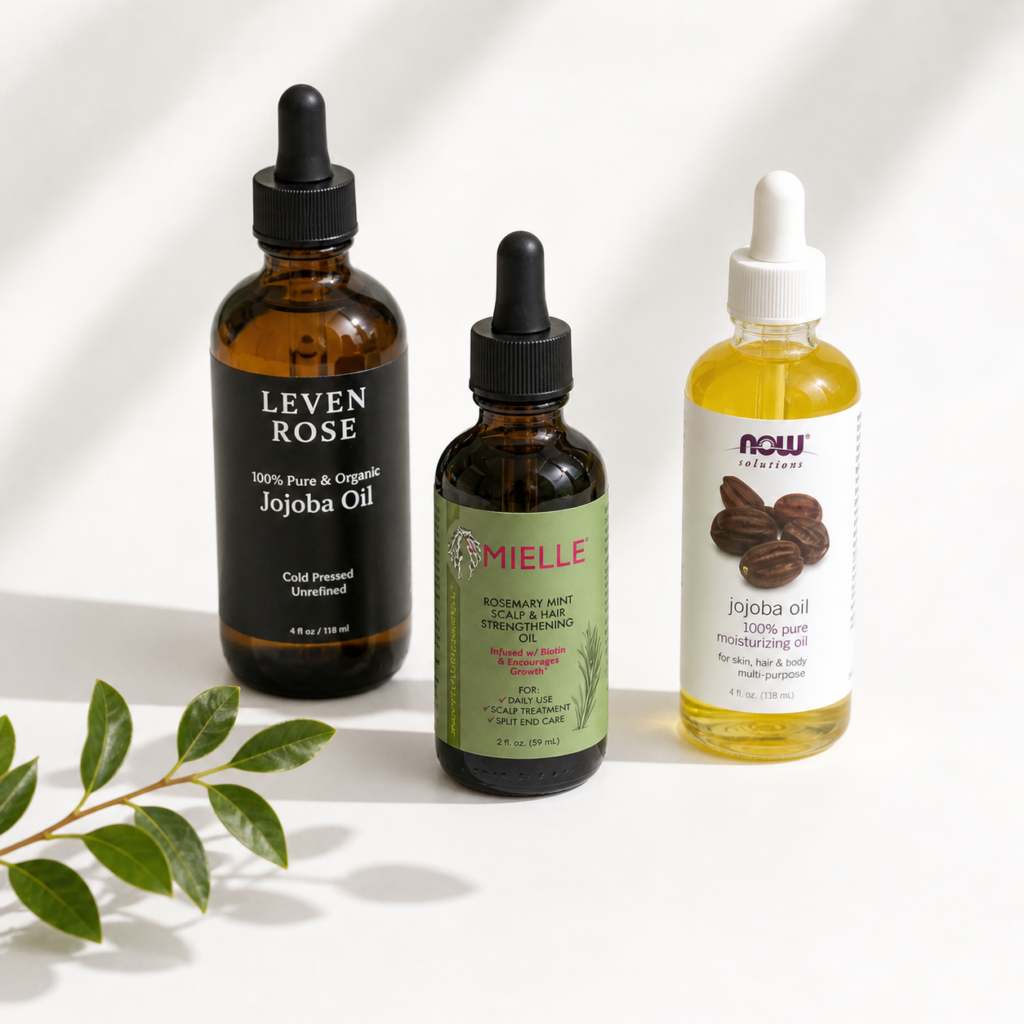
| Best budget jojoba oil | NOW Solutions Jojoba Oil (100% pure, widely available) | Leven Rose 100% Pure Jojoba Oil (cold-pressed, unrefined, amber glass) |
| Purity level | Usually pure but may lack cold-press certification | Cold-pressed and unrefined, retains all active nutrients |
| Packaging | Plastic bottle — light exposure degrades oil faster | Amber or dark glass, protects oil from oxidation |
| Price per ounce | Lower upfront cost, larger quantity | Higher cost, smaller batch, higher potency |
| Best for | First-timers testing jojoba for scalp care | Committed users wanting maximum growth results |
Porosity Check Sidebar:
Low Porosity Hair: Warm your jojoba oil in your palms or briefly in a bowl of hot water before applying. Heat lifts the cuticle slightly so the oil can actually enter the hair shaft. Cold oil just sits on top.
High Porosity Hair: Apply jojoba as a pre-shampoo treatment AND as a lightweight post-wash sealant. Your hair absorbs fast but also loses moisture fast, jojoba’s wax structure helps seal that gap.
Medium Porosity Hair: You’ve got the easiest job here. Apply at room temperature, 2 to 3 times per week, and you’ll see results fastest.
Frequently Asked Questions
Does jojoba oil actually grow hair or just condition it?
Both, honestly. Jojoba oil directly conditions the hair shaft and seals moisture in. However, it also supports hair growth by reducing scalp inflammation, regulating sebum, and delivering zinc and copper to the follicle. Most importantly, it creates the scalp conditions where existing follicles can produce thicker, longer strands over time.
How long before I see results from jojoba hair oil for hair growth?
Most people notice reduced shedding within 3 to 4 weeks. Furthermore, visible density improvements take 6 to 8 weeks of consistent use. Hair growth cycles are slow by nature, the anagen phase alone takes months. Therefore, patience plus consistency is the only real formula that delivers results here.
Can I use jojoba oil every day?
Daily use is usually too much. Because jojoba is a wax ester, daily application without proper cleansing leads to buildup on the scalp. That buildup can actually block follicles and slow growth. In other words, 2 to 3 times per week gives you all the benefits without the congestion risk.
Is jojoba oil better than coconut oil for hair growth?
For scalp health specifically, jojoba wins. Coconut oil penetrates the hair shaft better due to its smaller molecular size, great for coconut oil for hair moisture work. However, jojoba regulates sebum and reduces scalp inflammation more effectively. For growth-focused protocols, jojoba is my first recommendation.
The Amber Verdict
Jojoba hair oil for hair growth isn’t hype, it’s one of the most scalp-compatible oils you can use, and the sebum-mimicking chemistry is genuinely impressive. That said, it works best as a consistent scalp treatment, not a one-off mask. Commit to the protocol above for 8 weeks and track your shedding, I think the results will change your mind about “natural” oils. Pin this so you remember to come back when wash day rolls around.