
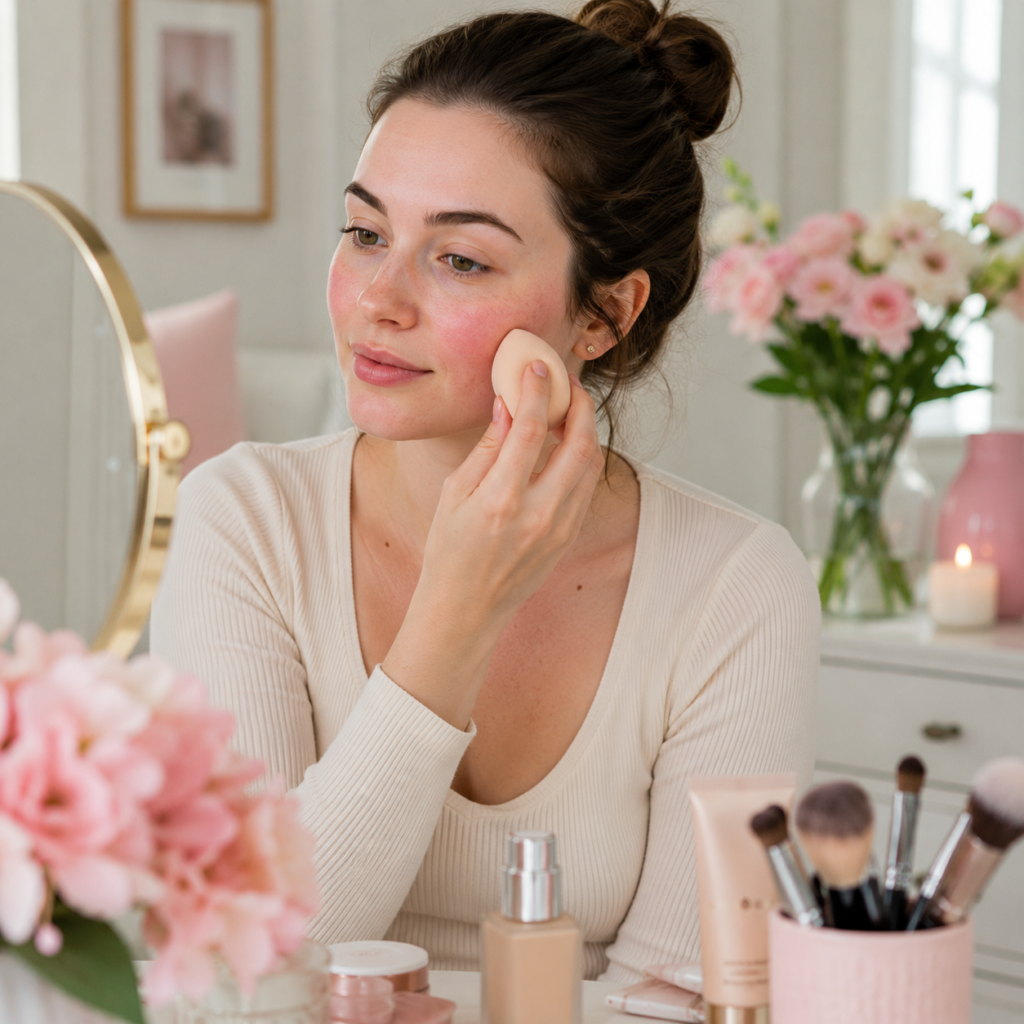
Living with rosacea can make getting ready in the morning feel like a balancing act. One day your skin may look calm, and the next you might notice redness, flushing, or sensitive patches that make applying makeup more challenging. The good news is that wearing makeup for rosacea doesn’t have to mean choosing between comfort and confidence.
With the right products and gentle techniques, you can create a natural-looking complexion without irritating your skin. The secret isn’t simply covering redness—it’s understanding your skin’s needs and selecting rosacea-friendly makeup products that work with your skin instead of against it.
In this guide, you’ll learn how to prepare rosacea-prone skin, choose makeup that won’t aggravate sensitivity, master color correction for rosacea redness, and avoid common mistakes that can make flushing more noticeable. Whether you’re looking for the best makeup for rosacea redness, an easy everyday routine, or dermatologist-inspired tips, this guide will help you build a routine that feels comfortable and looks beautiful.
What Is Rosacea and Why Does Makeup Behave Differently?
Rosacea is a long-term skin condition that often causes persistent facial redness, visible blood vessels, flushing, and increased skin sensitivity. While it commonly appears on the cheeks, nose, forehead, and chin, every person’s experience is different.
Because rosacea affects the skin barrier, your complexion may react more easily to ingredients, friction, and even changes in temperature. This means makeup that works perfectly for someone else may feel uncomfortable or appear patchy on rosacea-prone skin.
Instead of focusing only on coverage, it’s helpful to think of makeup as part of a gentle skincare routine. When your skin is well-prepared and hydrated, foundation and concealer blend more evenly, reducing the appearance of redness without looking heavy.
Many people worry that wearing makeup will worsen rosacea. In reality, carefully chosen sensitive skin makeup can be worn comfortably as long as it contains skin-friendly ingredients and is removed gently at the end of the day.
Why Rosacea Changes the Way Makeup Looks
Rosacea often creates uneven skin tone and areas of inflammation, making makeup behave differently than it would on healthy skin.
Common challenges include:
- Foundation clinging to dry patches.
- Redness showing through lightweight formulas.
- Makeup separating during flushing episodes.
- Increased irritation from heavily fragranced products.
- Difficulty finding the right shade for changing skin tone.
Fortunately, these challenges can often be managed with proper skin preparation and thoughtful product selection rather than simply applying more coverage.
Identifying Your Rosacea Triggers Before Choosing Makeup
One of the biggest mistakes people make is assuming their makeup alone causes flare-ups. In many cases, external triggers play a much larger role.
Common rosacea triggers include:
- Hot weather
- Cold wind
- Sun exposure
- Emotional stress
- Spicy foods
- Alcohol
- Hot beverages
- Over-exfoliating
- Harsh skincare products
- Fragrance-heavy cosmetics
Keeping track of when flare-ups occur can help you identify patterns. If your skin becomes red after exercising or spending time outdoors, for example, the trigger may not be your foundation at all.
Understanding these triggers allows you to choose products that support your skin rather than adding unnecessary stress.
How Triggers Affect Your Makeup
During a flare-up, the skin becomes warmer and more reactive. Heavy products may settle unevenly, while excess rubbing can make redness appear stronger.
On these days, it’s often better to simplify your routine with lightweight layers rather than applying thick, full-coverage makeup all at once.
Building a Rosacea-Friendly Makeup Routine
A consistent routine is one of the easiest ways to improve both comfort and makeup performance. Rather than relying on a single product to hide redness, focus on building gentle layers that work together.
A simple routine includes:
- Gentle cleansing.
- Hydrating moisturizer.
- Broad-spectrum sunscreen.
- Color correction if needed.
- Lightweight or buildable foundation.
- Concealer for targeted redness.
- Light setting powder or setting spray.
This approach creates a natural finish while helping minimize irritation.
Morning Routine
Start with lukewarm water and a gentle cleanser designed for sensitive skin. Avoid scrubbing or using rough washcloths that can increase facial redness.
After cleansing, apply a soothing moisturizer that supports the skin barrier before moving on to sunscreen.
Giving skincare a few minutes to absorb helps foundation apply more smoothly and reduces patchiness.
Evening Routine
At the end of the day, remove makeup carefully instead of rubbing aggressively.
Use a gentle cleanser or cleansing balm, rinse with lukewarm water, and finish with a nourishing moisturizer to replenish hydration overnight.
A healthy skin barrier often means easier makeup application the following morning.
Skin Prep That Helps Makeup Look Better
Beautiful makeup begins with healthy skin, especially when managing rosacea. Preparing your skin properly helps foundation glide on evenly and reduces the chance of irritation.
Step 1: Cleanse Gently
Choose a fragrance-free cleanser that removes impurities without stripping away moisture.
Avoid products containing alcohol or harsh exfoliating acids that may increase redness.
Step 2: Hydrate Thoroughly
Hydration is essential because dry, compromised skin tends to absorb foundation unevenly.
Look for moisturizers containing:
- Ceramides
- Hyaluronic acid
- Glycerin
- Niacinamide (if your skin tolerates it)
These ingredients help strengthen the skin barrier while keeping the complexion smooth.
Step 3: Never Skip Sunscreen
Sun exposure is one of the most common rosacea triggers.
A broad-spectrum mineral sunscreen containing zinc oxide or titanium dioxide protects your skin while creating a comfortable base for makeup.
How Color Correction Actually Works
Many people assume they need heavier foundation to hide redness, but professional makeup artists often rely on green color corrector for rosacea instead.
This works because green sits opposite red on the color wheel, helping visually neutralize redness before foundation is applied.
The goal isn’t to turn your face green, it’s to soften redness so you need less foundation afterward.
Apply a small amount only to the reddest areas, such as the cheeks, nose, or chin, then blend gently using tapping motions.
Using color correction for rosacea redness first often results in a more natural finish than relying solely on full-coverage makeup.
Choosing the Right Makeup Products
Selecting the right products can make the difference between makeup that looks fresh all day and makeup that emphasizes redness.
When shopping for makeup for rosacea, prioritize formulas that are:
- Fragrance-free
- Non-comedogenic
- Hypoallergenic
- Suitable for sensitive skin
- Dermatologist-tested whenever possible
Foundation
The best foundation for rosacea-prone skin is usually lightweight yet buildable. Instead of masking the skin with one thick layer, apply thin layers gradually where more coverage is needed.
Both mineral foundation and liquid foundation can work well depending on your skin type.
Concealer
Use concealer for rosacea only where additional coverage is necessary, such as around the nose or on persistent red patches. This targeted approach keeps makeup looking natural while avoiding unnecessary product buildup.
How to Apply Makeup Without Irritating Rosacea
Even the best makeup for rosacea can become uncomfortable if it’s applied too aggressively. Rosacea-prone skin responds better to gentle pressure and thin, buildable layers than heavy blending or rubbing.
Use Gentle Application Techniques
A few small changes can make a noticeable difference:
- Apply products using light tapping motions instead of dragging them across the skin.
- Work in thin layers rather than applying a thick coat of foundation.
- Allow each product to settle for a minute before adding the next.
- Avoid excessive buffing with dense brushes if your skin is flaring.
Sponge vs. Brush
Both tools can work well, but your skin’s condition should guide your choice.
A damp makeup sponge often provides the softest finish and helps press foundation into the skin without disturbing redness. Soft synthetic brushes are excellent for applying lightweight formulas evenly while minimizing friction.
For many people with rosacea, alternating between a sponge and a brush depending on the product creates the most natural-looking complexion.
Ingredients That Help Calm Rosacea
Choosing products with soothing ingredients is just as important as selecting the right shade.
Look for makeup and skincare that contain:
Ceramides
Ceramides help strengthen the skin barrier and reduce moisture loss, making makeup sit more smoothly on sensitive skin.
Hyaluronic Acid
This hydrating ingredient attracts moisture, helping prevent foundation from clinging to dry patches.
Glycerin
Glycerin keeps skin comfortable throughout the day and supports long-lasting hydration.
Niacinamide
Many people with rosacea tolerate niacinamide well because it can help improve the appearance of redness and support the skin barrier. If you’re trying it for the first time, patch test before applying it to your entire face.
Zinc Oxide & Titanium Dioxide
These mineral sunscreen ingredients provide sun protection while being less likely to irritate sensitive skin than many chemical filters.
Ingredients to Avoid If You Have Rosacea
Some ingredients can increase irritation, especially during flare-ups.
Whenever possible, avoid products containing:
- High amounts of denatured alcohol
- Artificial fragrance
- Menthol
- Peppermint
- Eucalyptus oil
- Strong essential oils
- Harsh physical scrubs
- Highly fragranced setting sprays
If you’re introducing a new product, perform a patch test on a small area before using it on your full face.
Makeup Habits That Protect Your Skin Barrier
Beautiful makeup starts with healthy skin.
Small daily habits can help reduce irritation while improving makeup performance.
Clean Your Brushes Regularly
Dirty brushes can collect oil, bacteria, and leftover makeup that may irritate sensitive skin.
Aim to wash brushes and makeup sponges at least once a week using a gentle brush cleanser.
Replace Old Makeup
Expired makeup may not perform as well and can introduce unwanted bacteria.
Pay attention to expiration dates, especially for liquid products.
Remove Makeup Gently
Never sleep with makeup on.
Use a gentle cleansing balm or fragrance-free cleanser, then follow with a nourishing moisturizer.
A soft, latex-free makeup sponge and synthetic brush set designed for sensitive skin.
Common Rosacea Makeup Myths
There are many misconceptions about wearing makeup with rosacea. Let’s clear up a few of the most common ones.
Myth: You Should Never Wear Foundation
Not true. Choosing the best foundation for rosacea-prone skin and applying it gently can help create an even complexion without irritating the skin.
Myth: More Coverage Is Always Better
Heavy layers often emphasize texture and dry patches. Buildable coverage usually creates a more natural result.
Myth: Rosacea Means You Can’t Wear Blush
Soft peach or neutral blush shades applied lightly can still look beautiful. The key is placement and moderation.
Myth: Makeup Causes Rosacea
Makeup doesn’t cause rosacea, but unsuitable products or harsh application techniques can worsen symptoms in some people.
Seasonal Makeup Tips for Rosacea
Your routine may need small adjustments throughout the year.
Summer
- Use lightweight, breathable foundation.
- Reapply mineral sunscreen regularly.
- Blot excess oil instead of adding more powder.
Winter
- Increase hydration before makeup.
- Switch to cream-based formulas if your skin feels dry.
- Avoid extremely hot water when cleansing.
Humid Weather
Choose lightweight non-comedogenic makeup and set only areas that become oily.
Dry Climates
Hydrating primers and moisturizers help prevent foundation from looking patchy.
When Makeup Isn’t Enough
Although makeup can help reduce the appearance of redness, it doesn’t treat rosacea itself.
If you experience frequent flare-ups, burning, swelling, visible blood vessels, or persistent irritation, it’s a good idea to consult a dermatologist. A personalized treatment plan combined with a gentle skincare routine often produces the best long-term results.
Best Tools for Applying Makeup on Sensitive Skin
Using quality tools can improve both comfort and results.
Helpful tools include:
- Damp makeup sponge
- Soft synthetic foundation brush
- LED makeup mirror with adjustable lighting
- Gentle brush cleanser
- Clean microfiber face towel
These tools help create smoother coverage while reducing unnecessary friction.
Frequently Asked Questions
Can you wear makeup if you have rosacea?
Yes. Choosing gentle, fragrance-free products and applying them carefully allows many people with rosacea to wear makeup comfortably.
Is mineral makeup better for rosacea?
Mineral makeup is often a good choice because many formulas contain fewer potentially irritating ingredients and provide buildable coverage.
Should I use a green primer every day?
Only if redness is noticeable. A green color-correcting primer can help neutralize redness before foundation, allowing you to use less coverage overall.
What type of foundation works best for rosacea?
A lightweight, buildable, non-comedogenic foundation designed for sensitive skin usually provides the most natural-looking results.
Can makeup trigger rosacea flare-ups?
Certain ingredients, fragrances, or rough application methods may contribute to irritation. Choosing gentle products and maintaining a healthy skin barrier can reduce this risk.
How do I make makeup last on rosacea-prone skin?
Prepare your skin with moisturizer, apply thin layers, use a damp sponge, and finish with a light setting powder or setting spray only where needed.
Should I avoid wearing makeup during a flare-up?
If your skin feels especially inflamed or painful, simplifying your routine and focusing on skincare may be more comfortable until the flare settles.
Final Thoughts
Finding the right makeup for rosacea isn’t about hiding your skin, it’s about working with it. A gentle skincare routine, thoughtful product selection, and careful application can help minimize redness while keeping your complexion comfortable throughout the day.
Focus on supporting your skin barrier first, then build your makeup routine with lightweight, fragrance-free products that suit your individual needs. Small changes, from using a green color corrector to applying foundation in thin layers, can make a noticeable difference.
With patience and the right routine, you can confidently wear makeup that enhances your natural beauty while respecting the unique needs of rosacea-prone skin.