
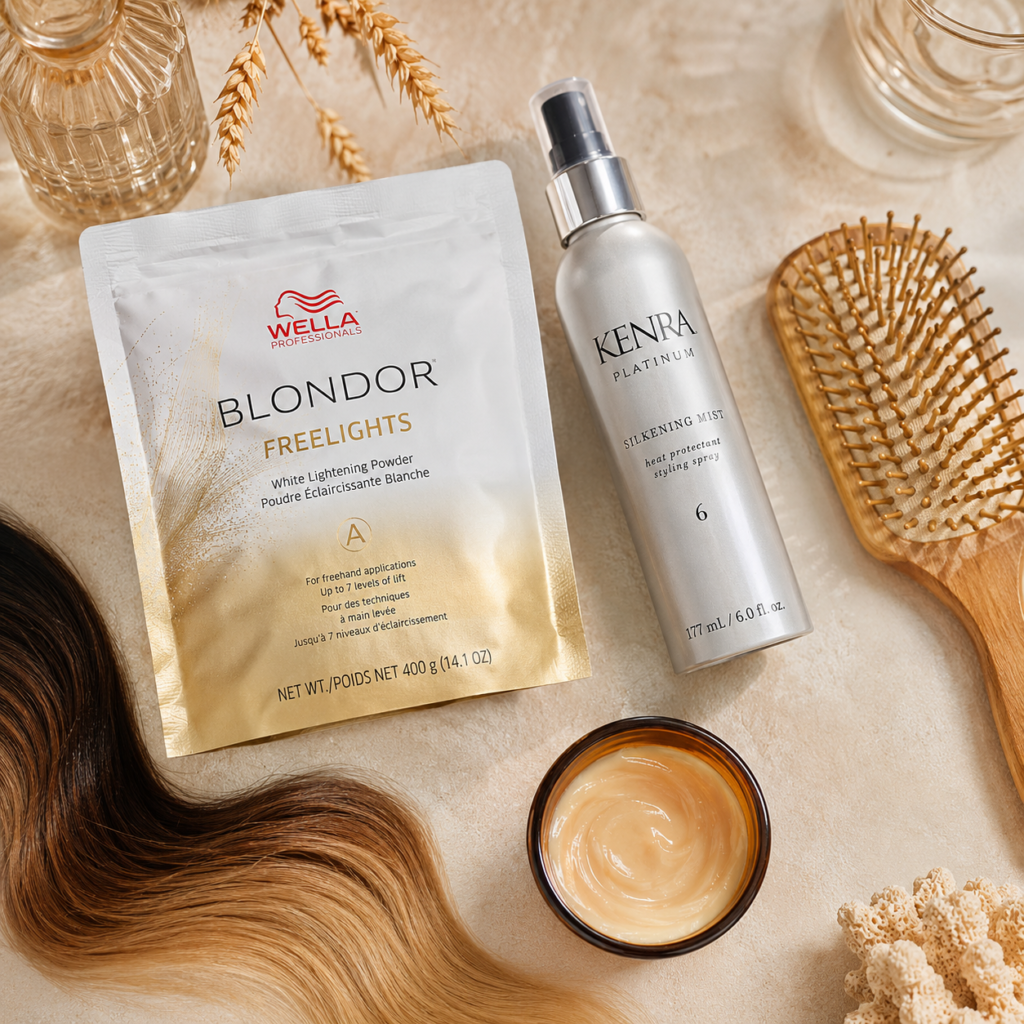
Here’s the deal, I walked into a salon three years ago with a box-dye disaster, brassy and patchy from root to tip, and my colorist spent forty-five minutes explaining why balayage was going to save my hair before she touched a single strand. She was right. Understanding what balayage hair actually is, and how it differs from every other highlight technique, changed the way I think about color entirely.
Balayage is a French freehand painting technique where color is swept onto the surface of the hair in a gradient pattern. There are no foils. No rigid sections. The result is a soft, natural-looking blend that grows out gracefully instead of showing a harsh regrowth line after six weeks.
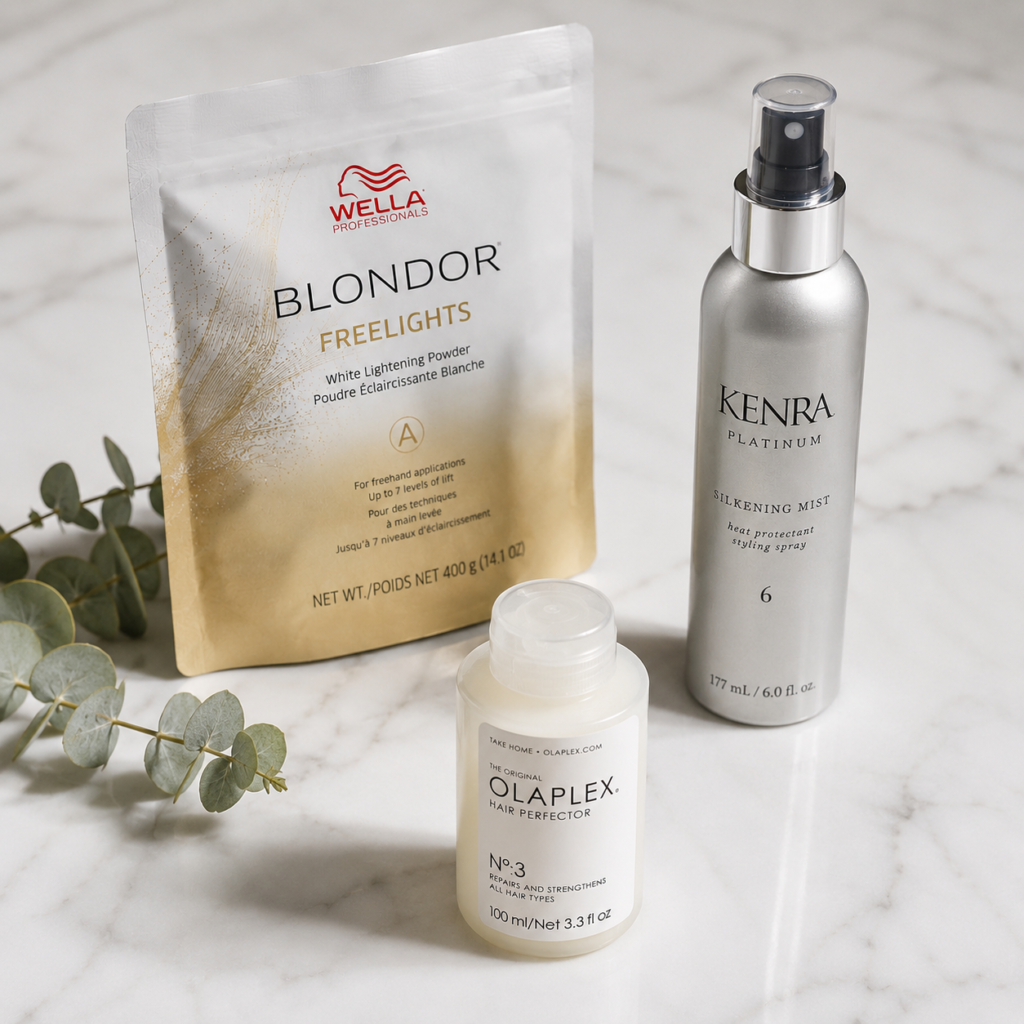
The Wella Professionals Blondor Freelights Bleach Powder is the formula my colorist uses specifically for balayage work because it stays where it is placed without bleeding, a detail that matters enormously for freehand application.
How Balayage Works
Let’s look at the chemistry for a moment. Traditional foil highlights wrap the hair in heat, which causes the bleach to lift aggressively and evenly throughout the section. Balayage skips the foil entirely, so it lifts more slowly and more gently on the outer surface of each strand.
This controlled lift is exactly what creates that follicle to tip dimension, darker at the root, progressively lighter toward the ends. Because the colorist paints by hand in sweeping strokes, every placement is unique to the way your hair actually falls and moves.
The result tends to mimic what the sun does naturally to hair over a summer. As a result, the grow-out looks intentional rather than neglected, which is why most people can comfortably go twelve to sixteen weeks between appointments.
Before and After: What to Expect
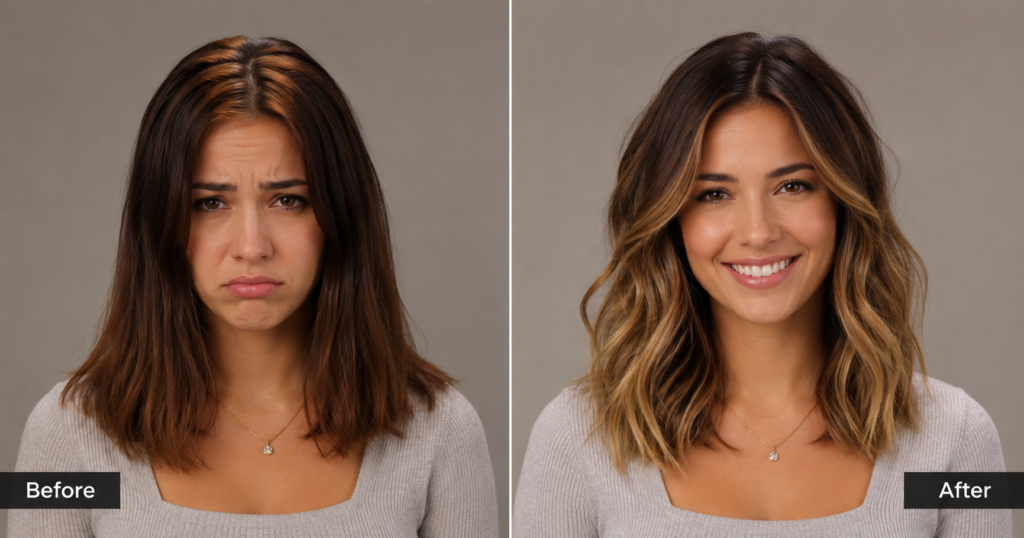
| Feature | Before (Common Mistake) | After (Optimized Approach) |
|---|---|---|
| Placement method | Uniform foil highlights, rigid sections | Freehand painted strokes, customized to hair movement |
| Root appearance | Stark visible regrowth line after 6 weeks | Soft shadow root that blends naturally as hair grows |
| Dimension and depth | Flat, uniform lightness throughout | Graduated lift from dark root to lighter ends |
| Maintenance frequency | Every 6 to 8 weeks to cover regrowth | Every 12 to 16 weeks, sometimes longer |
| Overall result | Noticeably artificial, high-upkeep color | Sun-kissed, natural dimension that moves with the hair |
The Protocol
Whether you are getting balayage in a salon or learning what to expect at your appointment, knowing the steps helps you prepare and communicate with your colorist.
1. Consultation and sectioning. Your colorist will examine how your hair falls naturally, not how it is combed, but how it actually moves. This is the most underrated step. They map out where the sun would realistically hit, which varies person to person.
2. Lightener application. The colorist sweeps bleach onto the surface of sections in upward, sweeping motions. No foil goes down. The lightener is stacked or left open to the air, which controls lift speed. For freehand work, a stable bleach powder matters here, I have watched formulas bleed and bleed on fine hair when the consistency is too thin.
3. Processing time. Balayage typically processes for 30 to 45 minutes without heat. Some colorists use a diffused infrared lamp to speed things slightly, but harsh direct heat usually creates uneven results.
4. Toning. This step is where the magic actually lands. After rinsing the bleach, a toner or gloss corrects the underlying warmth and sets the final shade, whether that is ash, caramel, champagne, or anything in between. Most people skip asking about this step, which is a mistake because the tone is what you are actually living with day-to-day.
5. Aftercare. Balayage-treated hair needs regular moisture and bond maintenance from follicle to tip. I use the Olaplex No. 3 Hair Perfector weekly on the lightened mid-lengths and ends, without it, three bottles in, my ends started snapping off at the lightest sections.
6. Maintenance appointments. Most balayage clients return once every three to four months for a refresh, either a gloss treatment or a light touch-up on the lightest sections. You rarely redo the full head each time.
Porosity Check: Does Your Hair Need to Know This?
Before any colorist applies lightener, your hair’s porosity level genuinely affects the result. High-porosity hair, often damaged or over-processed, lifts very fast and can turn brassy almost immediately. Low-porosity hair resists the bleach and may require a longer processing time.
Here is a quick test: drop a shed strand into a glass of room-temperature water and wait four minutes. If it sinks, you are likely high porosity. If it floats, you are probably low. My own hair tested at around 6.5 pH after color treatment last winter, slightly acidic, which is actually where you want it for color retention.
Telling your colorist your porosity level upfront tends to produce noticeably better results.
Drugstore Gems vs. Salon Standards
| Feature | Drugstore Pick | Salon Professional |
|---|---|---|
| Lightener formula | John Frieda Go Blonder Spray — gradual surface lightening, limited control | Wella Professionals Blondor Freelights Bleach Powder — freehand-stable, low bleed |
| Toner access | Box toners with fixed ratios, hard to customize | Wella Color Touch or Redken Shades EQ — fully adjustable tone and depth |
| Bond protection | Generic strengthening conditioners | Olaplex No. 1 Bond Multiplier added directly to lightener |
| At-home maintenance | Purple shampoo once a week | Weekly bond treatment plus a monthly gloss refresh |
| Overall finish | Subtle gradual brightening, works for minor refreshing | True customized balayage dimension with lasting tone |
Frequently Asked Questions
Does balayage work on dark hair?
Yes, though it takes more processing time and sometimes multiple sessions to reach a lighter target shade without damage. On deep brunette or black hair, most colorists recommend starting with a darker caramel result and lightening gradually over two or three appointments. Rushing the lift on dark hair usually ends in breakage or uneven brassiness.
How is balayage different from ombré?
Balayage is the technique, the freehand painting method. Ombré is a style, a specific gradient that is typically more dramatic and starts darker at the root with a sharp transition point. Balayage usually produces a softer, more blended result. However, a colorist can use the balayage technique to create an ombré effect, so the two terms often overlap in conversation.
Can I do balayage at home?
Technically possible, but genuinely difficult. The freehand application requires control over both placement and timing, and you cannot easily see the back sections of your own head. Most at-home attempts I have seen result in patchy lift or over-processed ends. If you want to experiment, start with a highlight kit on just the front face-framing pieces rather than attempting a full balayage.
How do I maintain balayage color between appointments?
A purple or blue toning shampoo used once per week tends to neutralize brassiness on lightened sections. In addition, a weekly bond or protein treatment on the mid-lengths and ends slows breakage significantly. Avoid daily washing if possible, color-treated hair retains tone much longer on a two-to-three-day wash schedule.
The Amber Verdict
Balayage is one of the few color techniques I genuinely think most people could benefit from, it is lower maintenance than traditional highlights and the grow-out is actually flattering rather than awkward. That said, I would push back on the mainstream advice that balayage suits every hair type equally, very fine or silky hair can have a harder time holding the painted placement, and results on those textures tend to look thinner and less dimensional than expected. Find a colorist who specializes in it, ask to see their portfolio specifically on your hair type, and do not skip the toning step.
Pin This if you are heading to a color consultation soon, your colorist will appreciate that you know what you are asking for.