
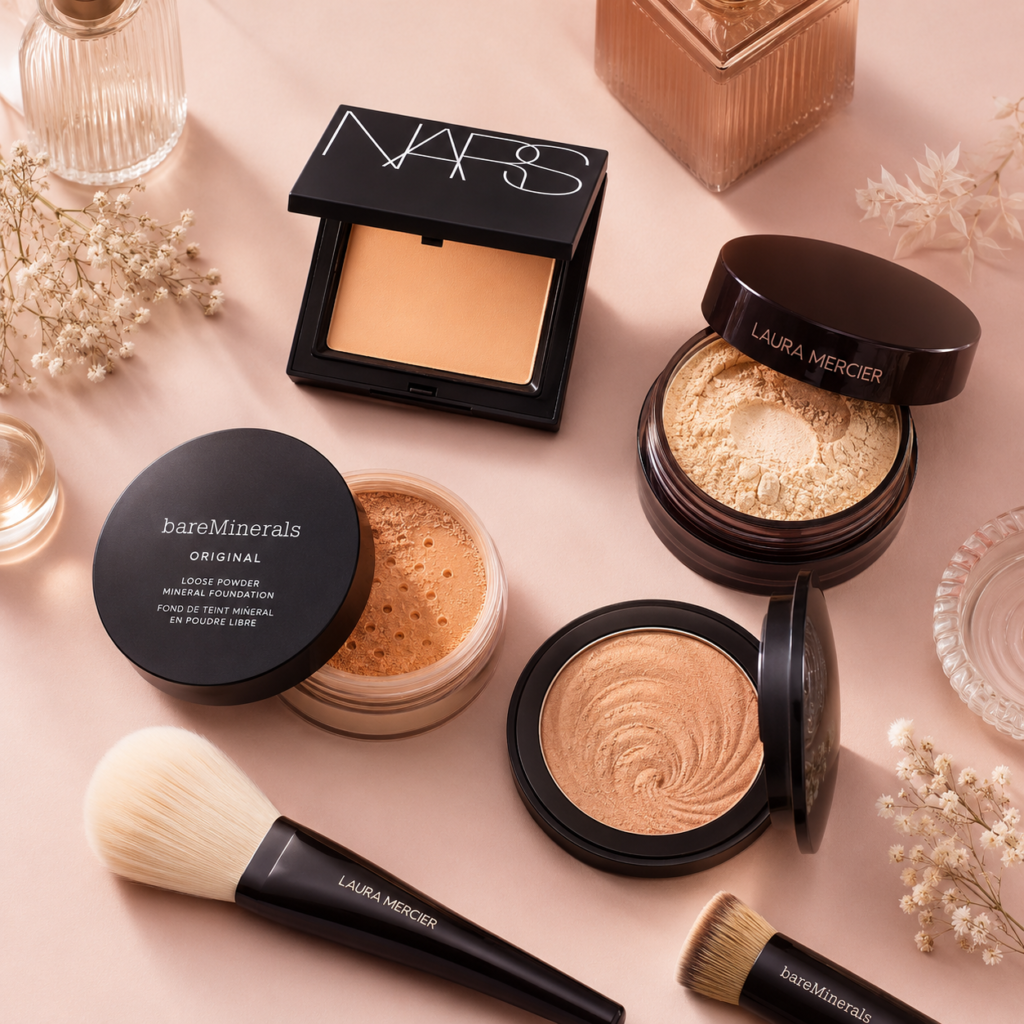
Here’s the deal, I spent most of last winter cycling through powder foundations that looked incredible in the pan and absolutely tragic on my face by noon. Cakey patches over my dry cheeks, oxidized patches over my oilier zones, the works. After testing six formulas back to back and tracking results over eight weeks, I finally figured out that the problem wasn’t always the product. It was the method. The bareMinerals Original Loose Powder Mineral Foundation was the one that finally clicked for me, but only after I changed my entire application approach. And that’s what I want to walk you through today.
How Powder Foundation Works
Powder foundation sits in a category that’s misunderstood way more than it should be. Most people treat it like pressed powder, pat it on and hope for the best. But the chemistry is doing something more specific than that.
The pigment in powder foundation is suspended in either talc, mica, or mineral bases like zinc oxide and titanium dioxide. These particles scatter light and physically diffuse the look of pores and uneven texture. Because of this, the finish tends to read more matte or satin than liquid, and the coverage builds with each buffed layer.
Here’s where seamless integration matters most. The powder has to bond to whatever skin prep is underneath, whether that’s bare skin, moisturizer, or primer. That bond determines whether your finish looks blended or just sitting on top.
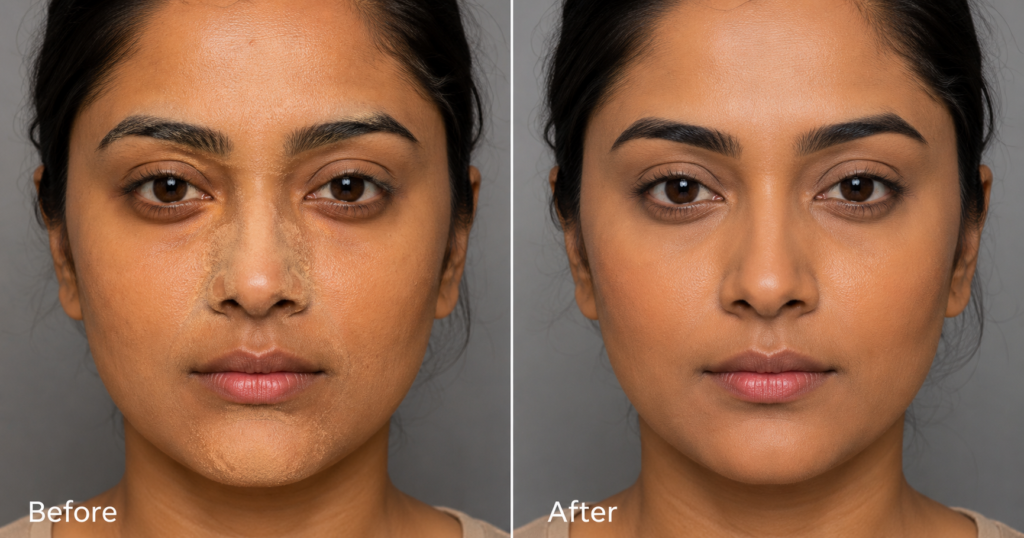
Before and After: What to Expect
| Feature | Before (Common Mistake) | After (Optimized Approach) |
|---|---|---|
| Skin prep | Applying directly to bare, unprimed skin | Lightweight hydrating primer or moisturizer fully absorbed first |
| Tool choice | Flat paddle brush or sponge, wrong for powder | Dense kabuki or fluffy dome brush for buffing motion |
| Application method | Pressing powder in one thick layer | Thin layers built with circular buffing strokes |
| Frequency of reapplication | Piling on more powder over oil midday | Blotting first, then pressing one light layer |
| Result | Caked patches, oxidized color, visible texture | Even second-skin finish that holds for 6 to 8 hours |
The Application Method
Start here and work through each step in order. Rushing any of these, especially the first one, is usually where things fall apart.
Prep Step, This is non-negotiable. Let your moisturizer or primer sink in for at least three minutes before touching powder. I once timed it at 90 seconds because I was in a hurry and the foundation pilled within an hour. Not worth it.
- Tap, don’t swipe. Load your brush lightly, tap excess off the back of your hand before touching your face. This single habit reduces caking by a noticeable margin.
- Start at the center. Apply the first pass across your nose bridge and center of the forehead. These areas tend to be oilier, so building coverage there first makes blending outward easier and more natural-looking.
- Buff in circular motions. Use a dense kabuki or domed fluffy brush, the Sigma Beauty F80 Flat Kabuki Brush works well here, and work in small tight circles. This presses the mineral particles into skin rather than sitting them on top.
- Build in thin passes, not one thick coat. Wait ten seconds between layers. That sounds fussy, but it genuinely makes the difference between coverage and paste.
- Set the perimeter last. Dust lightly over the jaw and hairline with almost nothing on the brush. These edges are where powder foundation tends to look masklike if you’re not careful.
- Midday refresh correctly. Blot oil first with a tissue or blotting paper, then press, not swipe, one light layer over the blotted area. Adding powder over active oil is what creates the cakey look most people associate with this format.
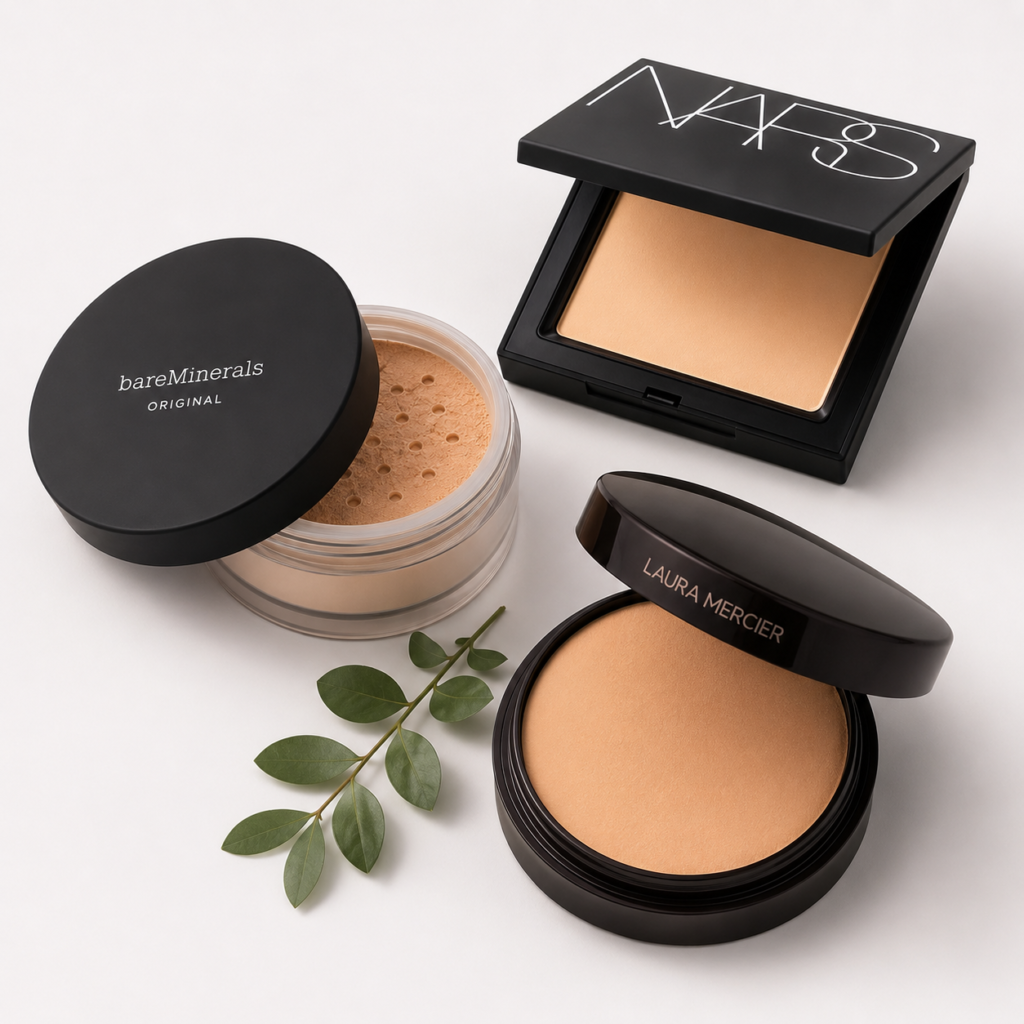
How These Three Powder Foundations Compare
| Feature | BareMinerals Original Loose Powder Mineral Foundation | NARS Light Reflecting Pressed Powder Foundation | Laura Mercier Candleglow Soft Luminous Foundation Powder |
|---|---|---|---|
| Coverage level | Light to medium, buildable | Medium, buildable with layering | Light to medium, skin-like finish |
| Finish | Natural matte with subtle glow | Luminous semi-matte | Soft radiant satin |
| Skin-loving ingredients | Zinc oxide, titanium dioxide, bismuth-free option | Light-diffusing pigments, skin conditioners | Hyaluronic acid, vitamin E, pearl powder |
| Best skin type | Oily and combination skin | Normal to combination skin | Dry to normal skin |
| Format | Loose mineral powder | Pressed compact | Pressed powder |
| Wear time | 6 to 8 hours with oil control | Up to 8 hours | 8 hours, with moisturizing base |
Frequently Asked Questions
Is powder foundation good for dry skin?
It tends to work better for oily and combination skin, honestly. However, dry skin can wear powder foundation if you layer a hydrating primer underneath and choose a formula with emollient ingredients, Laura Mercier’s Candleglow version, for example, includes hyaluronic acid. In addition, misting with a setting spray after application helps the powder meld rather than sit on dry patches.
Can I wear powder foundation without primer?
You can, but results vary significantly by skin type. For oily skin, bare clean skin often works fine and sometimes grips powder better than a primer does. On the other hand, dry or textured skin almost always needs a smoothing base first, otherwise the powder settles into fine lines and accentuates them rather than softening them.
How do I stop powder foundation from oxidizing?
Oxidation usually happens when powder reacts with excess oil on the skin. Because of this, blotting your skin before application and choosing a mineral-based formula, especially one with zinc oxide, tends to reduce the problem. Furthermore, checking that your shade isn’t too yellow-warm for your skin tone also helps, since those tones tend to shift more noticeably over time.
What brush works best with powder foundation?
A dense, dome-shaped kabuki brush or a flat-top kabuki gives the most even coverage and buffs the mineral particles into skin rather than on top of it. Fluffy fan brushes work for a very sheer pass but don’t build coverage well. Generally, the denser the bristle, the more you can control where the product sits.
The Amber Verdict
The best powder foundation isn’t always the one with the most impressive shade range or the sleekest compact, it’s the one you learn to apply correctly. Most of the complaints I hear about this format trace back to method, not formula. Get the prep right, buff in thin layers, and treat midday touch-ups as a blot-first situation, and almost any decent powder foundation will perform way better than you expect. Pin this before your next makeup restock.