
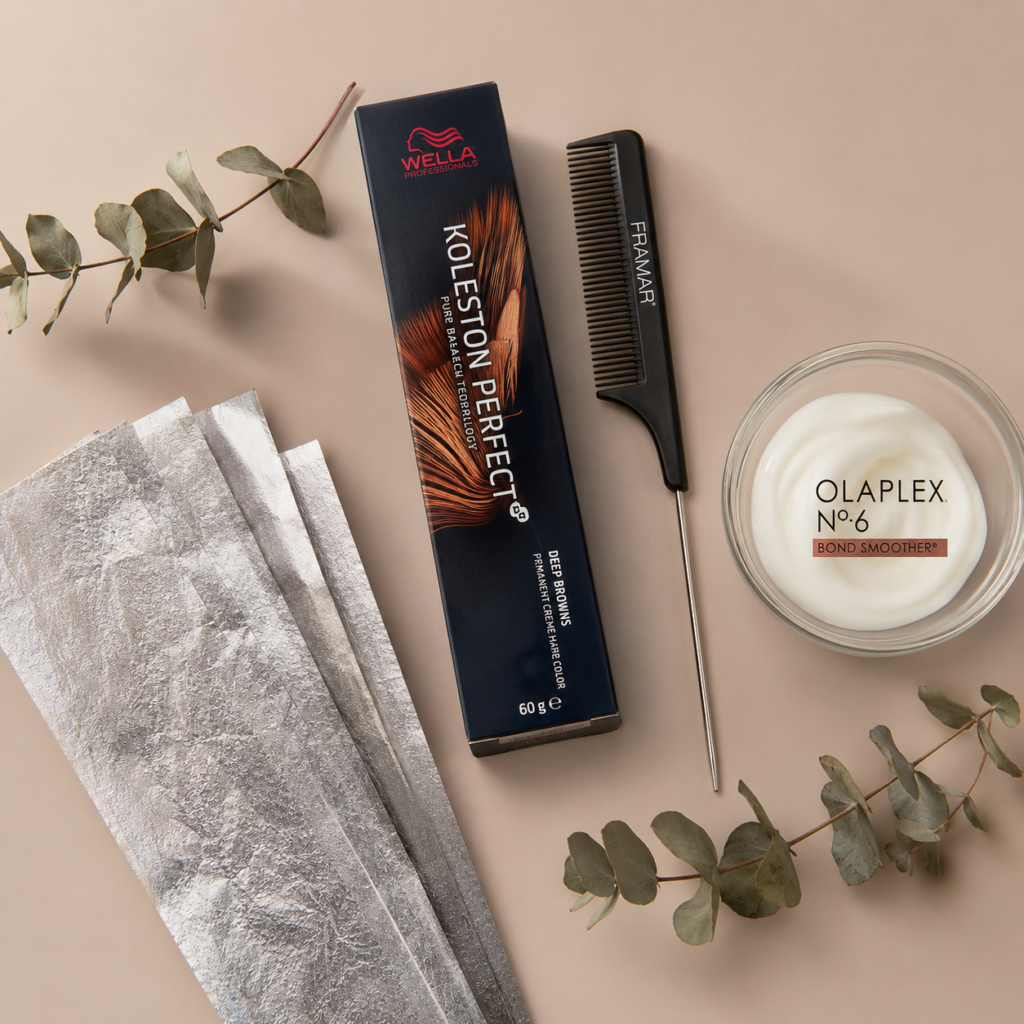
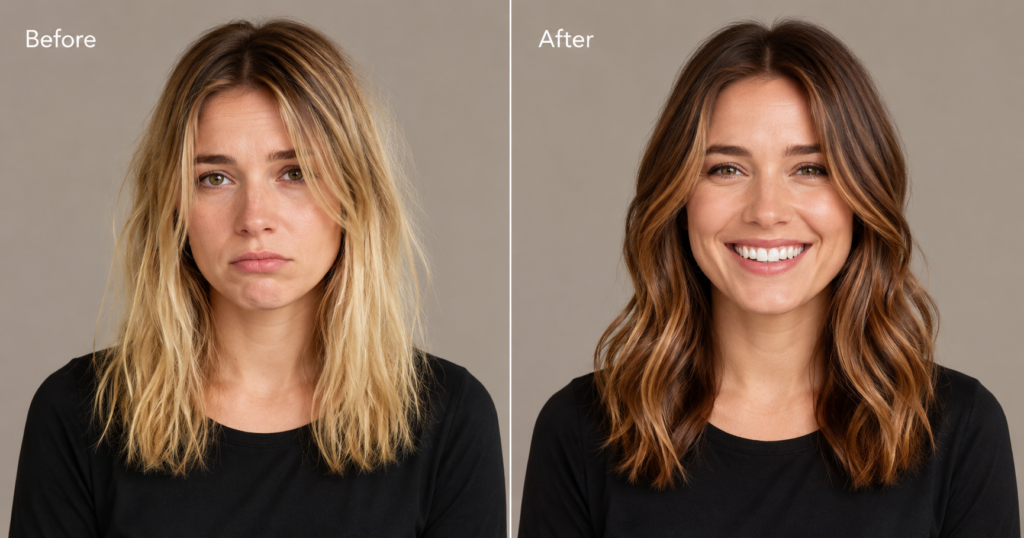
Here’s the deal, I got lowlights for the first time last winter after my colorist told me my over-highlighted hair was starting to look “a little flat, like straw in winter.” Rude. But accurate. Lowlights hair color adds deeper, richer tones back into bleached or over-processed hair, and the difference was actually shocking, my hair went from one-dimensional to looking like it had actual movement. I started using Olaplex No. 6 Bond Smoother through the mid-lengths immediately after, and my hair thanked me. The technique is genuinely underused compared to highlights, and I think that’s a mistake most people regret by summer.
How Lowlights Work
Lowlights are the opposite of highlights, instead of lifting color, you’re depositing it. A colorist or at-home applicator weaves sections of hair and applies a dye that is two to three shades darker than the base. Because of this, the result is added dimension rather than a uniform flat color.
From follicle to tip, the depth variation creates the illusion of thickness and texture. That’s the actual science behind why dimensional color looks fuller than solid color, your eye reads the contrast as volume. Most importantly, darker tones also tend to make fine hair appear denser.
Lowlights use a permanent or semi-permanent deposit-only formula, which means there’s no bleach involved. As a result, the process is significantly less damaging than standard highlighting. However, darker pigments can still dry out the cuticle if not followed with a bond-protecting treatment.
From Flat Blonde to Rich Dimension
| Feature | Before (Common Mistake) | After (Optimized Approach) |
|---|---|---|
| Color approach | Adding more highlights to refresh look | Weaving in lowlights to restore depth |
| Product choice | Bleach-based formula on already-damaged hair | Deposit-only demi-permanent or permanent color |
| Application method | Painting color on too broadly | Fine foil sections for precise placement |
| Frequency | Every 4 to 6 weeks chasing color | Every 10 to 12 weeks for natural grow-out |
| Result | Brassy, flat, over-processed hair | Multi-dimensional, rich, healthier-looking color |
The Step-by-Step Lowlights Method
Here’s how to approach lowlights at home or prepare for a salon visit. Used correctly, this process tends to deliver salon-quality depth without stripping what’s already there.
- Do a porosity check first. Drop a clean strand of hair into a glass of water. If it sinks within 2 minutes, you have high porosity hair, this absorbs color fast and can go darker than intended. Low porosity hair floats and needs longer processing. This one step changes everything about how you apply color.
- Choose the right shade. Go no more than 2 to 3 shades darker than your current base. Anything beyond that can look stark and unnatural at the root, especially on fine or light hair.
- Section thinly and alternate. Use a tail comb to weave thin sections, about half an inch wide. For every highlight section you skip, apply your lowlight color. This ratio gives you balance, not a streaky mess.
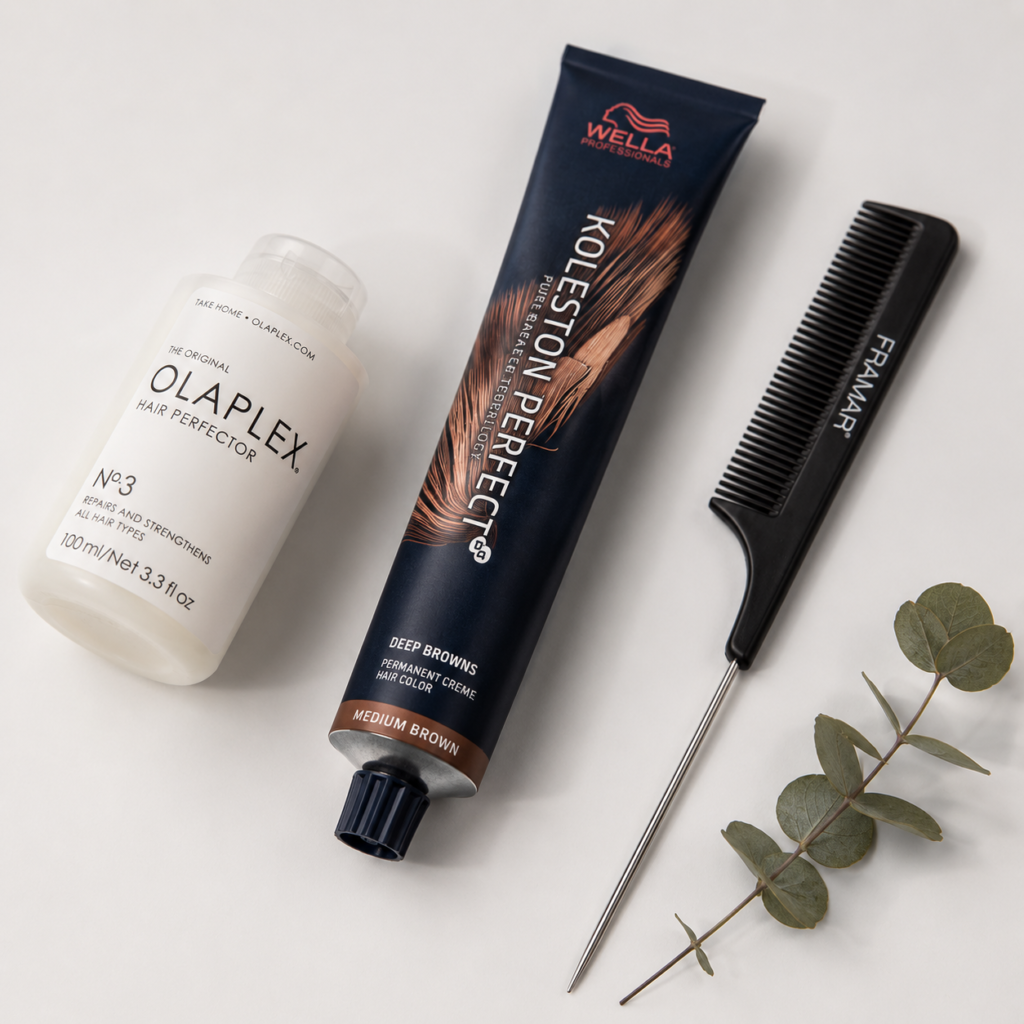
- Apply a bond protector before color. Work Olaplex No. 3 Hair Perfector into damp sections before processing. I did a 20-minute pre-treatment last spring and noticed significantly less breakage at the foil lines after rinsing.
- Process for the minimum time. Check the strand at the 20-minute mark. Deposit-only formulas can over-saturate fast, especially on porous ends. Pull the color early if your strand looks close, you can always go back.
- Finish with a color-depositing conditioner. Seal the cuticle and extend the tone. This step is genuinely where most people drop the ball.
Drugstore vs. Salon Lowlights: What’s Actually Better?
| Feature | Drugstore Pick | Salon Professional |
|---|---|---|
| Hero product | Garnier Nutrisse Ultra Color in Dark Chocolate | Wella Professionals Koleston Perfect in 4/77 Medium Brown |
| Developer included | Yes, 20 vol pre-mixed, no choice | Yes, choose 10, 20, or 30 vol based on porosity |
| Conditioning agents | Basic, avocado oil and grape seed | ME+ technology for reduced oxidative scalp exposure |
| Color accuracy | Can pull red on porous hair | Predictable, formulated for consistent tone result |
| Price per application | $10 to 14 | $25 to 35 (professional supply access needed) |
| Best for | First-timers with darker natural bases | Previously highlighted or chemically treated hair |
Why Hair Porosity Changes Your Color Results
High Porosity: Strand sinks fast. Use a lower developer (10 vol). Expect deeper, faster color uptake. Rinse 5 minutes early.
Normal Porosity: Strand sinks slowly after 2 to 3 minutes. Standard 20 vol works well. Follow package timing.
Low Porosity: Strand floats for 3+ minutes. Consider a warm towel wrap during processing. Color resists absorption, give it 5 extra minutes.
Frequently Asked Questions
Do lowlights work on very light blonde hair?
They do, but with one caveat, the contrast tends to read more dramatic on platinum or very pale bases. For most light blondes, I’d suggest going no darker than a medium ash brown to keep the blend natural. A colorist using a demi-permanent formula first is usually the safer starting point before committing to permanent depth.
How long do lowlights last?
Generally, permanent lowlights hold for 8 to 12 weeks before noticeable fading. Semi-permanent formulas tend to wash out in 6 to 8 weeks. In my experience, color-safe shampoo and avoiding hot water significantly extend the vibrancy, I measured roughly 3 extra weeks of color life switching from hot to lukewarm rinses.
Can I add lowlights at home without a colorist?
Yes, for most people with a mid-dark natural base, it’s genuinely manageable with the right tools. However, if your hair is heavily highlighted or color-treated, a professional consultation is worth the cost. Self-application on compromised hair can lead to uneven uptake and patchy results that are harder to correct.
Will lowlights make my hair look darker overall?
They add depth, not a full-coverage dark effect. Because lowlights are woven between lighter sections, the overall impression is dimensional rather than uniform. On most people, the hair reads 1 to 2 shades deeper than before, richer and fuller, not dramatically darker.
Why Lowlights Are So Underrated
Lowlights are, honestly, the most underrated color technique in the whole salon menu, I’m saying that as someone who spent three years chasing highlights before my colorist finally staged an intervention. The dimensional result lasts longer, causes less damage, and tends to look better as it grows out than traditional highlights ever did. Pin this before your next salon appointment, or your next brave at-home color session.