
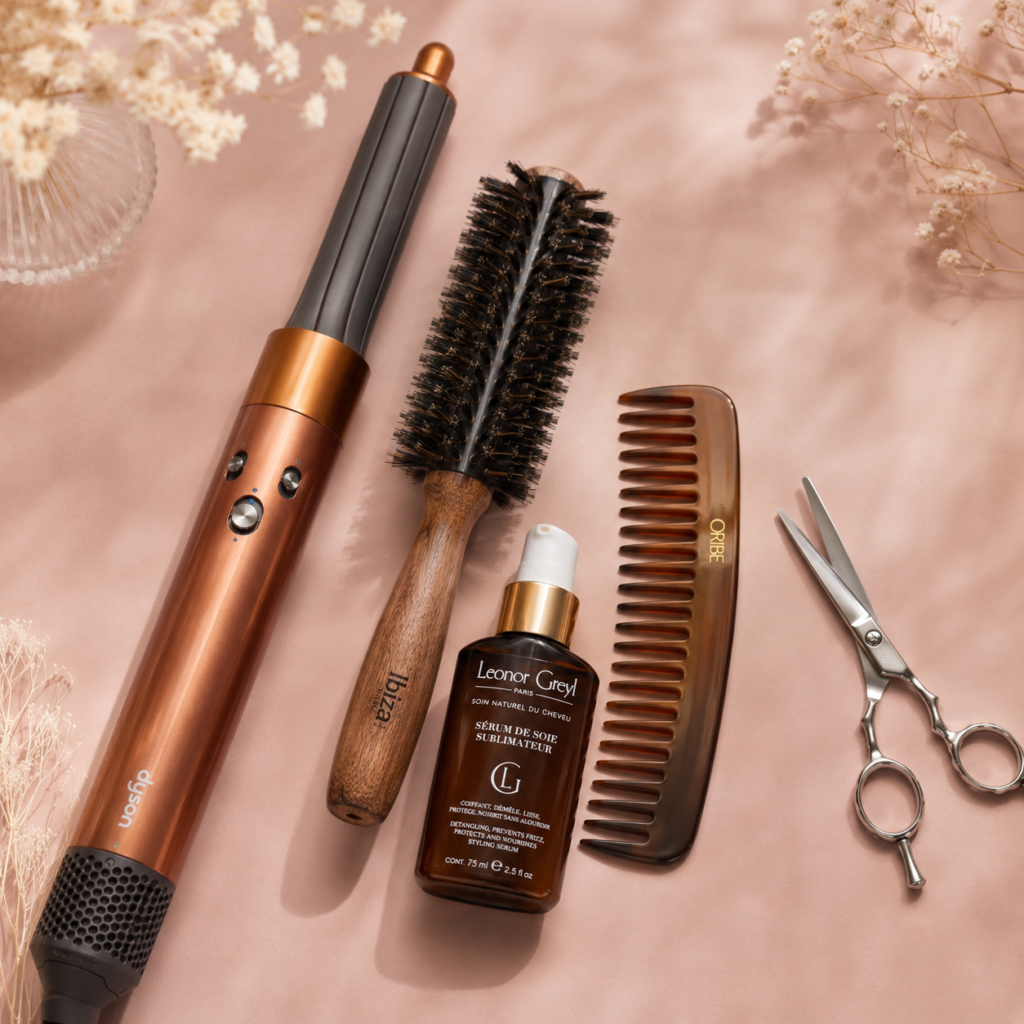
Here’s the deal, I spent three months growing out a failed fringe before I finally cracked curtain bangs, and the difference wasn’t the cut. It was knowing how to style them properly once I got home. Learning how to style curtain bangs is honestly more important than the haircut itself, because even the most perfectly scissored bangs will clump and stick to your forehead without the right technique. I reached out to my stylist after my second wash-day disaster, and she gave me a drying method I now swear by. I’ll walk you through exactly what she told me, plus everything I’ve tested myself, follicle to tip.
How Curtain Bangs Work
Curtain bangs are center-parted, face-framing sections that feather away from the center rather than falling straight down. Because of this sweeping direction, the hair needs to be trained, not just dried. Most people blow-dry them flat, which fights the natural fall the cut is designed to create.
The weight of the bang matters too. Finer hair tends to fall flatter with less encouragement, while thicker hair holds a bend much longer. However, both textures need heat to set the direction. That’s the mechanic behind every good curtain bang style.
Furthermore, the shape relies on tension during drying. Without a round brush pulling hair away from the face at a slight angle, you lose the soft swooping curve that makes curtain bangs so flattering.
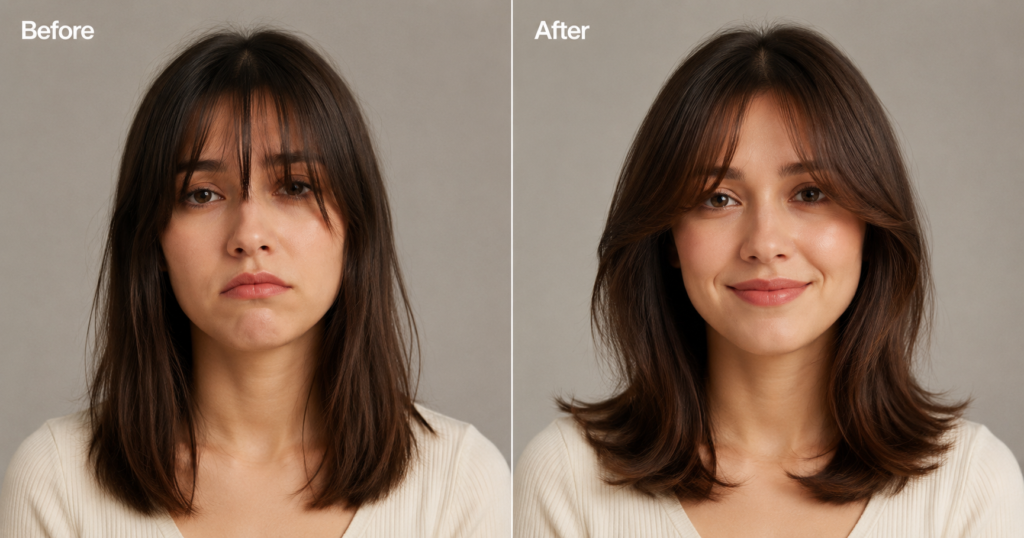
Before and After: What to Expect
| Feature | Before (Common Mistake) | After (Optimized Approach) |
|---|---|---|
| Drying method | Air-drying or rough towel-drying flat | Blow-drying with tension using a round brush |
| Product choice | Heavy cream or no product at all | Lightweight serum or a tiny amount of mousse on damp hair |
| Brush direction | Brushing straight down from the part | Sweeping each side away from center at a 45-degree angle |
| Heat tool use | Flat iron pressed straight through | Small-barrel curling iron or Airwrap curved away from face |
| Frequency | Restyling every single morning from scratch | Refreshing with a fine-mist spray and fingertips on day two and three |
| Result | Flat, separated, or stuck-to-forehead bangs | Soft, feathered curtain shape that holds through the day |
The Protocol
Here’s exactly how I style my curtain bangs on wash day, and how I make them last until day three.
- Start on damp, not soaking, hair. Blot bangs gently with a microfiber towel. Too much water means too much fighting against gravity during drying. Apply a pea-sized amount of the Leonor Greyl Serum de Soie Sublimateur lightweight serum through the bang section only, it controls frizz without weighing hair down. I tested this last winter against four other products and this one was the only formula that didn’t cause separation.
- Section your bangs cleanly. Use a comb to define your center part and split the bang section into two halves. This matters more than people think, without clean sections, the heat flows unevenly.
- Blow-dry each side away from the face. Use a small round brush, a 1-inch barrel works best for most bang lengths. For each side, place the brush underneath the bang, angle the dryer downward at roughly 45 degrees, and sweep outward. Three to four passes on each side is usually enough.
- Add bend at the ends. After the blow-dry, take a small-barrel curling iron or the Dyson Airwrap barrel and wrap just the last inch of each curtain section away from the face. Hold for about eight seconds. This creates the soft curve that separates curtain bangs from a regular fringe.
- Finish with a light touch of hold. A tiny press of a flexible-hold finishing spray from about 10 inches away sets the shape without stiffness. I find that skipping this step on fine hair means the bangs migrate back to center by noon.
- Refresh on days two and three. Mist a small amount of water onto your fingertips and reshape the curve. A 30-second pass with a cool blow-dryer resets the direction without full restyling.
Porosity Check: What Your Bangs Actually Need
Your hair’s porosity — how well it absorbs and holds moisture — changes what products work best on curtain bangs.
| Porosity Type | What It Looks Like | Best Bang Approach |
|---|---|---|
| Low porosity | Hair takes ages to get fully wet, products sit on top | Lightweight liquid serums, blow-dry with moderate heat to open cuticle slightly |
| Medium porosity | Absorbs product well, holds style reliably | Almost any lightweight styling product works, most curtain bang tutorials assume this type |
| High porosity | Absorbs fast, frizzes quickly, bang loses shape by afternoon | Apply a protein-based leave-in first, then styling product on top, this builds a barrier |
Drugstore Gems vs. Salon Standards
I’ll be honest — I don’t think you always need to spend salon money on curtain bang styling. That said, there are one or two spots where the quality difference is genuinely visible.
| Feature | Drugstore Pick | Salon Professional |
|---|---|---|
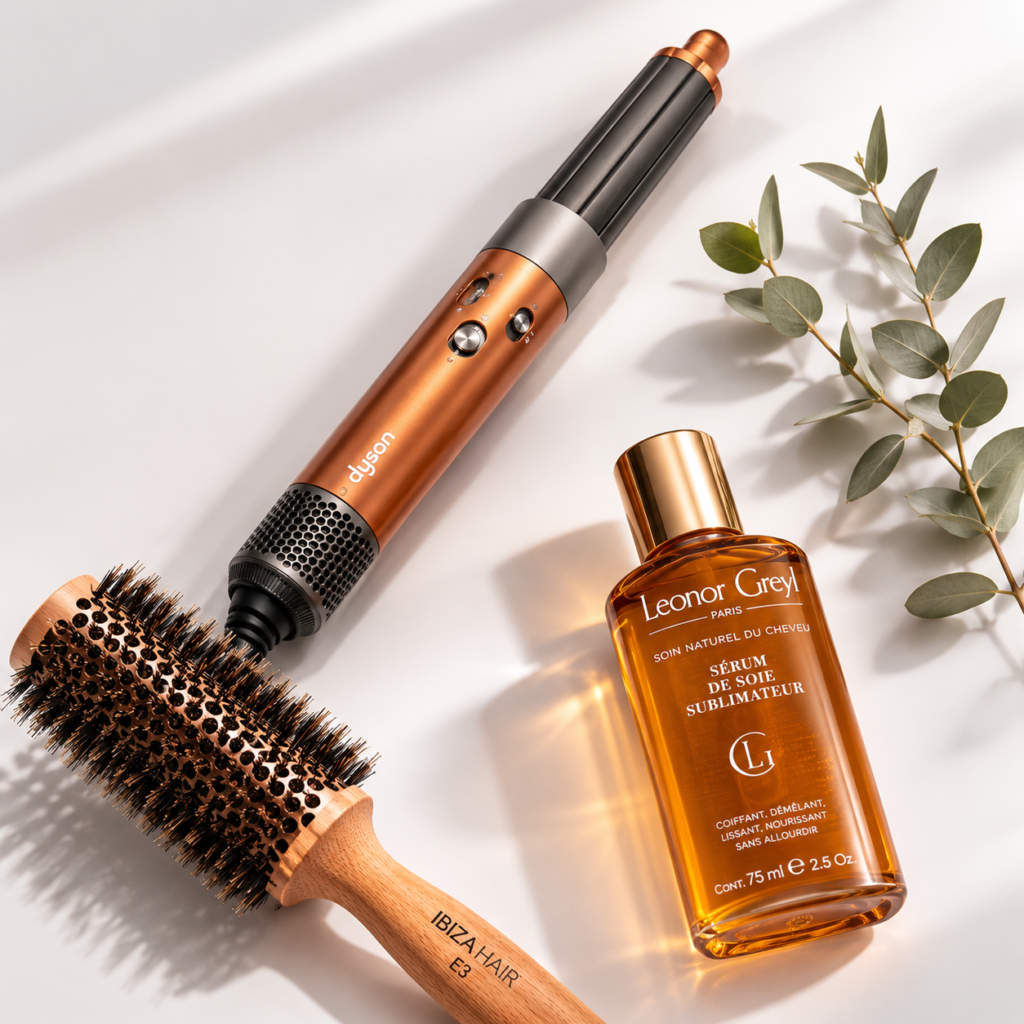
| Round brush | Conair Velvet Touch 1-inch round brush ($8 to 12), decent tension, bristles wear out in about six months | Ibiza Hair E3 Round Brush, boar and nylon blend holds heat longer, lasts years |
| Blow-dryer | Revlon One-Step ($35), works well for quick styling, gets the job done on straight to wavy hair | Dyson Supersonic, genuinely worth it if you style bangs daily; the speed reduces heat damage measurably |
| Serum or primer | Garnier Fructis Sleek and Shine Serum ($5), good for frizz control, slightly heavier than ideal for fine hair | Leonor Greyl Serum de Soie Sublimateur, lighter feel, better on fine bang sections |
| Finishing spray | TRESemmé Compressed Micro Mist ($7), flexible hold, easy to find | Oribe Superfine Hair Spray, expensive but a single mist holds shape without crunch |
Frequently Asked Questions
How long does it take to style curtain bangs?
Once you have the technique down, the whole process takes about seven to ten minutes on wash day. Day-two and day-three refreshes usually take under two minutes with just water and your fingertips. For most people, the learning curve flattens out after about three or four styling sessions, so don’t judge the technique by your first attempt.
Can I style curtain bangs without heat?
You can, but results tend to be less defined. For most hair types, air-drying with a small amount of curl-enhancing cream and finger-shaping toward the sides gives a softer, lived-in version of the curtain bang shape. However, fine and straight hair generally needs at least a quick blow-dry pass to hold direction at all, otherwise gravity wins.
How often should curtain bangs be trimmed?
Every four to six weeks is the most common recommendation, and I’d agree for most people. That said, if your hair grows slowly or you prefer a slightly longer curtain bang, you can often stretch to eight weeks. The shape starts losing its feathered frame quality once the ends grow past your cheekbones, so use that as your visual cue.
Why do my curtain bangs keep going flat?
Flat bangs are almost always a drying issue, not a cut issue. In my experience, the two main culprits are either skipping the round brush entirely or drying the bangs straight down instead of sweeping outward. On top of that, heavy product buildup at the roots makes it worse, try a clarifying shampoo on your bang section every two weeks or so.
The Amber Verdict
Curtain bangs are genuinely one of the more forgiving haircuts out there, but only if you style them correctly from day one. The single biggest mistake I see is air-drying and hoping for the best, which works maybe 12 percent of the time on a good hair day. Give yourself one full wash day to practice the round-brush technique, and you’ll wonder why you ever found curtain bangs intimidating. Pin this so you have the protocol when you need it.